Shishigashira Japanese Maple
Shishigashira is one of the most recognisable of all Japanese maples, prized for its dense, crinkled, tightly curled green leaves and its stiff, upright, sculptural habit (Acer palmatum 'Shishigashira').
Last reviewed: September 2026
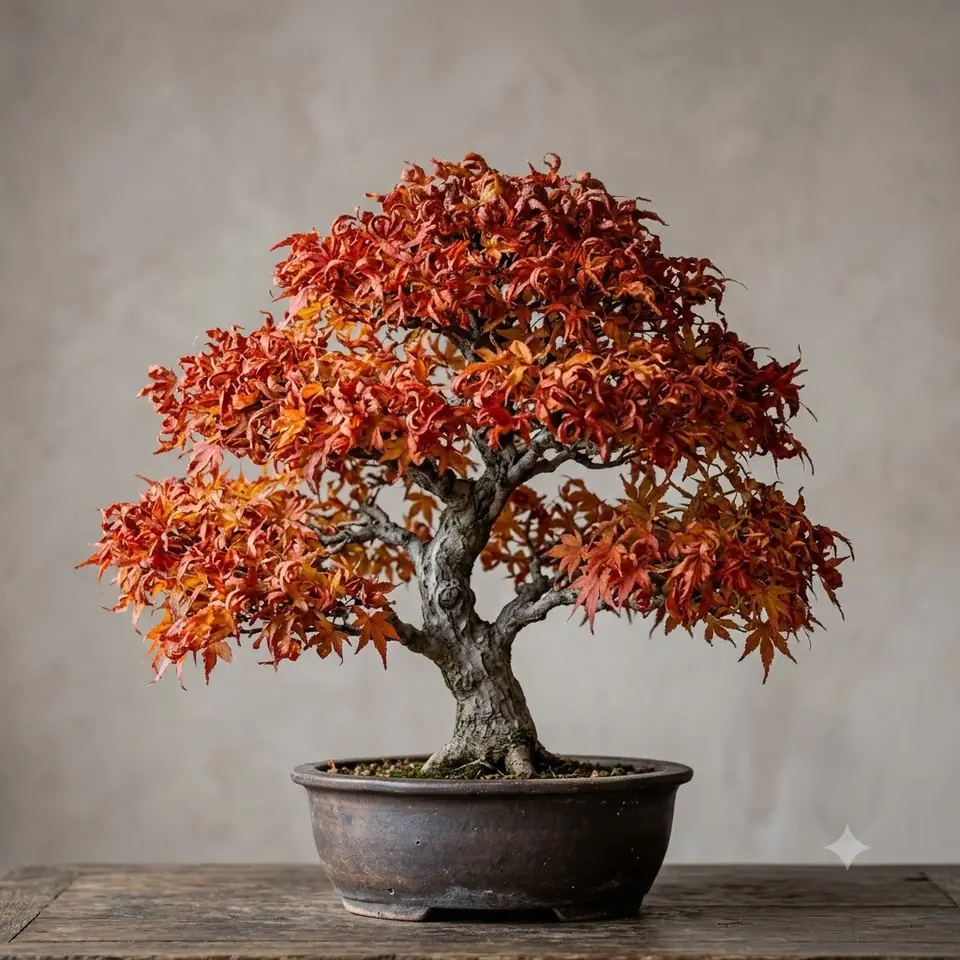 AI illustration
 Overview
Shishigashira is one of the most recognisable of all Japanese maples, prized for its dense, crinkled, tightly curled green leaves and its stiff, upright, sculptural habit (Acer palmatum 'Shishigashira'). The name translates roughly as "lion's head" or "lion's mane," a nod to the way the small, ruffled leaves bunch so thickly along the branches that they look like a shaggy mane. Unlike the weeping, lacy maples people often picture, this is a slow, compact, distinctly architectural shrub or small tree.
Origin & Background
The species Acer palmatum is native to Japan, Korea, and parts of eastern China, where it grows as an understorey tree in cool, humid woodlands. 'Shishigashira' is an old Japanese selection that has been cultivated for well over a century and remains a classic in traditional Japanese garden design. It is propagated by grafting to keep its unusual foliage and growth habit true.
Appearance
The leaves are small, deeply cut, and heavily curled or crimped, with edges that roll inward so the foliage looks crinkly and congested rather than flat. Summer colour is a rich, deep green; new spring growth often shows reddish tints, and in autumn the whole plant turns gold, orange, and crimson, colouring noticeably later than most other Japanese maples. The habit is stiffly upright and vase-shaped, with short, densely branched stems and attractive olive-green bark marked with fine pale striping. It is slow growing, typically reaching about 1.8 to 3 m tall and 1.2 to 1.8 m wide over many years, occasionally taller in age.
Why People Grow It - Qualities & Benefits
- Unique, textural foliage that reads as a solid mound of ruffled green from a distance
- Compact, slow growth that suits small gardens, courtyards, and large containers
- Excellent, long-lasting late-autumn colour in gold, orange, and red
- Strong, upright structure that gives year-round form even when bare in winter
Care
Light: Full sun to partial shade; in hot-summer regions give afternoon shade to prevent leaf-edge scorch. Water: Consistent, even moisture; keep the root zone from drying out, especially in the first few years and during heat. Soil: Moist but well-drained, humus-rich soil that is slightly acidic; avoid heavy, waterlogged ground. Hardiness: USDA zones 5 to 9, most reliable and best-coloured in zones 6 to 8. Bloom or Season: Grown for foliage from spring leaf-out through a long, late autumn display; small reddish flowers in spring are inconspicuous. Extra: The signature quirk is the tightly curled "lion's mane" foliage packed densely along stiff branches, and its habit of colouring later in the season than nearly every other maple. Non-toxic to cats and dogs.
Planting & Propagation
Plant in spring or autumn in a sheltered spot out of harsh wind and hot afternoon sun, setting the tree at the same depth it grew in the pot and mulching to keep roots cool and moist. Named cultivars like this one are almost always grafted onto seedling Acer palmatum rootstock rather than grown from seed, since seedlings will not come true. Home propagation is difficult; layering is occasionally used, but grafting by a nursery is the standard method.
Common Problems & Pests
- Leaf scorch and crispy leaf margins from too much sun, wind, or dry soil
- Aphids, scale, and mites, especially on stressed plants
- Verticillium wilt and various fungal leaf spots, more likely in poorly drained or overcrowded conditions
Toxicity & Safety
Non-toxic to cats and dogs. Japanese maple (Acer palmatum) is not listed as toxic to pets, so Shishigashira is a safe choice for gardens shared with animals. As with any plant, discourage pets from chewing foliage to avoid mild stomach upset.
Pros & Cons
Pros
- Distinctive, unmistakable foliage and strong architectural form
- Compact and slow, so it stays in scale in small spaces and pots
Cons
- Slow growth means patience and a higher price for a mature plant
- Prone to leaf scorch if sited in too much heat, sun, or dry wind
Best Suited For
- Small gardens, courtyards, entryways, and large containers wanting a focal-point specimen
- Gardeners in zones 5 to 9 who can offer moist soil and some afternoon shade
FAQ
Why does my Shishigashira colour so late in autumn?
That is normal and one of its trademarks. This cultivar reliably holds its green foliage well past most other Japanese maples before turning gold, orange, and crimson, often when the surrounding garden has already dropped its leaves.
Can I grow it in a pot?
Yes. Its slow, compact growth makes it one of the better Japanese maples for containers. Use a well-drained, slightly acidic mix, water consistently, shelter it from harsh afternoon sun, and protect the pot from hard freezes in colder zones.
Gear for growing shishigashira japanese maple
Links go to Amazon or a partner store (such as Adagio Teas) and may earn us a commission at no extra cost to you. As an Amazon Associate we earn from qualifying purchases. We link gear types, not sponsors' picks: you choose the exact product.