Sneezy Dahlia
Sneezy is a compact single-flowered dwarf bedding dahlia (Dahlia 'Sneezy') prized for its clean, open-faced white blooms rather than the dense pom or dinnerplate look.
Last reviewed: July 2026
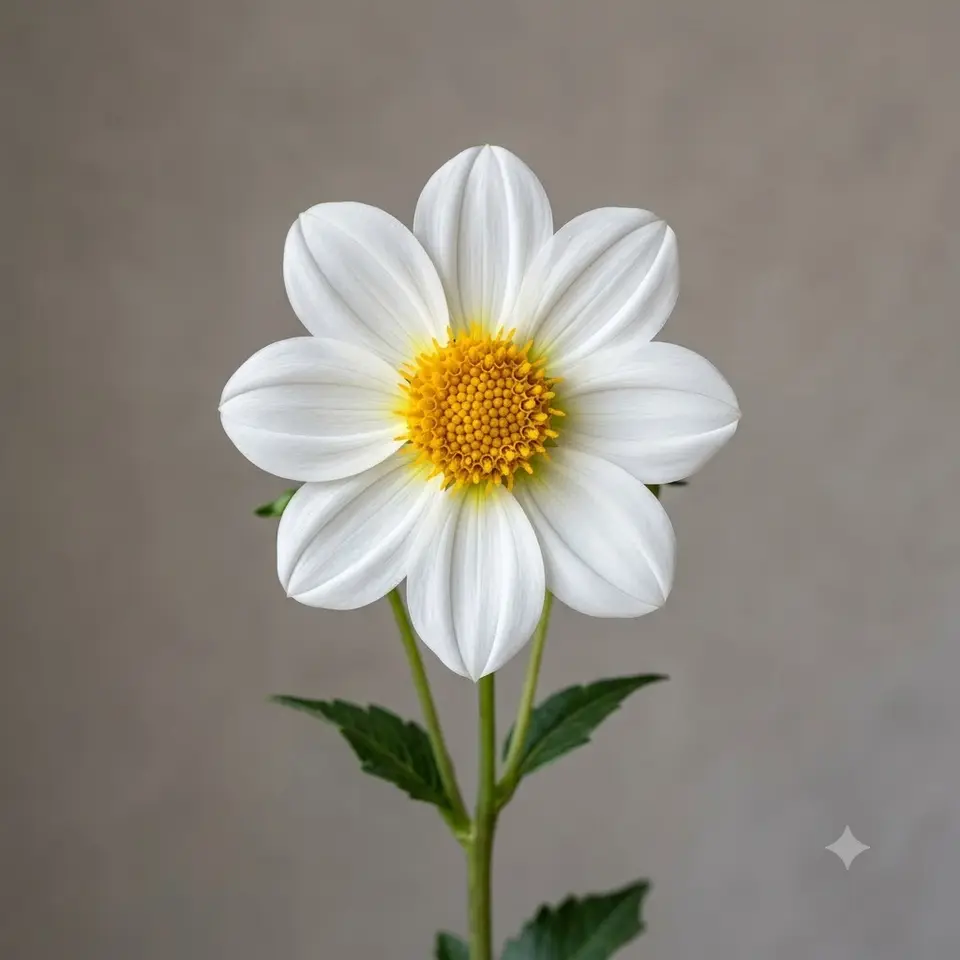 AI illustration
 Overview
Sneezy is a compact single-flowered dwarf bedding dahlia (Dahlia 'Sneezy') prized for its clean, open-faced white blooms rather than the dense pom or dinnerplate look. Each flower carries a single ring of flat white ray florets around a bright golden-yellow central disc, giving it an approachable, cottage-garden charm. Its low, tidy habit and long flowering season make it one of the easier dahlias to slot into a border, a bedding scheme or a container.
Origin & Background
The garden dahlia descends from wild Dahlia species native to the highland meadows and pine-oak slopes of Mexico and parts of Central America, where they grow from perennial tubers. Modern named cultivars like 'Sneezy' are the product of generations of European and North American breeding since the 19th century, selected from open-pollinated seedlings for flower form, colour and habit. 'Sneezy' belongs to the single-flowered dwarf bedding group (RHS class Sin/DwB), a compact class valued for simple, pollinator-friendly flowers on short, bushy plants.
Appearance
The blooms are small, roughly 6 to 8 cm across, with a single ring of pure white ray florets surrounding a golden-yellow central disc. Foliage is mid to dark green, divided and slightly toothed, on sturdy, well-branched stems. Plants stay dwarf and clump-forming, typically reaching about 30 to 45 cm tall with a spread of 30 to 40 cm. Flowering runs from mid-summer through to the first hard frost, with the bright open centres drawing in bees and hoverflies.
Why People Grow It - Qualities & Benefits
- Long bloom season from mid-summer until frost, with heavy repeat flowering when deadheaded.
- Open single flowers are highly attractive to bees, hoverflies and other pollinators.
- Low, compact, self-supporting habit suits bedding, small borders, patios and pots.
- Crisp white-and-gold blooms make cheerful, long-lasting cut flowers.
Care
Light: Full sun, ideally 6 or more hours a day, for the strongest stems and best flowering. Water: Regular, deep watering to keep the soil evenly moist in summer; avoid waterlogging, which rots tubers. Soil: Rich, fertile, well-drained soil improved with compost; slightly acidic to neutral pH around 6.5 to 7.0 is ideal. Hardiness: USDA zones 8 to 11 in the ground; in zones 7 and colder, lift and store tubers over winter or grow as an annual. Bloom or Season: Flowers from mid-summer to the first frost, often 8 to 12 weeks of continuous colour with regular deadheading. Extra: Pinch out the growing tip early to encourage bushier growth and more blooms, and feed with a high-potash fertiliser once buds form. Note that Sneezy Dahlia is mildly toxic to cats and dogs, causing mild gastrointestinal upset and possible mild skin irritation from the sap.
Planting & Propagation
Plant dormant tubers in spring after the last frost, setting them about 10 to 15 cm deep with the old stem base pointing up, spaced roughly 30 cm apart to suit its dwarf habit. In cold regions, start tubers in pots under cover a few weeks early and plant out once the soil warms. Propagate named cultivars like 'Sneezy' vegetatively to stay true to type: lift the tuber clumps in autumn, let them dry, then divide in spring so each piece has a section of crown with a visible growth "eye." Basal cuttings taken from sprouting tubers in early spring are another reliable method. Seed will not come true and is not used for named cultivars.
Common Problems & Pests
- Slugs and snails shred young shoots and can strip emerging plants overnight.
- Aphids, earwigs and thrips distort buds and foliage; capsid bugs can pit petals.
- Powdery mildew and tuber rot appear in overcrowded, damp or poorly drained conditions.
Toxicity & Safety
Dahlias, including 'Sneezy', are considered mildly toxic to cats and dogs. Chewing or eating the leaves, stems or tubers can cause mild gastrointestinal upset such as drooling, vomiting or diarrhoea, and contact with the sap may cause mild skin or mouth irritation in sensitive animals and people. Reactions are generally mild and short-lived, but it is sensible to wear gloves when dividing tubers and to discourage pets from nibbling the plant. Contact a vet if a pet eats a large amount or shows persistent symptoms.
Pros & Cons
Pros
- Low and self-supporting, so no staking is needed.
- Exceptionally long flowering season with strong pollinator appeal.
Cons
- Tubers are frost-tender and usually need lifting and storing in cold climates.
- Prone to slug, snail and aphid damage without regular attention.
Best Suited For
- Gardeners wanting a low, tidy dahlia for bedding, borders, patios or containers.
- Wildlife and cut-flower growers who value open, pollinator-friendly blooms.
FAQ
Do I need to stake Sneezy Dahlia?
No. At around 30 to 45 cm with a bushy, well-branched dwarf habit, it supports itself easily and needs no staking, even in most exposed spots.
How do I overwinter it in a cold climate?
After the first frost blackens the foliage, cut the stems back, lift the tubers, brush off soil and let them dry. Store them in a cool, frost-free, dry place in trays of dry compost or sawdust, then replant in spring once frost has passed.
Gear for growing sneezy dahlia
Links go to Amazon or a partner store (such as Adagio Teas) and may earn us a commission at no extra cost to you. As an Amazon Associate we earn from qualifying purchases. We link gear types, not sponsors' picks: you choose the exact product.