Snow Queen Oakleaf Hydrangea
🗓️ Last reviewed: September 2026
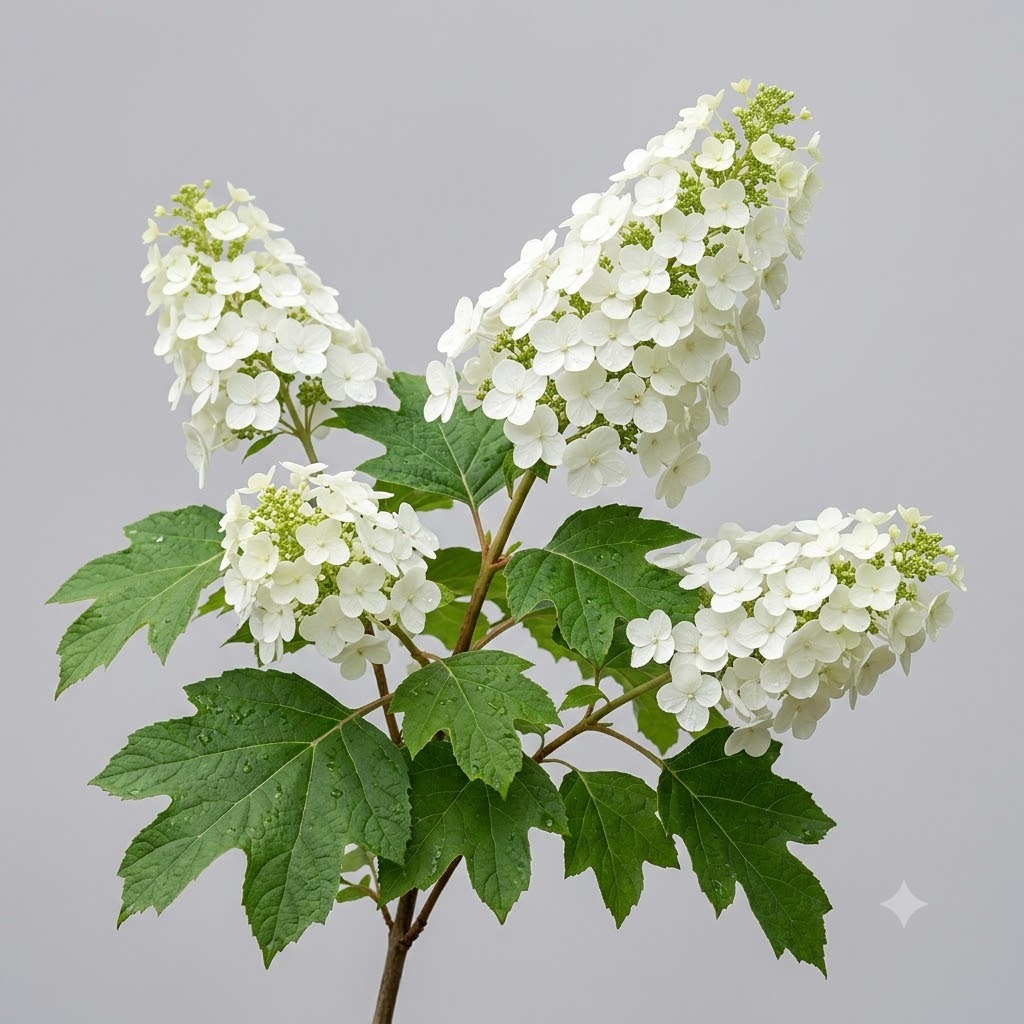
Hydrangea quercifolia 'Snow Queen' is one of the most reliable oakleaf hydrangeas for a mixed border or woodland edge. Introduced by Princeton Nurseries (selected by breeder William Flemer III), it earns its place through four-season interest rather than a single flush of bloom.
What it looks like
- Size: A rounded, multi-stemmed deciduous shrub reaching roughly 1.8 m tall and 1.8 m wide at maturity, so give it room rather than planting it tight against a path.
- Flowers: Dense, upright conical panicles about 15 to 20 cm long open creamy white in early-to-mid summer, then age to a soft dusty pink and finally tan. Because the florets are held more erect than on the species, the panicles stay upright rather than flopping after rain.
- Foliage: Large, deeply lobed leaves shaped like oak leaves, mid-green through the growing season, colouring to burgundy, red and bronze in autumn.
- Bark: Older stems develop a peeling, cinnamon-brown bark that adds winter texture once the leaves drop.
Growing it
Plant in full sun to part shade. In hotter, drier regions some afternoon shade keeps the foliage from scorching, while cooler-climate gardens will get the strongest flowering and best autumn colour in more sun. It wants moist but well-drained soil rich in organic matter; it dislikes soggy, waterlogged ground and will sulk in heavy clay that stays wet.
Water regularly through the first two seasons while the root system establishes, then during prolonged dry spells. A spring mulch of leaf mould or compost conserves moisture and feeds the soil.
Hardiness: USDA zones 5 to 9.
Pruning
'Snow Queen' blooms on old wood (the previous season's growth), so time any pruning for immediately after flowering. Cutting it back in late winter or spring removes the flower buds and costs you that year's display. In practice it needs little pruning beyond removing dead, damaged or crossing stems and shaping lightly once the flowers fade.
Care difficulty
An excellent choice for beginners. Once sited correctly with decent soil moisture and drainage, it is low-maintenance, largely trouble-free, and tolerant of a range of light conditions.
Safety note
All parts of hydrangea are toxic to cats, dogs and horses. The leaves and flowers contain a cyanogenic glycoside, and ingestion can cause vomiting, diarrhoea and lethargy. Sweep up fallen blooms and pruning trimmings and keep them out of reach of pets and grazing animals.