Star-of-Bethlehem
Ornithogalums split into two stories: the garden star-of-Bethlehem - white satin stars that naturalize (assertively: siting required), and the florist's chincherinchee, whose cut spires last a legendary MONTH in water.
Last reviewed: October 2026
 AI illustration
 Overview
Ornithogalums split into two stories: the garden star-of-Bethlehem - white satin stars that naturalize (assertively: siting required), and the florist's chincherinchee, whose cut spires last a legendary MONTH in water. White, easy, and worth knowing both faces of. (Ornithogalum umbellatum / thyrsoides.)
Origin & Natural Habitat
umbellatum: Europe/Mediterranean meadows; thyrsoides (chincherinchee): South African Cape - tender but immortal in the vase.
Appearance
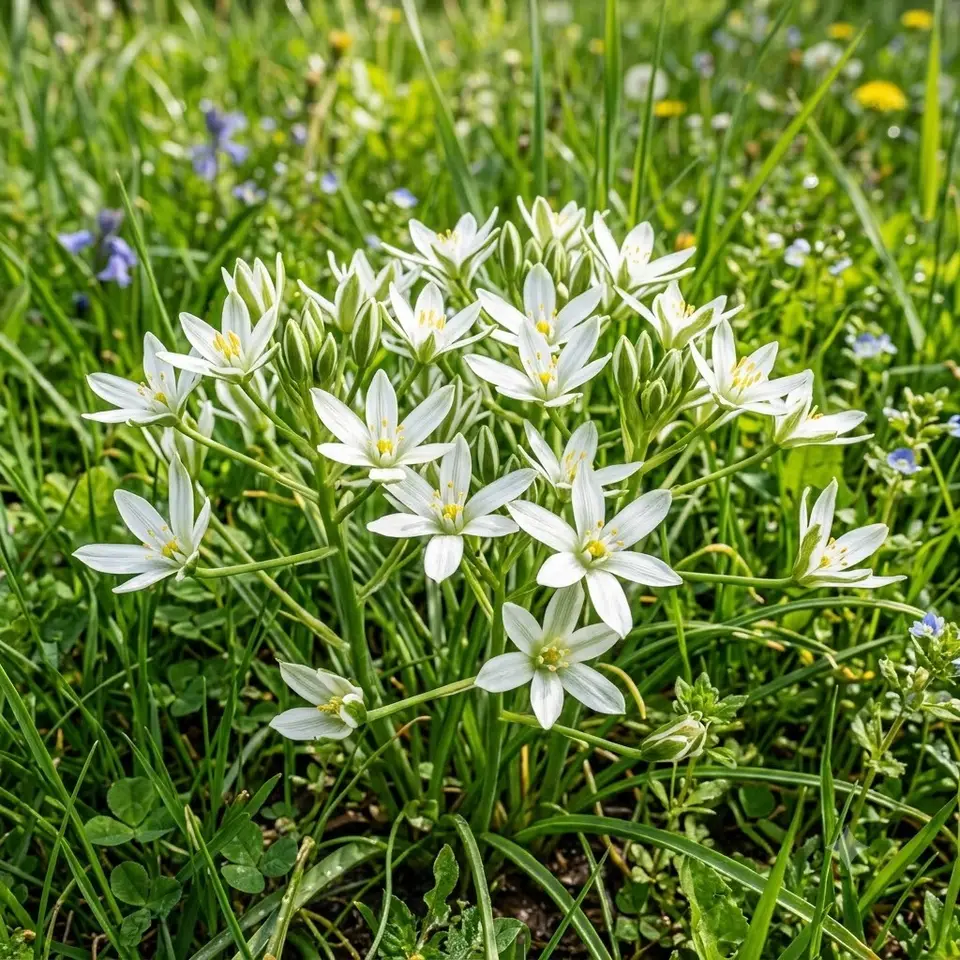
umbellatum: 15-25 cm clusters of green-striped satin stars opening to noon sun, May. thyrsoides: 30-50 cm dense white bloom-cones, early summer, florist-grade.
Why People Grow It - Qualities & Benefits
- Porcelain-white stars, zero effort
- Chincherinchee = the longest-lasting cut flower, full stop
- Shade-tolerant naturalizing (umbellatum)
- Cheap in quantity
Care
Light: Sun to half-shade (umbellatum); full sun (thyrsoides).
Water: Ordinary; both rest dry in summer.
Soil: Any drained.
Planting: Fall 8 cm deep. umbellatum: WHERE CONTAINED (mowed grass, tree circles, bounded beds) - it colonizes with enthusiasm bordering on cheek, and is flagged invasive in parts of North America; check regionally, never dump bulbs in wild margins. thyrsoides: zones 8-10 in ground, or spring-planted/lifted like glads elsewhere.
Hardiness: umbellatum zones 4-9; thyrsoides 8-10 (or annual culture).
After flowering: umbellatum self-manages (that's the caution); thyrsoides lifts and stores dry in cold zones.
Propagation
Bulb offsets - abundantly (umbellatum needs no help; that's the theme).
Common Problems & Pests
- umbellatum's vigor where unwanted (site as advised: regional invasive lists!)
- Blooms shut on dull days
- Little else
Toxicity & Safety
Toxic if ingested (cardenolides - bulbs especially) to pets and grazers; another reason for tidy contained siting. Cut chincherinchee stems are fine in vases but keep the water from pets.
Pros & Cons
Pros
- Gleaming white for pennies
- The month-long vase flower
- Grows anywhere (the caution restated as praise)
Cons
- umbellatum oversteps unmanaged
- Noon-only opening habit
- thyrsoides tender
Best Suited For
- Contained naturalizing (tree rings, mowed edges)
- Cutting rows (thyrsoides especially)
- White-garden fillers
- Long-vase-life devotees
FAQ
A cut flower that lasts a MONTH - really?
Chincherinchee's fame is earned: buds open sequentially up the cone for 3-4+ weeks in plain water - South Africa historically shipped them to Europe by SEA, blooming on arrival.
Is the garden species invasive?
In parts of North America, yes-listed - it colonizes grass and beds durably. In its lane (contained, mowed, bounded) it's charming; check your region's list and site like you mean it.
Gear for growing star-of-bethlehem
Links go to Amazon or a partner store (such as Adagio Teas) and may earn us a commission at no extra cost to you. As an Amazon Associate we earn from qualifying purchases. We link gear types, not sponsors' picks: you choose the exact product.