South Seas Daylily
South Seas is a warm coral-tangerine daylily prized for its clean, ruffled blooms and a long, generous flowering season that includes reliable rebloom in many gardens (Hemerocallis 'South Seas').
Last reviewed: October 2026
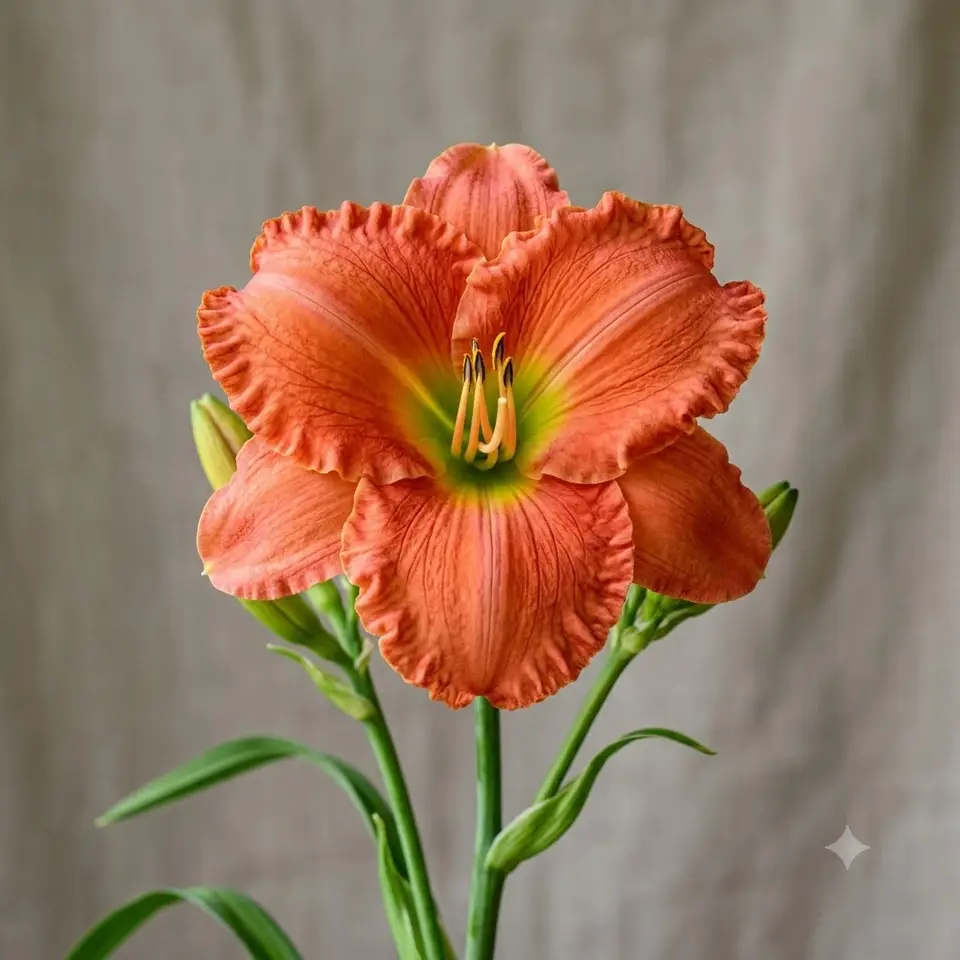 AI illustration
 Overview
South Seas is a warm coral-tangerine daylily prized for its clean, ruffled blooms and a long, generous flowering season that includes reliable rebloom in many gardens (Hemerocallis 'South Seas'). What sets it apart is the way the melon-coral petals glow with a subtle blend of pink and orange over a small green throat, giving each flower a tropical, sunset-like warmth. It is a tough, dependable tetraploid daylily that performs well for beginners while still earning respect from serious collectors.
Origin & Background
The genus Hemerocallis is native to eastern Asia, with wild species ranging across China, Korea, and Japan, where daylilies grow in meadows, along woodland edges, and on riverbanks. 'South Seas' itself is a modern garden hybrid raised by daylily breeder Steve Moldovan and registered in 1993. It went on to become one of the most celebrated coral daylilies of its era, earning an Honorable Mention from the American Hemerocallis Society in 1998.
Appearance
The flowers are a bright melon to coral-tangerine blend, warmed by pink and orange tones and centred on a small green throat, with lightly ruffled, rounded petal edges. Individual blooms are large, roughly 13 to 14 cm across, held on sturdy scapes that reach about 66 to 70 cm tall, with the clump spreading to a similar width over time. The arching, strap-shaped foliage is fresh green and dormant, dying back in winter and returning each spring. Peak flowering comes in midsummer, and because the plant is an extended bloomer that often reblooms, the coral show can carry on for many weeks.
Why People Grow It - Qualities & Benefits
- Long flowering season with extended-bloom flowers and frequent rebloom
- Warm coral-tangerine colour that reads well from a distance and mixes easily with other perennials
- Extremely tough and low-maintenance once established, tolerating heat and a range of soils
- Award-winning garden performance and vigour that make it forgiving for new gardeners
Care
Light: Full sun is best (at least 6 hours); light afternoon shade in very hot climates keeps the coral colour from fading but too much shade reduces bloom. Water: Average, even moisture during the growing and flowering season; established clumps are quite drought tolerant. Soil: Adaptable to most soils but happiest in fertile, well-drained loam with a slightly acidic to neutral pH (about 6.0 to 7.0). Hardiness: USDA zones 3 to 9. Bloom or Season: Midseason bloomer, roughly early to midsummer, with extended-bloom flowers and reliable rebloom stretching the display over many weeks. Extra: As an extended bloomer, each flower stays open longer than a standard daylily, so deadheading spent blooms keeps the clump looking tidy. Important pet-safety note: daylilies (Hemerocallis) are extremely dangerous to cats and even small amounts can cause fatal kidney failure, so keep cats away and contact a vet immediately if a cat eats any part of the plant.
Planting & Propagation
Plant in spring or early autumn, setting the crown about 2.5 cm below the soil surface in a sunny, well-drained spot, spaced 45 to 60 cm apart to allow the clump to fill out. Water in well and keep evenly moist until established. The easiest way to propagate is by division: lift a mature clump every 3 to 5 years in early spring or after flowering, separate it into fans each with roots and foliage, and replant promptly. Division also rejuvenates older clumps and keeps bloom vigorous.
Common Problems & Pests
- Daylily rust and leaf streak, which cause discoloured or spotted foliage in humid conditions
- Aphids and thrips, which can distort buds and new growth
- Crown rot in soggy, poorly drained soil, especially over winter
Toxicity & Safety
Daylilies are a serious, potentially fatal hazard to cats. Ingesting even a small amount of any part of the plant, including leaves, flowers, and the water from a vase, can trigger acute kidney failure in cats, and this can be deadly without fast treatment. If you know or suspect a cat has eaten any part of a daylily, treat it as an emergency and contact a veterinarian or animal poison line immediately, as prompt care greatly improves the outcome. For dogs the risk is much milder, usually limited to mild stomach upset such as drooling or vomiting rather than kidney damage, but it is still sensible to discourage chewing. Because of the severe feline risk, cat owners should think carefully about where they plant it and keep cut stems out of reach indoors. The ASPCA lists daylilies (Hemerocallis) as toxic to cats. For dogs, the ASPCA lists them as non-toxic.
Pros & Cons
Pros
- Long, extended-bloom flowering with frequent rebloom
- Hardy, adaptable, and beginner-friendly across a wide climate range
Cons
- Seriously toxic to cats, so a poor choice for households with outdoor cats
- Foliage can look tired after bloom and needs occasional tidying and division
Best Suited For
- Sunny perennial borders, cottage gardens, and mass plantings wanting warm coral colour
- Beginner and low-maintenance gardeners in cat-free settings who want reliable summer bloom
FAQ
Does South Seas daylily really rebloom?
Yes. It is an extended-bloomer that commonly produces a second flush later in the season, especially in warm climates with good moisture and full sun, which is a big part of its popularity.
How often should I divide it?
Every 3 to 5 years is ideal. When flowering slows or the clump becomes crowded, lift and divide it in early spring or just after bloom to restore vigour and gain more plants.
Gear for growing south seas daylily
Links go to Amazon or a partner store (such as Adagio Teas) and may earn us a commission at no extra cost to you. As an Amazon Associate we earn from qualifying purchases. We link gear types, not sponsors' picks: you choose the exact product.