Stella de Oro Daylily
Stella de Oro is a compact, golden-yellow reblooming daylily that flowers for months rather than a single flush (Hemerocallis 'Stella de Oro').
Last reviewed: October 2026
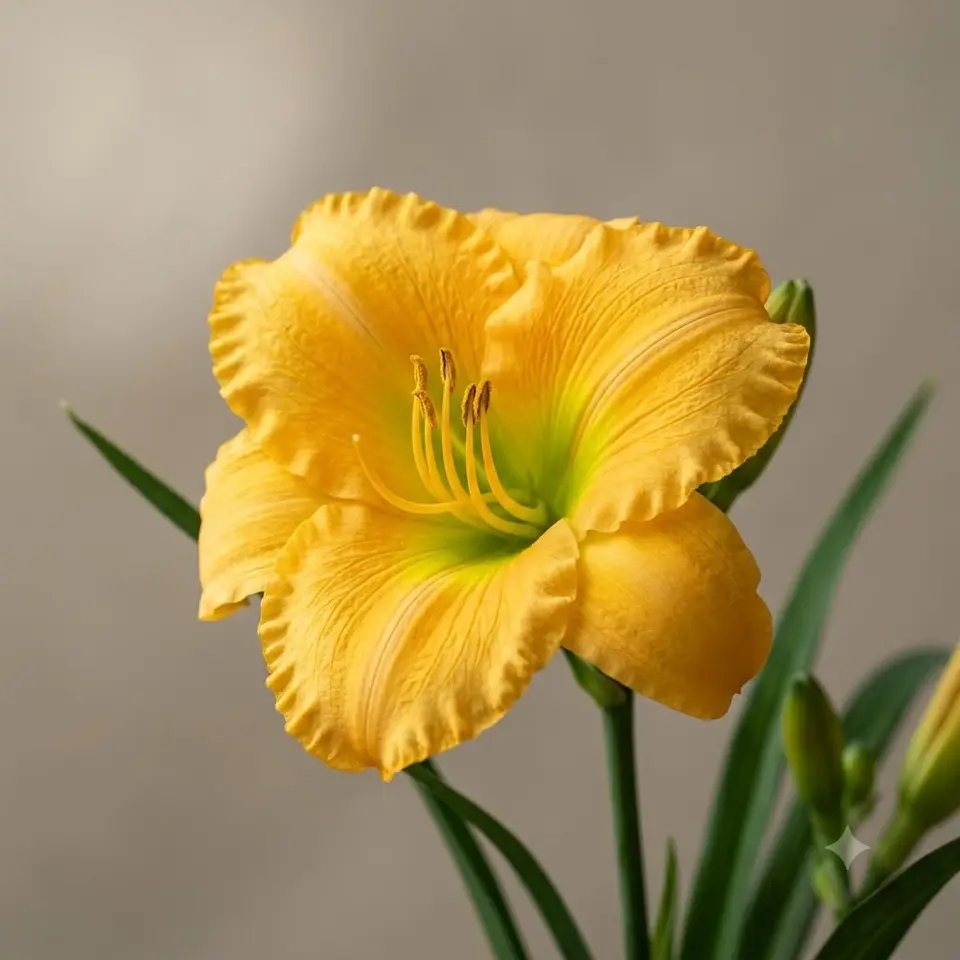 AI illustration
 Overview
Stella de Oro is a compact, golden-yellow reblooming daylily that flowers for months rather than a single flush (Hemerocallis 'Stella de Oro'). What sets it apart is the combination of a small, tidy clump size and an exceptionally long bloom season, which is why it shows up in so many low-maintenance beds and commercial plantings. It is tough, adaptable, and one of the easiest perennials a beginner can grow.
Origin & Background
The daylily genus Hemerocallis is native to eastern Asia, including China, Korea, and Japan, where wild species grow in meadows, forest margins, and along waterways. 'Stella de Oro' itself is a modern hybrid, registered by amateur breeder Walter Jablonski in 1975 and later awarded the Stout Silver Medal, the highest honour in daylily breeding, in 1985. Its success helped launch the whole category of dwarf, repeat-blooming daylilies that followed.
Appearance
This is a dwarf, clump-forming daylily with narrow, arching, grass-like green foliage. Mature clumps reach roughly 25 to 30 cm tall in leaf, with flower scapes rising slightly above the foliage, and spread about 30 to 45 cm wide. The flowers are golden-yellow, gently ruffled, trumpet-shaped, and around 6 to 8 cm across, each lasting a single day but produced in steady succession. Bloom begins in late spring to early summer and, with deadheading, continues in waves through summer into early autumn. The foliage is deciduous, dying back to the ground over winter and re-emerging in spring.
Why People Grow It - Qualities & Benefits
- Exceptionally long bloom season, flowering from late spring into autumn rather than a brief single flush
- Compact, tidy size that fits front-of-border, edging, and small-space plantings
- Extremely tough and forgiving - tolerant of heat, drought once established, and poor soils
- Reliable, cheerful golden colour that pairs easily with almost any planting scheme
Care
Light: Full sun for best flowering; tolerates light or part shade but blooms more sparsely with fewer than about six hours of direct sun. Water: Moderate; keep evenly moist in the first season, then water during dry spells - established clumps are quite drought tolerant. Soil: Adaptable to most soils; prefers fertile, well-drained ground with a slightly acidic to neutral pH (about 6.0 to 7.0). Hardiness: USDA zones 3 to 9. Bloom or Season: Golden-yellow flowers from late spring or early summer, reblooming in waves through summer into early autumn; each bloom lasts one day. Extra: Deadheading spent blooms and removing old scapes encourages the strongest rebloom - this is the key to its long season. Pet-safety note: daylilies are dangerous to cats and can cause acute, potentially fatal kidney failure even from small amounts, so keep cats away and contact a vet immediately if one ingests any part.
Planting & Propagation
Plant in spring or early autumn, setting the crown about 2.5 cm below the soil surface and spacing clumps 30 to 45 cm apart. Water in well and mulch lightly to conserve moisture. The easiest way to propagate is by division: lift an established clump every three to four years in early spring or after flowering, split it into fan-shaped sections each with roots and foliage, and replant promptly. Division also keeps clumps vigorous and free-flowering.
Common Problems & Pests
- Daylily rust and leaf streak can spot or discolour the foliage in humid conditions - remove affected leaves and improve airflow
- Aphids and thrips may distort new growth and buds; hose off or treat if populations build
- Crown rot can occur in soggy, poorly drained soil, so avoid waterlogged sites
Toxicity & Safety
Daylilies (Hemerocallis) are a serious hazard to cats. Ingesting even a small amount of any part - flowers, leaves, pollen, or water from a vase - can cause acute kidney failure that may be fatal if untreated. Signs can include vomiting, lethargy, and loss of appetite, and they can progress quickly. If a cat chews or eats any part of the plant, treat it as an emergency and contact a vet immediately; prompt treatment greatly improves the outcome. In dogs, daylilies are generally considered much milder, typically causing no more than mild stomach upset, though ingestion is still best avoided. The ASPCA lists daylilies (Hemerocallis) as toxic to cats. For dogs, the ASPCA lists them as non-toxic.
Pros & Cons
Pros
- One of the longest-blooming, most reliable perennials for beginners
- Compact and low-maintenance, thriving in tough spots with little fuss
Cons
- Individual flowers last only a day, so it needs regular deadheading to look its best
- Genuinely dangerous to cats, making it a poor choice for households with free-roaming cats
Best Suited For
- Beginner gardeners wanting long-season colour with minimal effort
- Front-of-border edging, mass plantings, and low-maintenance or drought-tolerant beds
FAQ
Why has my Stella de Oro stopped blooming?
The most common causes are too much shade, an overcrowded clump that needs dividing, or a lack of deadheading. Give it at least six hours of sun, divide congested clumps every few years, and remove spent flowers to keep the rebloom going.
Does Stella de Oro really bloom all summer?
It reblooms in repeated waves rather than flowering non-stop. With full sun and regular deadheading you can expect colour from late spring into early autumn, though there are usually short gaps between flushes.
Gear for growing stella de oro daylily
Links go to Amazon or a partner store (such as Adagio Teas) and may earn us a commission at no extra cost to you. As an Amazon Associate we earn from qualifying purchases. We link gear types, not sponsors' picks: you choose the exact product.