Sum and Substance Hosta
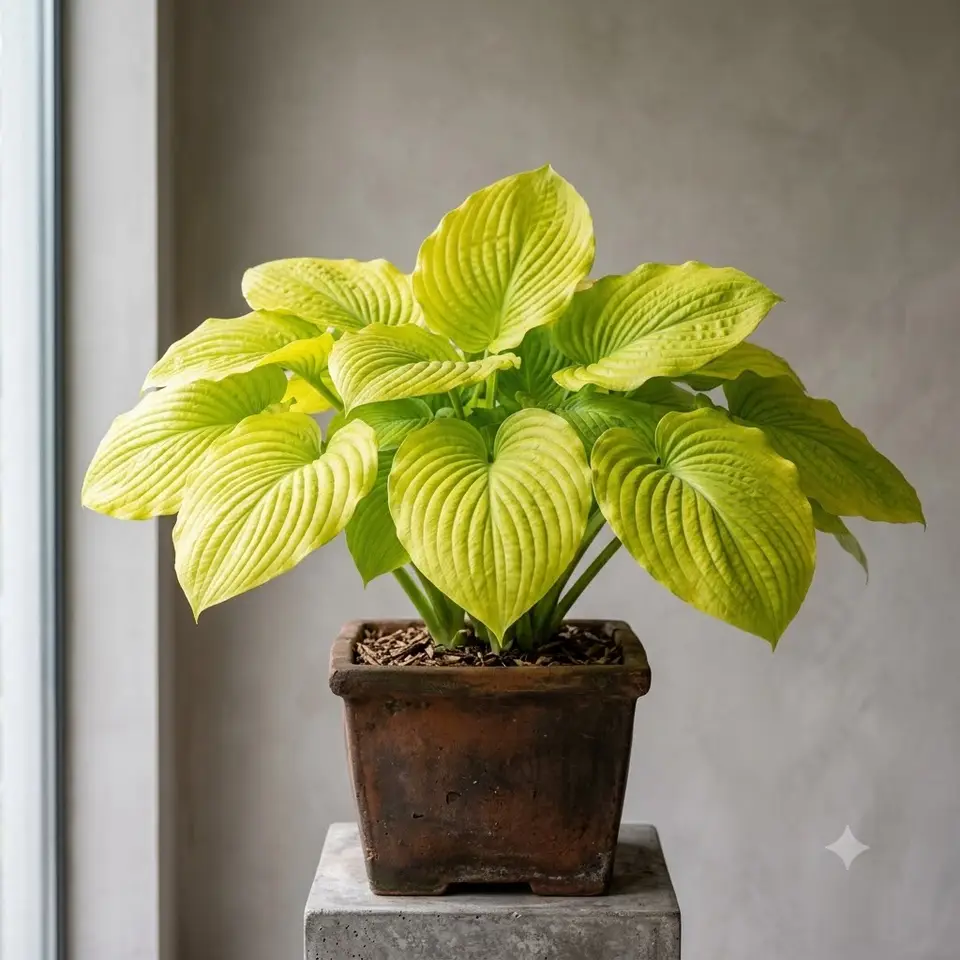
Sum and Substance is one of the largest and most recognisable gold hostas ever introduced, prized for enormous, thick, chartreuse-to-gold leaves that can span more than 30 cm across (Hosta 'Sum and Substance').
Last reviewed: September 2026
 AI illustration
 Overview
Sum and Substance is one of the largest and most recognisable gold hostas ever introduced, prized for enormous, thick, chartreuse-to-gold leaves that can span more than 30 cm across (Hosta 'Sum and Substance'). Its sheer scale and unusually heavy leaf substance set it apart from the many blue and green hostas, and that same thickness gives it better slug resistance than most of its relatives. A single mature clump can anchor an entire shade border on its own.
Origin & Background
The genus Hosta is native to East Asia, chiefly Japan, Korea and parts of eastern China, where the wild species grow in woodland margins, stream banks and shaded rocky slopes. 'Sum and Substance' is a garden cultivar raised by the American hosta breeder Paul Aden and introduced around 1980. It became a landmark variety, earning the American Hosta Growers Association Hosta of the Year award in 2004, and is still one of the most widely grown giant hostas.
Appearance
The leaves are the whole show: large, broadly heart-shaped, deeply veined and notably thick, with a slightly cupped and puckered surface as the clump matures. Colour ranges from soft chartreuse in shade to a rich golden-yellow where the plant receives some morning sun, brightening through the season. A mature plant forms a mounded clump roughly 60 to 90 cm tall and 1.2 to 1.8 m wide, making it a true giant. In mid to late summer it sends up tall scapes of pale lavender to near-white funnel-shaped flowers held above the foliage. Being a herbaceous perennial, it dies back to the ground in autumn, often after the leaves fade to a butter-yellow, and re-emerges in spring.
Why People Grow It - Qualities & Benefits
- Dramatic scale and glowing gold foliage that lights up shaded corners
- Thicker leaf substance than most hostas, giving noticeably better slug resistance
- Tolerates more sun than typical hostas, deepening to gold rather than scorching easily
- Long-lived, low-maintenance clump that improves and enlarges year after year
Care
Light: Part shade to dappled shade is ideal; it takes more sun than most hostas and colours most golden with a few hours of gentle morning light, but harsh afternoon sun can scorch the margins. Water: Prefers consistently moist, evenly watered soil, especially while establishing and during dry spells; such a large plant is thirsty in heat. Soil: Rich, humus-heavy, well-drained soil that stays moist; slightly acidic to neutral pH (about 6.0 to 7.0) suits it best. Hardiness: USDA zones 3 to 9. Bloom or Season: Grown mainly for foliage from spring through autumn, with pale lavender flowers in mid to late summer and a soft yellow autumn fade before dormancy. Extra: Give it room from the start - crowding a plant this size ruins the effect, and it can take three to five years to reach full stature. Toxic to cats and dogs. Hostas contain saponins; ingestion causes vomiting, diarrhoea and depression.
Planting & Propagation
Plant in spring or early autumn, digging a wide hole and setting the crown level with the soil surface, then spacing plants at least 90 cm to 1.2 m apart to allow for the mature spread. Water in well and mulch to conserve moisture and feed the soil. Propagation is easiest by division in early spring as the leaf spikes ("pips") push through: lift the clump and cut or tease it into sections, each with several growing points and roots, then replant immediately at the same depth and keep well watered.
Common Problems & Pests
- Slugs and snails, though the thick leaves resist damage better than thinner hostas
- Leaf scorch or bleaching from too much direct afternoon sun or dry soil
- Deer and rabbits, which browse hostas readily and can strip a clump
Toxicity & Safety
Sum and Substance, like all hostas, is toxic to cats and dogs. The plants contain saponins, and ingestion of leaves or other parts causes vomiting, diarrhoea and depression (lethargy). Keep pets from chewing the foliage, and contact a veterinarian if a pet eats part of the plant and shows these signs.
Pros & Cons
Pros
- Bold, architectural scale with luminous gold foliage
- More slug and sun tolerant than most hostas
Cons
- Needs a lot of space and takes years to reach full size
- Toxic to cats and dogs, and attractive to deer and rabbits
Best Suited For
- Shade and woodland gardens needing a large focal-point plant
- Gardeners who want a low-effort, long-lived perennial with big visual impact
FAQ
How big does Sum and Substance really get?
A mature clump typically reaches 60 to 90 cm tall and spreads 1.2 to 1.8 m wide, making it one of the largest commonly grown hostas. Give it several years and plenty of room to reach that size.
Can it grow in more sun than other hostas?
Yes. It tolerates more light than most hostas and actually turns a richer gold with some morning sun, but it still needs protection from hot afternoon sun and consistently moist soil to avoid leaf scorch.
Gear for growing sum and substance hosta
Links go to Amazon or a partner store (such as Adagio Teas) and may earn us a commission at no extra cost to you. As an Amazon Associate we earn from qualifying purchases. We link gear types, not sponsors' picks: you choose the exact product.