Sylvia Dahlia
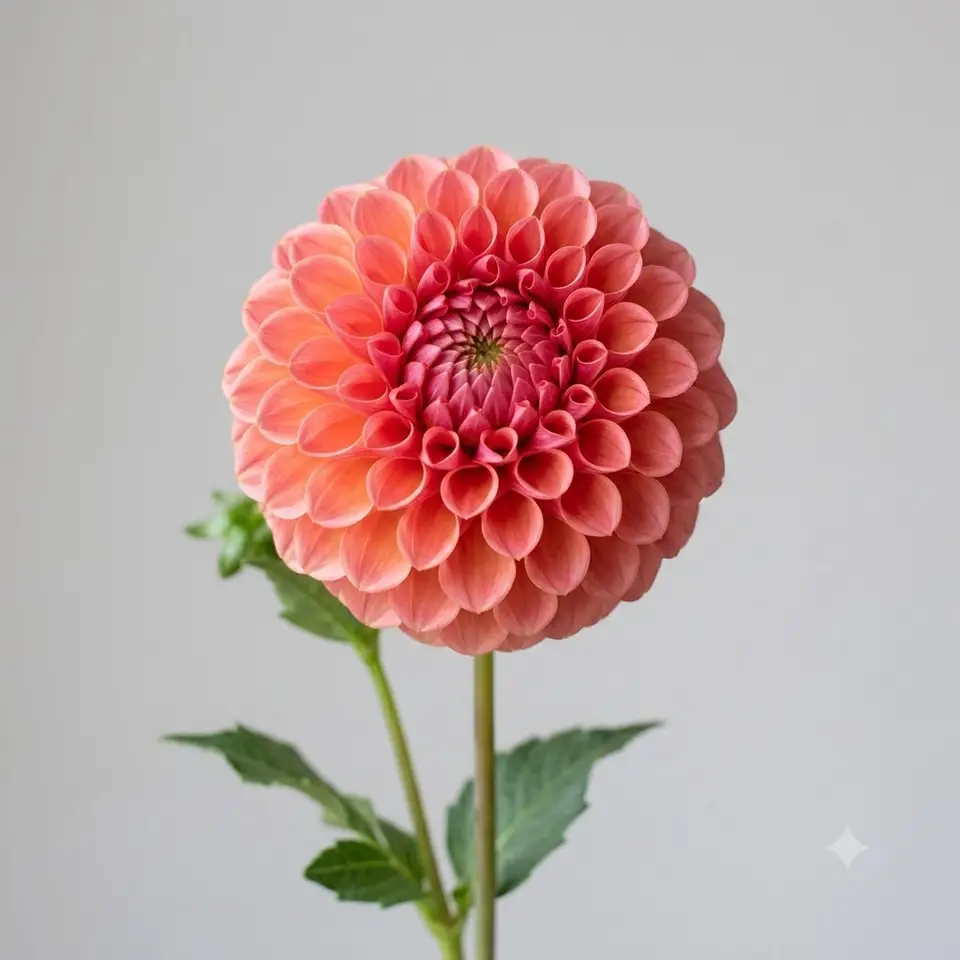
Sylvia Dahlia is a ball-type dahlia prized for its neatly rounded, warm apricot to peachy-salmon blooms held on strong stems above the foliage (Dahlia 'Sylvia').
Last reviewed: July 2026
 AI illustration
 Overview
Sylvia Dahlia is a ball-type dahlia prized for its neatly rounded, warm apricot to peachy-salmon blooms held on strong stems above the foliage (Dahlia 'Sylvia'). The tightly quilled, spiralling petals give each flower an almost geometric, honeycombed look that reads clean and formal in the border and holds up superbly as a cut flower. It is a mid-height, free-flowering cultivar that keeps producing from midsummer until the first hard frost.
Origin & Background
The garden dahlia is not a wild species but a group of complex hybrids descended from wild dahlias native to the highlands of Mexico and Central America, where the genus grows in cool, seasonally moist mountain climates. Named cultivars such as 'Sylvia' arose through generations of controlled crossing and selection by dahlia breeders, chosen and stabilised for its uniform ball form and soft apricot colouring, then bulked up vegetatively for the trade. Like nearly all show and garden dahlias, it traces back to the same Mexican ancestry that reached European gardens in the late 1700s.
Appearance
Sylvia produces fully double, ball-shaped flowers roughly 7 to 10 cm across, in a warm apricot-to-peach tone that can flush toward soft salmon or coral as the season cools. The petals are rolled into short tubes and arranged in tidy spirals, giving the bloom a rounded, textured surface. The plant carries deep green, divided (pinnate) leaves on branching stems and typically reaches about 90 to 110 cm tall with a spread of 45 to 60 cm. Flowering begins in midsummer and continues in flushes right up to frost, with the plant dying back to the tuber once cold arrives.
Why People Grow It - Qualities & Benefits
- Long bloom season from midsummer through to the first frost, giving months of colour
- Ball form and strong stems make it an excellent, long-lasting cut flower
- Warm apricot-peach colouring blends easily with both hot and pastel planting schemes
- Attracts bees and other pollinators when blooms are past their tightest stage
Care
Light: Full sun, ideally at least 6 to 8 hours a day, for the strongest stems and most abundant flowering. Water: Moderate and consistent; water deeply once the plants are established and growing, avoiding waterlogged soil that can rot the tubers. Soil: Rich, fertile, well-drained soil with plenty of organic matter; slightly acidic to neutral pH around 6.5 to 7.0 is ideal. Hardiness: USDA zones 8 to 11 in the ground; in zones 3 to 7 the tubers are lifted and stored over winter. Bloom or Season: Blooms from mid to late summer through autumn, roughly July until the first frost, in repeated flushes. Extra: Deadhead spent flowers regularly and stake the stems early, as ball dahlias can flop under the weight of their blooms. Sylvia Dahlia is mildly toxic to cats and dogs, so site it where pets are unlikely to chew the foliage or tubers.
Planting & Propagation
Plant tubers in spring once the soil has warmed and the risk of frost has passed, setting them about 10 to 15 cm deep with the growing eye facing up, and space plants 45 to 60 cm apart. In cold zones, lift the tubers after the first frost blackens the foliage, cure and store them dry and frost-free over winter, then replant in spring. Propagation of a named cultivar like Sylvia is done vegetatively to stay true to type - either by carefully dividing the tuber clumps so each division has an eye, or by taking basal cuttings from sprouting tubers in late winter; seed will not come true.
Common Problems & Pests
- Slugs and snails shredding young shoots, plus aphids and earwigs on buds and foliage
- Powdery mildew and grey mould (botrytis) in humid, crowded, or poorly ventilated conditions
- Tuber rot from waterlogged soil, and frost damage or storage rot on tubers left in cold or damp
Toxicity & Safety
Sylvia Dahlia is considered mildly toxic to cats and dogs. If chewed or eaten, the plant can cause mild gastrointestinal upset with signs such as drooling, vomiting, or loss of appetite, and the sap may cause mild skin irritation on contact. Reactions are generally mild rather than serious, but it is sensible to keep pets from grazing the plant and to contact a vet if a pet shows persistent or worrying symptoms.
Pros & Cons
Pros
- Exceptionally long flowering season with a high volume of blooms
- Neat ball form and sturdy stems that excel as cut flowers
Cons
- Tubers must be lifted and stored over winter in colder zones
- Needs staking, regular deadheading, and slug protection to look its best
Best Suited For
- Cut-flower and cottage-style gardeners who want repeat colour into autumn
- Sunny mixed borders and dedicated dahlia beds in warm or seasonally lifted plantings
FAQ
Do I need to dig up Sylvia Dahlia for winter?
In USDA zones 8 to 11 the tubers can usually stay in the ground with a protective mulch. In zones 3 to 7, lift the tubers after the first frost, dry and store them somewhere cool and frost-free, then replant in spring.
Why are my Sylvia blooms flopping over?
Ball dahlias carry heavy, dense flower heads, so the stems can bend or snap under the weight. Stake the plants early in the season and tie in the stems as they grow, and make sure they get full sun so growth stays sturdy rather than soft.
Gear for growing sylvia dahlia
Links go to Amazon or a partner store (such as Adagio Teas) and may earn us a commission at no extra cost to you. As an Amazon Associate we earn from qualifying purchases. We link gear types, not sponsors' picks: you choose the exact product.