Thomas Edison Dahlia
Thomas Edison is a classic dinnerplate decorative dahlia (Dahlia 'Thomas Edison') prized for its enormous, fully double blooms in a deep, saturated royal purple that few other dahlias match.
Last reviewed: September 2026
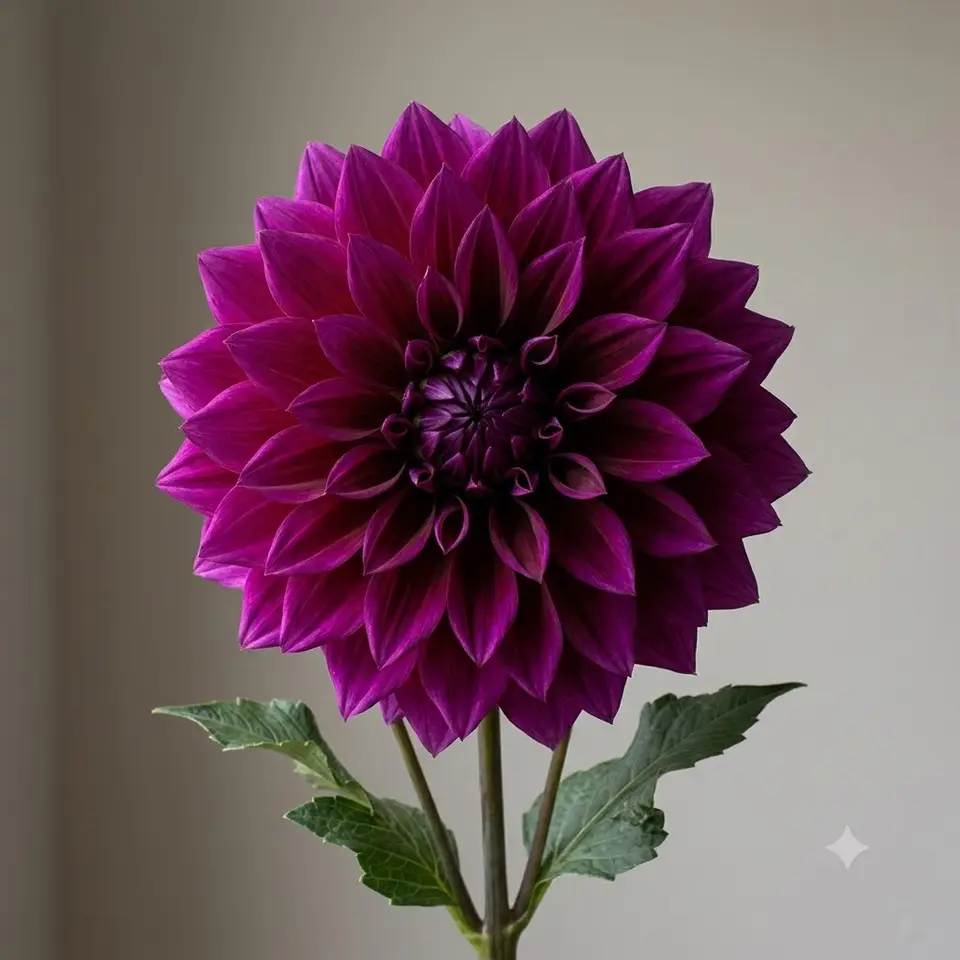 AI illustration
 Overview
Thomas Edison is a classic dinnerplate decorative dahlia (Dahlia 'Thomas Edison') prized for its enormous, fully double blooms in a deep, saturated royal purple that few other dahlias match. Introduced in the early 20th century, it remains one of the most recognisable dark-purple cultivars, valued as much for cut flowers as for the border. Its size and rich colour make it a genuine focal-point plant rather than a filler.
Origin & Background
The genus Dahlia is native to the highlands of Mexico and parts of Central America, where wild species grow as tuberous perennials. Named garden dahlias like Thomas Edison are complex hybrids bred over generations rather than wild forms. 'Thomas Edison' is an American-raised decorative cultivar from around the 1920s to 1930s, named for the inventor, and it has stayed in commerce for decades because of its dependable colour and vigour.
Appearance
The blooms are large dinnerplate-type flowers, typically 15 to 20 cm across, fully double with broad, slightly incurved petals forming a rounded head. Colour is a deep velvety purple, sometimes reading as royal violet or magenta-purple depending on light and soil. Foliage is mid to dark green, coarse and pinnate on sturdy stems. Mature plants reach about 100 to 120 cm tall with a spread of roughly 45 to 60 cm. As a warm-season plant it flowers from midsummer until the first hard frost, after which the top growth blackens and dies back.
Why People Grow It - Qualities & Benefits
- Dramatic dinnerplate blooms in a rare, deep true-purple that anchors a border or bouquet
- Long flowering run from midsummer to frost, especially with regular deadheading
- Excellent, long-lasting cut flower with strong stems for arrangements
- A magnet for bees and other pollinators when the open centre is visible
Care
Light: Full sun, at least 6 to 8 hours daily, for strong stems and heavy flowering. Water: Moderate and consistent; deep watering once established, avoiding waterlogged soil that rots tubers. Soil: Rich, fertile, well-drained soil with plenty of organic matter; slightly acidic to neutral pH around 6.2 to 7.0. Hardiness: USDA zones 8 to 11 for tubers left in the ground; grown as a lifted tuber or annual in zones 3 to 7. Bloom or Season: Midsummer through to the first frost, often July to October depending on region. Extra: Tall dinnerplate stems are heavy and need staking early so wind and rain do not snap them. Note that this cultivar is mildly toxic to cats and dogs, so site it away from pets.
Planting & Propagation
Plant tubers outdoors after the last frost once soil has warmed, setting them about 10 to 15 cm deep with the growing eye facing up, and insert a stake at planting time. Named cultivars like Thomas Edison do not come true from seed, so propagate by lifting and dividing the tuber clumps in autumn or early spring, making sure each division carries a piece of the old stem with a visible eye. Basal cuttings taken from sprouting tubers in spring are another reliable way to increase stock. In cold zones, lift tubers after the first frost blackens the foliage, dry them, and store them frost-free over winter.
Common Problems & Pests
- Slugs and snails shred young shoots and foliage, especially in wet spring weather
- Aphids, earwigs, and spider mites can distort growth and mar buds
- Powdery mildew and tuber rot appear in humid conditions or poorly drained, overwatered soil
Toxicity & Safety
Thomas Edison Dahlia is mildly toxic to cats and dogs. If a pet chews the leaves, stems, or tubers it can suffer mild gastrointestinal upset, with signs such as drooling, vomiting, or diarrhoea, and contact with the milky sap may cause mild skin irritation or dermatitis. Reactions are usually mild and self-limiting, but pets that eat a large amount or show persistent symptoms should be seen by a vet. It is sensible to plant it out of reach of animals and to keep stored tubers away from curious pets.
Pros & Cons
Pros
- Show-stopping dinnerplate blooms in an unusually deep purple
- Long, productive flowering season and superb cut flower
Cons
- Tall heavy stems need staking and can flop without support
- Tubers must be lifted and stored in colder zones, adding seasonal work
Best Suited For
- Cut-flower gardeners and dahlia collectors wanting a bold dark cultivar
- Sunny mixed borders where a large, high-impact focal plant is wanted
FAQ
Do I need to dig up Thomas Edison Dahlia every winter?
Only in colder regions. In zones 8 and above the tubers can usually stay in the ground with a protective mulch, but in zones 3 to 7 you should lift them after the first frost, dry them, and store them frost-free until spring.
Why are my blooms smaller than expected?
Dinnerplate size depends on feeding, watering, and disbudding. Grow in full sun with rich soil, keep the plant evenly watered, and remove the smaller side buds so the plant channels energy into fewer, larger flowers.
Gear for growing thomas edison dahlia
Links go to Amazon or a partner store (such as Adagio Teas) and may earn us a commission at no extra cost to you. As an Amazon Associate we earn from qualifying purchases. We link gear types, not sponsors' picks: you choose the exact product.