Ukigumo Japanese Maple
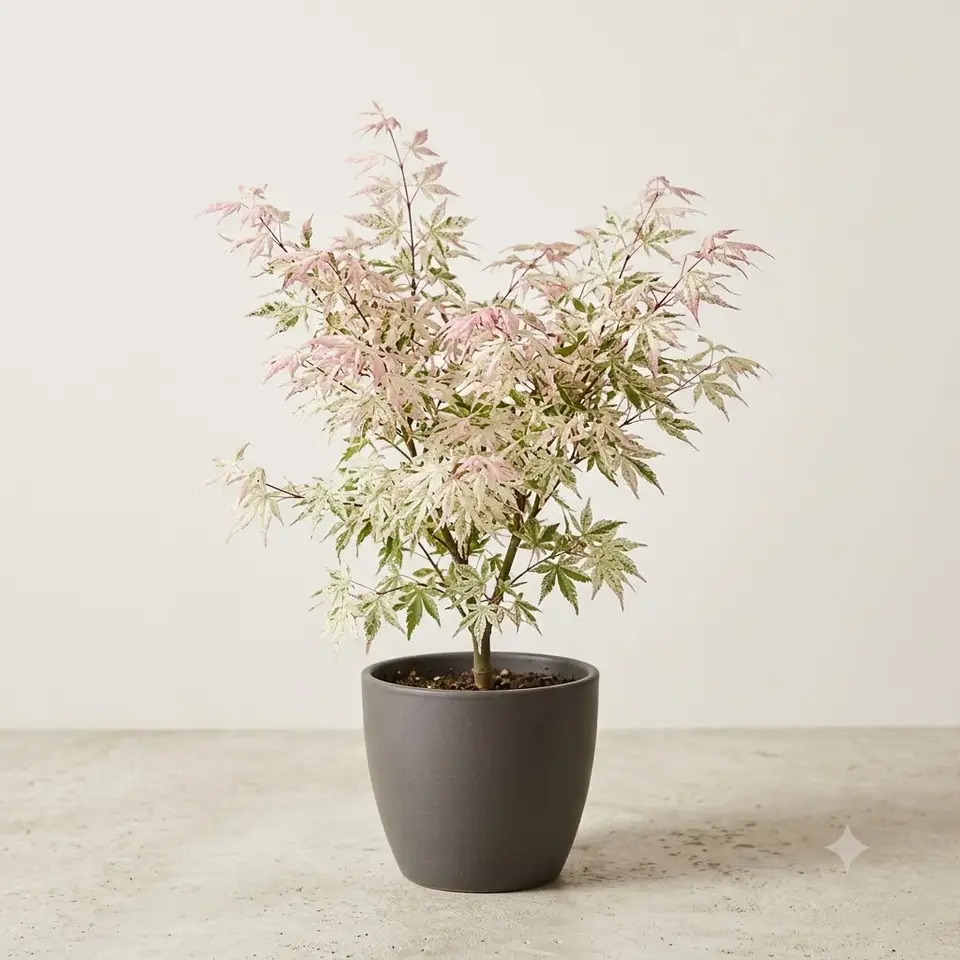
Ukigumo is a variegated Japanese maple prized for foliage that looks dusted with white, cream, and pink, an effect that earned it the name "floating clouds" (Acer palmatum 'Ukigumo').
Last reviewed: September 2026
 AI illustration
 Overview
Ukigumo is a variegated Japanese maple prized for foliage that looks dusted with white, cream, and pink, an effect that earned it the name "floating clouds" (Acer palmatum 'Ukigumo'). Each leaf is heavily speckled and mottled rather than evenly coloured, so no two look quite the same and the whole canopy reads as pale and misty from a distance. It is one of the more delicate and slower-growing cultivars, which makes it a collector's tree more than a beginner's plant.
Origin & Background
The species, Acer palmatum, is native to Japan, Korea, and parts of China, where it grows as an understorey tree in cool, humid woodland. 'Ukigumo' is a named Japanese selection grown for its distinctive variegation and, like nearly all ornamental maple cultivars, it is propagated by grafting rather than seed so that the variegated pattern stays true.
Appearance
The leaves are the classic five- to seven-lobed palmate shape, with a green to soft yellow-green base overlaid by irregular splashes of white and cream, often flushed pink toward the margins and on new growth. Spring flowers are tiny reddish-purple clusters and are insignificant next to the foliage. It forms a small, upright to rounded tree, typically reaching about 2.5 to 3.5 m tall and 1.8 to 3 m wide over many years, growing slowly. In autumn the pale foliage shifts toward gold, apricot, and orange before dropping.
Why People Grow It - Qualities & Benefits
- Unusual "clouded" white and pink variegation that few other maples match
- Compact, slow-growing size that suits small gardens and large containers
- Warm gold to orange autumn colour extends the season of interest
- Elegant, refined form that works as a specimen or focal point
Care
Light: Dappled shade or morning sun with afternoon shade. The white areas of the leaf lack pigment and scorch easily in hot, direct sun. Water: Keep the root zone consistently moist but never waterlogged, especially in the first few years and during heat. Mulch to hold moisture. Soil: Rich, well-drained soil that is slightly acidic; avoid heavy, soggy ground. Hardiness: USDA zones 5 to 8. Bloom or Season: Grown for foliage from spring through autumn, with variegated leaves in the growing season and gold-to-orange colour in fall. Extra: The variegation makes it prone to leaf scorch, so shelter from harsh sun and drying wind is the single biggest factor in keeping it looking good. Non-toxic to cats and dogs.
Planting & Propagation
Plant in spring or autumn in a sheltered spot, setting the graft union above soil level and watering in well. Propagation is done by grafting onto Acer palmatum seedling rootstock, since variegated cultivars do not come true from seed and root poorly from cuttings; layering is occasionally used but grafting is the standard method.
Common Problems & Pests
- Leaf scorch on the pale areas from too much sun, wind, or dry soil
- Aphids and scale insects on new growth
- Verticillium wilt and fungal issues such as anthracnose in wet conditions
Toxicity & Safety
Non-toxic to cats and dogs. Japanese maple (Acer palmatum) is not listed as toxic to pets, so this is a safe choice for households and gardens with animals.
Pros & Cons
Pros
- Striking, one-of-a-kind variegated foliage
- Small size and slow growth suit tight spaces and pots
Cons
- Sensitive to sun and wind, which can scorch the leaves
- Slower and more demanding than plain green Japanese maples
Best Suited For
- Sheltered, part-shade positions in small gardens or courtyards
- Container growing and collectors who want an unusual specimen tree
FAQ
Why are the leaves turning brown at the edges?
That is usually leaf scorch caused by too much direct sun, drying wind, or dry roots. Move or shade the tree, mulch well, and keep the soil evenly moist to reduce it.
Can I grow Ukigumo in a pot?
Yes. Its slow growth and compact size make it well suited to a large container, as long as you use free-draining soil, water regularly, and shelter it from strong afternoon sun.
Gear for growing ukigumo japanese maple
Links go to Amazon or a partner store (such as Adagio Teas) and may earn us a commission at no extra cost to you. As an Amazon Associate we earn from qualifying purchases. We link gear types, not sponsors' picks: you choose the exact product.