Ville de Lyon Clematis
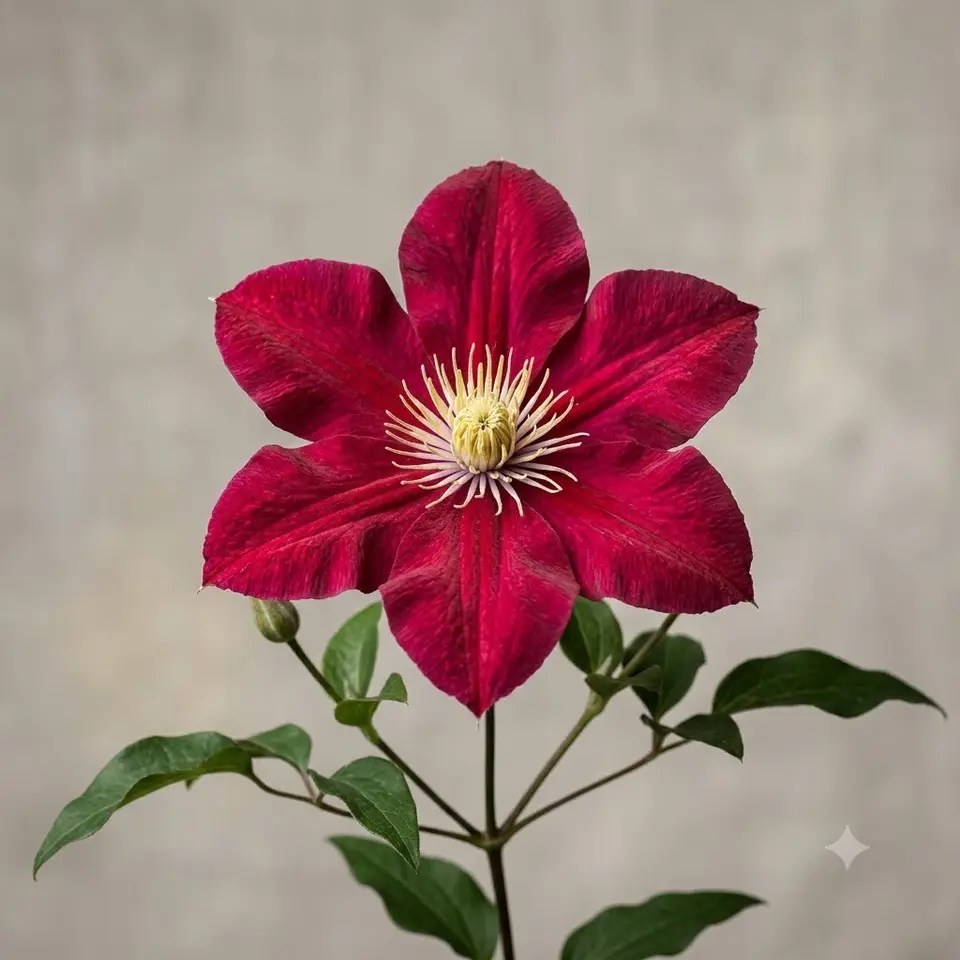
Ville de Lyon is a classic large-flowered climbing clematis prized for its bold carmine-red blooms that hold their colour better than many older reds (Clematis 'Ville de Lyon').
Last reviewed: September 2026
 AI illustration
 Overview
Ville de Lyon is a classic large-flowered climbing clematis prized for its bold carmine-red blooms that hold their colour better than many older reds (Clematis 'Ville de Lyon'). What sets it apart is the combination of glowing rose-crimson sepals with slightly deeper margins and a boss of creamy-yellow stamens, all carried on a vigorous, easy-going vine. It is one of the more forgiving and reliably free-flowering red clematis, which is why it has stayed popular for well over a century.
Origin & Background
The genus Clematis is widespread across the temperate Northern Hemisphere, with wild species native to Europe, Asia and North America, typically scrambling through hedgerows and woodland edges. 'Ville de Lyon' itself is a garden hybrid raised by the French breeder Francisque Morel and introduced around 1899, part of the great wave of large-flowered French clematis from that era. It has remained a garden staple ever since thanks to its vigour and dependable colour.
Appearance
The flowers are a rich carmine to rose-red, with sepals that deepen to a slightly darker crimson band along the edges and often fade a touch paler toward the centre, offset by prominent creamy-yellow anthers. Each rounded bloom is broad and flat, usually with six overlapping sepals, measuring around 10 to 15 cm across. It flowers heavily from early to mid summer and continues in flushes into early autumn. Mature plants climb to roughly 2.4 to 3.6 m with a spread of about 1 m. A well-known seasonal habit is that the lower stems tend to shed their leaves and go bare over the season, leaving flowers concentrated higher up.
Why People Grow It - Qualities & Benefits
- Bright, saturated red colour that reads well from a distance and holds up in sun
- Long summer-into-autumn flowering on current-season growth
- Vigorous and reliable, generally more resistant to clematis wilt than some large-flowered types
- Easy pruning regime, ideal for gardeners who want low-fuss structure and colour
Care
Light: Full sun to partial shade, ideally with at least six hours of light on the top growth while the roots stay cool and shaded. Water: Keep consistently moist, especially in the first couple of seasons and during dry spells; never let it dry out at the root but avoid waterlogging. Soil: Fertile, humus-rich, well-drained soil that is neutral to slightly alkaline. Hardiness: USDA zones 4 to 9. Bloom or Season: Early summer through early autumn, flowering in repeat flushes over a long period. Extra: This is a Pruning Group 3 clematis, so cut all stems back hard to a pair of strong buds about 20 to 30 cm above the ground in late winter or early spring; this also helps counter its habit of going bare at the base. Note on pet safety: this plant is toxic to cats and dogs, as the sap contains protoanemonin that can cause drooling, mouth irritation, vomiting and diarrhoea if chewed.
Planting & Propagation
Plant in spring or autumn, setting the crown a few centimetres below soil level to encourage strong shoots, and shade the root zone with low planting, a stone or mulch. Provide a trellis, obelisk or host shrub for the leaf stalks to twine around. Because named cultivars do not come true from seed, propagate by taking semi-hardwood cuttings in summer or by simple layering, pinning a low stem to the soil until it roots and then separating it the following season.
Common Problems & Pests
- Clematis wilt, though this cultivar is comparatively resistant; remove and destroy affected stems if it appears
- Aphids and earwigs on soft new growth, and slugs or snails on young shoots at ground level
- Powdery mildew in humid, still conditions, especially on crowded plants late in the season
Toxicity & Safety
All clematis, including 'Ville de Lyon', are toxic to cats and dogs. The sap contains protoanemonin, an irritant compound, and chewing leaves, stems or flowers can cause drooling, mouth and gastrointestinal irritation, vomiting and diarrhoea. In practice cases are usually mild, because the bitter, acrid taste discourages animals from eating much. Wearing gloves when pruning is sensible for people with sensitive skin.
Pros & Cons
Pros
- Long-flowering, vivid red colour on an easy, vigorous plant
- Simple hard-prune care and good general disease resistance
Cons
- Tends to lose its lower leaves and flower higher up, leaving bare legs
- Toxic to cats and dogs if chewed
Best Suited For
- Gardeners wanting a bold, reliable red climber for trellises, arches, obelisks or growing through shrubs
- Beginners who prefer the straightforward once-a-year hard-prune approach of Group 3 clematis
FAQ
How and when should I prune Ville de Lyon Clematis?
It is a Pruning Group 3 clematis that flowers on new growth, so cut all stems back hard to about 20 to 30 cm from the ground in late winter or early spring. This keeps it tidy, encourages fresh flowering shoots and helps reduce the bare-stem look at the base.
Why does the bottom of my plant look bare?
This is a natural habit of the cultivar rather than a health problem; it drops lower leaves and concentrates flowers higher up. Planting a low perennial or shrub in front of the base, or growing it with a companion climber, hides the bare legs effectively.
Gear for growing ville de lyon clematis
Links go to Amazon or a partner store (such as Adagio Teas) and may earn us a commission at no extra cost to you. As an Amazon Associate we earn from qualifying purchases. We link gear types, not sponsors' picks: you choose the exact product.