Winter Aconite
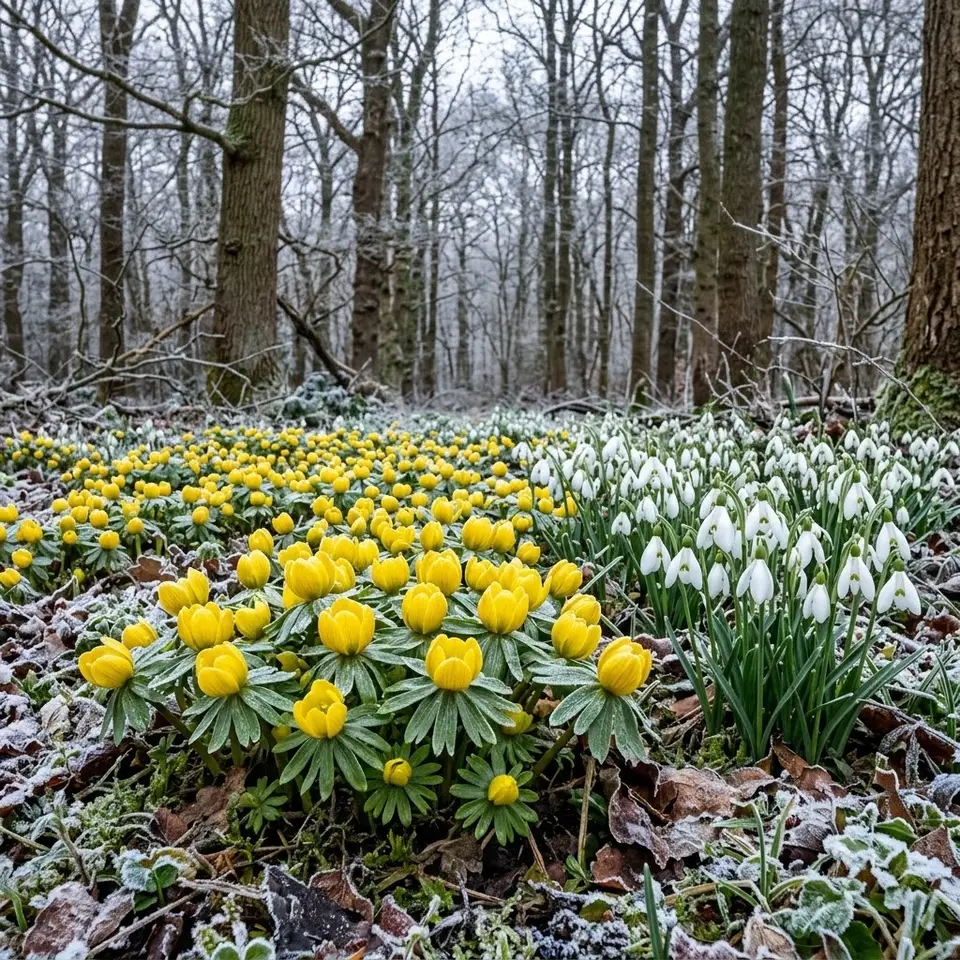
Winter aconites are spilled gold coins on the February floor - buttercup-yellow cups in green ruffs that bloom WITH the snowdrops and spread into molten carpets under bare trees.
Last reviewed: October 2026
 AI illustration
 Overview
Winter aconites are spilled gold coins on the February floor - buttercup-yellow cups in green ruffs that bloom WITH the snowdrops and spread into molten carpets under bare trees. Where they're happy they're gloriously unstoppable; the trick is getting the tubers to take. (Eranthis hyemalis.)
Origin & Natural Habitat
European deciduous woodlands; long naturalized into the great snowdrop-and-aconite winter gardens.
Appearance
5-10 cm: single upturned golden cups, each on a green Elizabethan collar, opening in winter sun; carpets by the thousand where established.
Why People Grow It - Qualities & Benefits
- Gold + snowdrop-white = THE winter carpet
- Blooms in February frost
- Self-sows into sheets
- Rodent- and deer-resistant
Care
Light: Winter sun under deciduous canopy (the snowdrop niche).
Water: Winter-spring moist, summer dormant-dry under trees.
Soil: Humusy, alkaline-leaning, drained.
Planting: The known trick: dry store tubers often fail - SOAK overnight before fall planting 5 cm deep, or best transplant 'in the green' clumps in spring like snowdrops.
Hardiness: Zones 4-7 - a true cold-country plant that sulks in mild-winter regions.
After flowering: Foliage vanishes by late spring; let seed drop first - the carpet is built from seed.
Propagation
Self-seed primarily (ants distribute); divide green clumps after bloom.
Common Problems & Pests
- Dry tubers failing (soak or in-green)
- Slow establishment then sudden abundance (year 3+ is the reveal)
- Nothing pest-wise: it's ranunculus-family bitter
Toxicity & Safety
Toxic if eaten (ranunculus family - cardiac glycosides); wildlife knows and abstains; keep bulbs from pet-digging: all parts are highly poisonous, leaves and flowers included.
Pros & Cons
Pros
- Molten-gold winter floors
- Immortal where suited
- Pairs with snowdrops by design
Cons
- Establishment lottery from dry tubers
- Needs real winters
- Invisible 9 months a year
Best Suited For
- Under beeches, oaks, fruit trees
- Winter gardens with snowdrop bones
- Alkaline-leaning soils
- Cold-climate gardeners' revenge plot
FAQ
Why did only 10% of my tubers come up?
Desiccation in storage - the genus's retail curse. Overnight-soak before planting, or buy growing clumps in spring; established colonies then self-sow forever.
Aconite - is this the poison monkshood?
Different plant (that's Aconitum, a relative in the same buttercup family) - shared name, different toxins, and monkshood is by far the more dangerous. Don't eat either; admire both.
Gear for growing winter aconite
Links go to Amazon or a partner store (such as Adagio Teas) and may earn us a commission at no extra cost to you. As an Amazon Associate we earn from qualifying purchases. We link gear types, not sponsors' picks: you choose the exact product.