The President Clematis
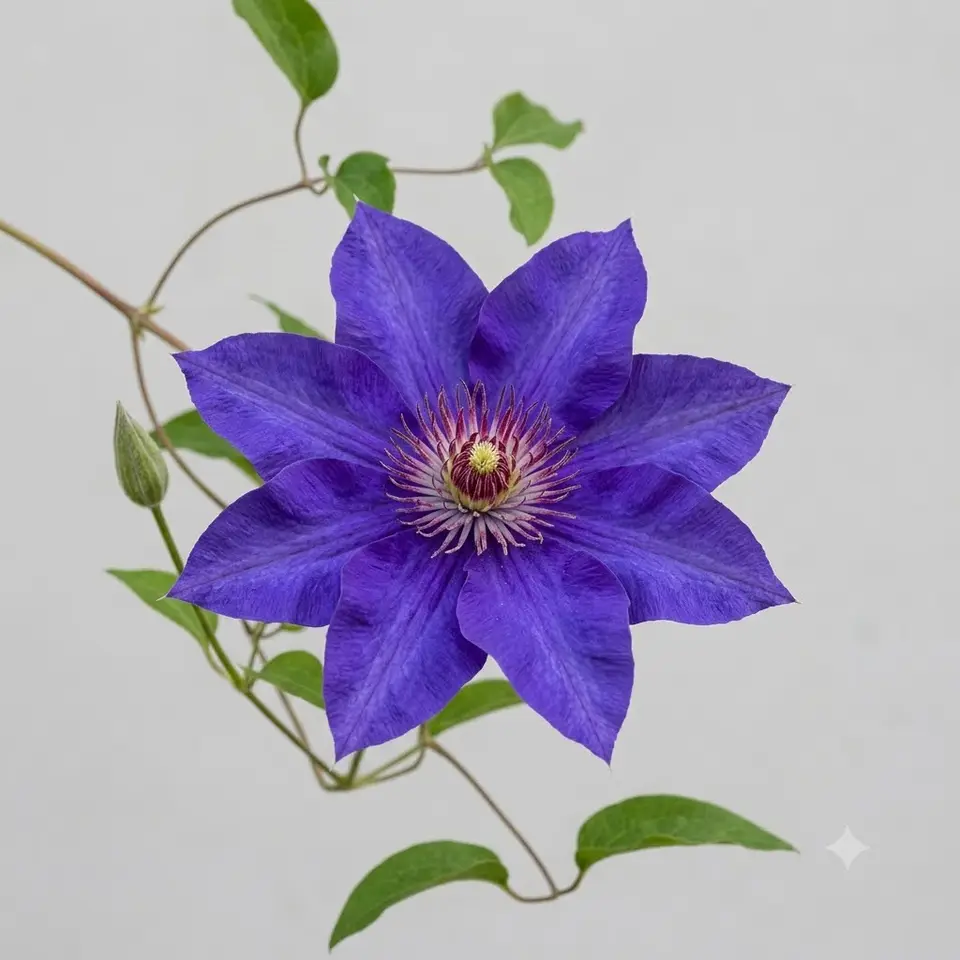
The President is one of the oldest and most reliable large-flowered clematis, prized for deep purple-blue blooms with a silvery reverse and a striking boss of reddish anthers (Clematis 'The President').
Last reviewed: September 2026
 AI illustration
 Overview
The President is one of the oldest and most reliable large-flowered clematis, prized for deep purple-blue blooms with a silvery reverse and a striking boss of reddish anthers (Clematis 'The President'). What sets this cultivar apart is its long, dependable flowering season and its habit of reblooming, giving colour in both early and late summer. It is a compact, well-behaved climber that suits smaller gardens and containers as readily as a full trellis.
Origin & Background
The genus Clematis is widespread across the temperate regions of both hemispheres, with wild species native to China, Japan, the Himalayas, Europe and North America. 'The President' is a classic Victorian hybrid raised by the English nurseryman Charles Noble and introduced around 1876, and it has remained in continuous cultivation ever since as a benchmark purple large-flowered clematis.
Appearance
The flowers are large, typically 15 to 18 cm across, with eight broad, pointed sepals that overlap to form a full, rounded star. Colour is a rich royal purple to violet-blue, deepening toward the centre, with a paler silvery underside that shows as the blooms nod or catch the light; the central boss of dark reddish-purple anthers adds contrast. The main flush comes in early summer (roughly late May into June) on the previous year's stems, with a lighter second flush in late summer to early autumn on new growth. Mature height is about 2.5 to 3 m with a spread of 1 to 1.2 m, and the plant dies back naturally toward winter before flushing again in spring.
Why People Grow It - Qualities & Benefits
- Two flushes of large, richly coloured blooms across a long season
- Compact, manageable size that fits trellises, obelisks, arches and large pots
- One of the most tried-and-tested purple cultivars, forgiving of beginner mistakes
- Flowers hold their colour well and pair easily with roses and pale climbers
Care
Light: Full sun to partial shade; the flowers colour best with several hours of sun, while the roots prefer to stay cool and shaded. Water: Regular, even moisture during the growing season; never let the rootball dry out, especially in containers, but avoid waterlogging. Soil: Fertile, humus-rich, well-drained soil that stays cool and moist; a neutral to slightly alkaline pH is ideal, though it tolerates a range. Hardiness: USDA zones 4 to 9. Bloom or Season: Early summer with a repeat flush in late summer to early autumn. Extra: This is a Pruning Group 2 clematis, so give it only a light tidy in late winter or early spring, removing dead or weak stems above a strong bud pair to preserve the wood that carries the early flowers. Note for pet owners: clematis is toxic to cats and dogs if chewed.
Planting & Propagation
Plant in spring or autumn with the crown set about 5 to 8 cm below soil level, which encourages new shoots from the base and helps the plant recover if stems are damaged. Shade the root zone with low planting, a slab or mulch, and provide support for the twining leaf stalks to climb. Named cultivars like this one do not come true from seed, so propagate by semi-hardwood cuttings taken in early to mid summer, or by layering a low stem into the ground in summer and separating it once rooted.
Common Problems & Pests
- Clematis wilt, a fungal dieback that can collapse stems suddenly; cut affected growth back to healthy tissue or below soil level
- Powdery mildew and leaf spot in humid, still conditions or when overcrowded
- Aphids, earwigs and slugs or snails feeding on soft new growth and buds
Toxicity & Safety
The President contains protoanemonin, a compound released from the sap when leaves or stems are bruised or chewed. It is toxic to cats and dogs, and contact or ingestion can cause drooling, mouth and skin irritation, vomiting and diarrhoea. In practice the reaction is usually mild, because the plant tastes bitter and pets rarely eat enough to cause serious harm; wash your hands after pruning and site the plant away from where pets like to nibble.
Pros & Cons
Pros
- Long, reliable flowering with two flushes of large blooms
- Compact and adaptable, thriving in borders and containers alike
Cons
- Susceptible to clematis wilt, which can be alarming when it strikes
- Needs its roots kept cool and moist, so it is not a plant-and-forget climber
Best Suited For
- Gardeners wanting a proven, richly coloured clematis for a trellis, obelisk or arch
- Smaller gardens, courtyards and large patio containers where a compact climber is needed
FAQ
How and when should I prune The President?
It flowers on both old and new wood, so it belongs to Pruning Group 2. In late winter or early spring, remove only dead, damaged or weak stems and cut back to a strong pair of buds; hard pruning would sacrifice the early summer flush.
Why did my plant suddenly wilt and collapse?
This is most likely clematis wilt, a fungal problem that causes stems to blacken and flop, often just as buds form. Cut the affected stems right back to healthy growth or to soil level; deeply planted clematis usually reshoot from below ground.
Gear for growing the president clematis
Links go to Amazon or a partner store (such as Adagio Teas) and may earn us a commission at no extra cost to you. As an Amazon Associate we earn from qualifying purchases. We link gear types, not sponsors' picks: you choose the exact product.