Siberian Squill
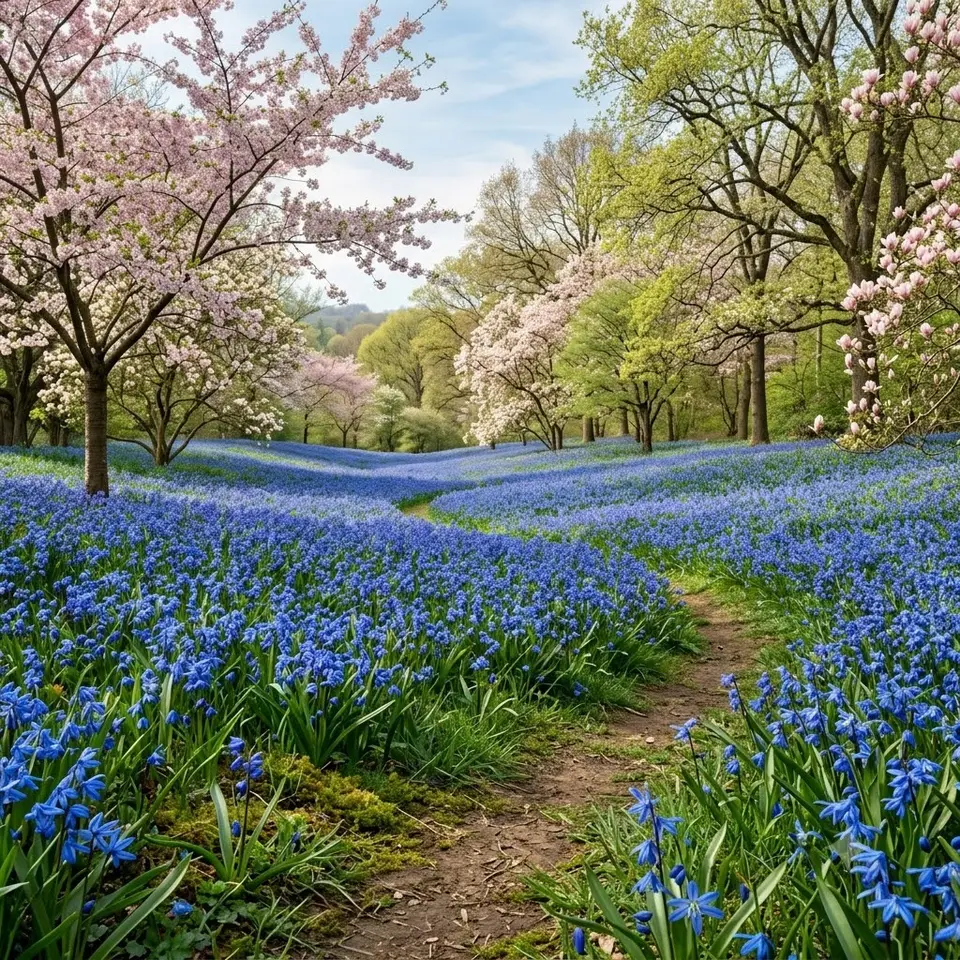
Siberian squill paints lawns BLUE - true gentian-blue nodding bells, 10 cm tall, that spread through grass and under shrubs into April lakes of color.
Last reviewed: October 2026
 AI illustration
 Overview
Siberian squill paints lawns BLUE - true gentian-blue nodding bells, 10 cm tall, that spread through grass and under shrubs into April lakes of color. Bone-hardy, rodent-proof, and one of the very best 'blue lawn' naturalizers: with a spreading enthusiasm to plant deliberately. (Scilla siberica.)
Origin & Natural Habitat
Russia and the Caucasus (not quite Siberia despite the name); a cold-steppes native built for zone 2.
Appearance
10-15 cm stems with 1-3 intensely blue nodding bells over strappy leaves; en masse, the famous 'blue lawn' effect of April.
Why People Grow It - Qualities & Benefits
- TRUE blue: the rarest bulb color, cheaply
- Zone 2-hardy, utterly permanent
- Blue-lawn naturalizing champion
- Bee banquet at a hungry time
Care
Light: Sun to half-shade; lawns, borders, under shrubs all work.
Water: Ordinary spring moisture; carefree after.
Soil: Any drained soil - completely unfussy.
Planting: Fall, 8 cm deep, in scattered hundreds (they're cheap) for the lake effect.
Hardiness: Zones 2-7 - among the hardiest bulbs sold; needs cold winters.
After flowering: Mow lawns only after foliage yellows (~6 weeks); it seeds AND offsets into ever-wider blue.
Propagation
Self-manages via seed and bulblets; lift-and-scatter clumps anywhere you want more.
Common Problems & Pests
- Its success: in parts of North America it naturalizes beyond gardens: check regional guidance before lawn-scale plantings and keep it from wild woodland edges where flagged
- Otherwise pest-free and immortal
Toxicity & Safety
Toxic if ingested (scilla glycosides) - hence rodent-proof; all parts are poisonous, leaves and flowers included.
Pros & Cons
Pros
- Unbeatable blue per dollar
- Indestructible
- Early bee forage
Cons
- Spreads beyond intentions (regional check!)
- Tiny individually
- Foliage delays first mowing
Best Suited For
- Lawns wanted blue in April
- Under deciduous shrubs
- Cold-climate gardens (z2!)
- Pollinator-minded plantings
FAQ
How do I get the solid-blue lawn look?
Volume + patience: 200+ bulbs scattered-and-planted where thrown, then five self-sowing springs - the famous photos are decade-old colonies.
Is it invasive?
In parts of the US Midwest/Northeast it escapes into woodlands and is discouraged - check local guidance; in contained urban lawns and cold interior climates it's a treasure. Plant with intention.
Gear for growing siberian squill
Links go to Amazon or a partner store (such as Adagio Teas) and may earn us a commission at no extra cost to you. As an Amazon Associate we earn from qualifying purchases. We link gear types, not sponsors' picks: you choose the exact product.