Snake's Head Fritillary
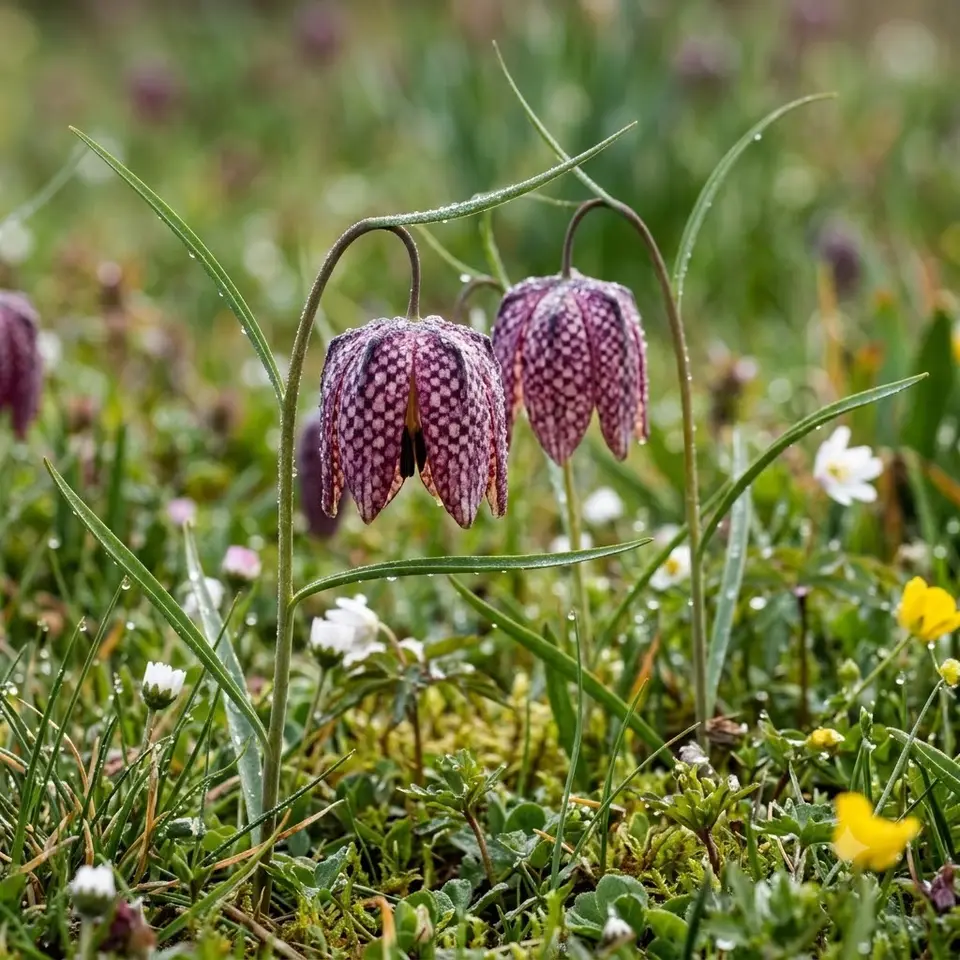
The snake's head fritillary wears the strangest pattern in spring - nodding bells CHECKERED in purple-and-white gingham, swaying over damp meadows like something designed by a chess-playing fairy.
Last reviewed: October 2026
 AI illustration
 Overview
The snake's head fritillary wears the strangest pattern in spring - nodding bells CHECKERED in purple-and-white gingham, swaying over damp meadows like something designed by a chess-playing fairy. It naturalizes in moist lawns where tulips drown, and no visitor ever walks past without kneeling. (Fritillaria meleagris.)
Origin & Natural Habitat
Damp European river meadows (England's Magdalen Meadow famously); a moisture-lover among dry-country cousins.
Appearance
20-30 cm wire stems, each with 1-2 perfectly checkered nodding bells (dusky purple gingham or ghost-white) over sparse grassy leaves; April.
Why People Grow It - Qualities & Benefits
- The checkerboard: botanically unique
- Thrives in MOIST soil where most bulbs rot
- Naturalizes in damp lawns and meadows
- Fairy-tale close-up charm
Care
Light: Sun to light shade.
Water: Likes SPRING-DAMP ground - the inversion of most bulbs; even soggy winter meadows suit it.
Soil: Heavier, moisture-holding soils welcome (a rescue for clay-garden bulb dreams).
Planting: Early fall, 10 cm deep, in grass or borders that stay damp-ish; fresh bulbs (they dislike drying, snowdrop-style).
Hardiness: Zones 4-8.
After flowering: Mow meadow plantings only after seed drops (June) - self-sowing builds the colony; borders: let foliage fade.
Propagation
Self-seeding is the engine (patient - 4-5 years seed to bloom); division of clumps possible.
Common Problems & Pests
- Lily beetle again
- Drying out in sandy summers
- Slugs on emerging bells
- Impatience with seedling timelines
Toxicity & Safety
Toxic if ingested like all fritillaries - and correspondingly rodent-proof; standard bulb-depth care around pets.
Pros & Cons
Pros
- Unique checkered beauty
- Damp-tolerant rarity
- Self-building meadows
Cons
- Small: plant dozens
- Slow to colonize
- Needs spring moisture
Best Suited For
- Damp lawns mowed late
- Stream and pond margins
- Clay-soil gardens
- Meadow romantics
FAQ
My lawn is damp and mossy - can bulbs really work there?
This one, yes - it's the classic bulb FOR damp turf. Plant 50, mow after mid-June, and in five years you'll host a checkerboard meadow.
Purple or white?
Colonies naturally mix both - buy the blend; the white 'ghosts' among purple gingham make the picture.
Gear for growing snake's head fritillary
Links go to Amazon or a partner store (such as Adagio Teas) and may earn us a commission at no extra cost to you. As an Amazon Associate we earn from qualifying purchases. We link gear types, not sponsors' picks: you choose the exact product.