Purple de Oro Daylily
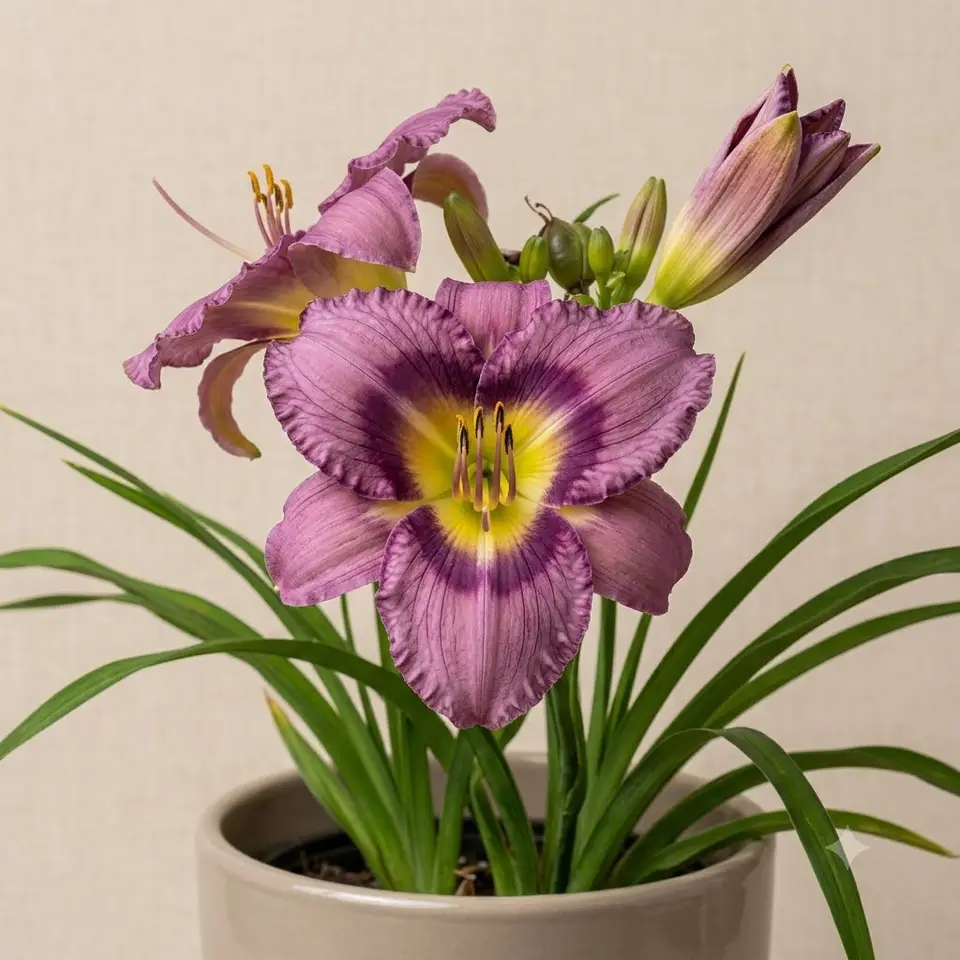
Purple de Oro is a compact, reblooming daylily grown for its rosy purple to lavender-purple flowers set off by a bright yellow-green throat (Hemerocallis 'Purple de Oro').
Last reviewed: October 2026
 AI illustration
 Overview
Purple de Oro is a compact, reblooming daylily grown for its rosy purple to lavender-purple flowers set off by a bright yellow-green throat (Hemerocallis 'Purple de Oro'). It reads as a purple companion to the well-known compact rebloomers, staying low and tidy while flowering over a long season. Its small stature and repeat bloom make it one of the easiest daylilies for edging and mass planting.
Origin & Background
Daylilies belong to the genus Hemerocallis, whose wild species originate in eastern Asia, including China, Korea, and Japan, where they grow in meadows, forest edges, and along streams. Modern garden daylilies like this one are the result of extensive hybridizing rather than wild collection, and 'Purple de Oro' was bred as a compact, repeat-blooming diploid selected for a purple flower color in the low-growing, long-flowering style that made short rebloomers popular. Precise breeder and introduction records for this cultivar are limited, so it is best described simply as a modern compact rebloomer in that lineage.
Appearance
The plant forms a dense clump of arching, grass-like green foliage, typically reaching about 38 to 45 cm tall and roughly as wide in flower. Blooms are around 6 to 8 cm across, rosy purple to lavender-purple, each with a contrasting yellow to chartreuse-green throat and often a subtle lighter midrib on the petals. Like all daylilies, each individual flower lasts a single day, but a steady succession of buds keeps the clump in color for weeks. Foliage is deciduous to semi-evergreen depending on climate, dying back over winter in colder zones and returning in spring.
Why People Grow It - Qualities & Benefits
- Long flowering season, with a main early-summer flush and repeat bloom into late summer or fall
- Compact, tidy habit that suits edging, small beds, and containers
- Tough and low-maintenance once established, tolerating heat and a range of soils
- Purple flower color that pairs easily with yellow, silver, and green foliage plantings
Care
Light: Full sun is best (at least 6 hours); it tolerates light afternoon shade, though flowering is heaviest in full sun. Water: Moderate and even moisture while establishing and during bloom; established clumps are fairly drought-tolerant but bloom better with regular water. Soil: Adaptable, but prefers fertile, well-drained soil rich in organic matter, ideally slightly acidic to neutral (pH about 6.0 to 7.0). Hardiness: USDA zones 3 to 9. Bloom or Season: Main bloom in early to midsummer, with rebloom continuing into late summer and early fall, giving many weeks of color overall. Extra: Removing spent flowers and old scapes keeps the clump looking neat and encourages the strongest rebloom. Safety note: daylilies are highly dangerous to cats and can cause fatal kidney failure even in small amounts, so keep this plant away from cats and call a vet immediately if a cat ingests any part.
Planting & Propagation
Plant in spring or early fall, setting the crown just at or slightly below the soil surface and spacing plants about 40 to 60 cm apart to allow the clump to fill in. Water in well and mulch lightly to conserve moisture. Propagate by division: lift a mature clump every three to five years in early spring or after flowering, split it into sections that each carry roots and several fans of foliage, and replant promptly. Division also rejuvenates old clumps that have begun to bloom less.
Common Problems & Pests
- Daylily rust and leaf streak can spot or discolor foliage in humid conditions; remove affected leaves and improve airflow
- Aphids and thrips may distort buds and flowers, sometimes reducing bloom quality
- Crown or root rot can occur in soggy, poorly drained soil, so avoid waterlogged sites
Toxicity & Safety
Daylilies are a serious, potentially fatal hazard to cats. All parts of the plant, including leaves, flowers, and even the water from a vase, can cause acute kidney failure in cats, and even a small ingested amount can be dangerous. This is an emergency: if you know or suspect a cat has eaten or chewed any part of a daylily, contact a veterinarian or an animal poison control service immediately, as prompt treatment greatly improves the outcome. For dogs the risk is much lower, usually limited to mild stomach upset such as drooling or vomiting rather than kidney damage. Given the severity for cats, this plant is safest grown in cat-free gardens or well away from where cats roam. The ASPCA lists daylilies (Hemerocallis) as toxic to cats. For dogs, the ASPCA lists them as non-toxic.
Pros & Cons
Pros
- Compact and long-blooming, with reliable rebloom in a small footprint
- Easy, forgiving, and quick to establish for beginner gardeners
Cons
- Extremely toxic to cats, making it a poor choice for households and gardens with cats
- Each flower lasts only one day, and foliage can look tired after the main flush without cleanup
Best Suited For
- Beginner gardeners wanting dependable, low-care color in borders, edging, or containers
- Cat-free gardens where a compact, repeat-blooming perennial is needed for mass planting
FAQ
Does Purple de Oro really rebloom?
Yes. It produces a strong early-to-midsummer flush and then continues to send up new scapes into late summer and fall, especially when spent flowers are removed and it is watered during dry spells.
How is it different from a full-size daylily?
It stays much shorter and more compact, generally around 38 to 45 cm, and blooms over a longer season than many standard daylilies, which makes it better suited to edges, small beds, and pots.
Gear for growing purple de oro daylily
Links go to Amazon or a partner store (such as Adagio Teas) and may earn us a commission at no extra cost to you. As an Amazon Associate we earn from qualifying purchases. We link gear types, not sponsors' picks: you choose the exact product.