Nikko Blue Hydrangea
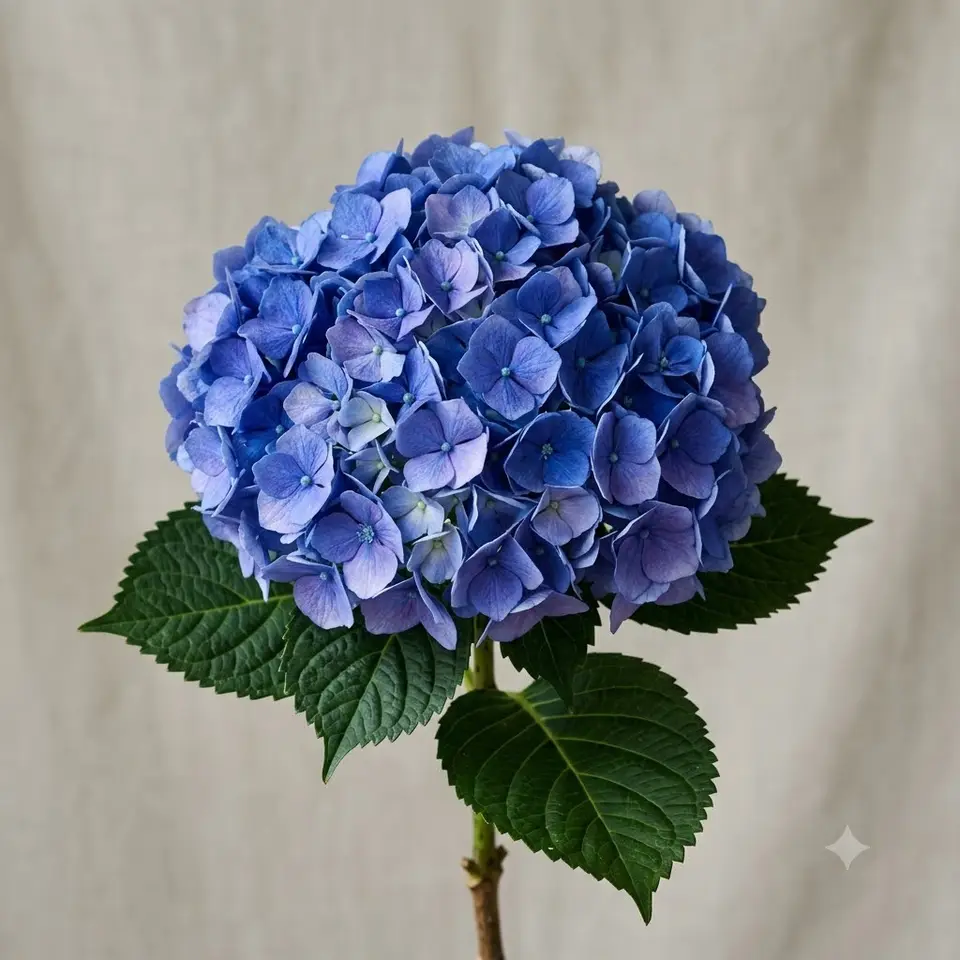
Nikko Blue is one of the best known mophead bigleaf hydrangeas, grown for its large rounded clusters of blue florets that hold their colour reliably in acidic soil (Hydrangea macrophylla 'Nikko Blue').
Last reviewed: July 2026
 AI illustration
 Overview
Nikko Blue is one of the best known mophead bigleaf hydrangeas, grown for its large rounded clusters of blue florets that hold their colour reliably in acidic soil (Hydrangea macrophylla 'Nikko Blue'). What sets it apart from the crowd of bigleaf cultivars is its dependable, saturated blue in the right conditions and its vigorous, rounded habit. Like most classic mopheads it blooms on old wood, so the timing of any pruning matters.
Origin & Background
The parent species, Hydrangea macrophylla, is native to coastal Japan, where it grows in mild, humid, maritime conditions. It has been cultivated and bred for centuries, first in Japan and later widely across Europe and North America. 'Nikko Blue' is a long established mophead selection that became a nursery standard in the twentieth century and remains a benchmark for blue bigleaf hydrangeas.
Appearance
Nikko Blue produces large, rounded mophead flower clusters, typically 15 to 20 cm across, packed with sterile florets. In acidic soil the flowers are a clear mid to deep blue; in neutral to alkaline soil the same plant shifts toward mauve and pink. Bloom time is early to mid summer, with clusters often persisting and ageing to soft green and dusky tones into late summer. The plant forms a rounded, deciduous shrub roughly 1.2 to 1.8 m tall and about as wide, clothed in broad, glossy, coarsely toothed leaves that can take on reddish tints in autumn before dropping.
Why People Grow It - Qualities & Benefits
- Large, showy mophead blooms with strong presence in the summer border
- Reliable blue colour in acidic soil, prized where gardeners want true blue
- Flower colour can be tuned with soil chemistry, offering some control over the display
- Blooms make excellent cut and dried flowers for arrangements
Care
Light: Morning sun with afternoon shade is ideal; full sun in hot regions scorches leaves and wilts blooms, while deep shade reduces flowering. Water: Consistent, even moisture is important; the large leaves wilt quickly when dry, so water deeply in heat and mulch to conserve moisture. Soil: Rich, moist, well drained soil high in organic matter. Flower colour is pH sensitive: acidic soil (roughly pH 5.5 or below) with available aluminium gives blue, while neutral to alkaline soil gives pink to mauve. Hardiness: USDA zones 5 to 9; in zone 5 the flower buds are vulnerable, so it flowers most reliably in zones 6 to 9. Bloom or Season: Early to mid summer, with clusters holding for several weeks and slowly ageing rather than dropping quickly. Extra: It blooms on old wood, so prune only just after flowering and avoid hard spring cuts or you will remove the coming season's buds; late frosts on swelling buds are the other common cause of a bloomless year. Note for pet owners: this plant is toxic to cats, dogs and horses.
Planting & Propagation
Plant in spring or autumn into moisture retentive, well drained soil enriched with compost, setting the crown at the same depth it grew in the pot and spacing plants to allow for the mature spread. Water in well and mulch. Named cultivars like Nikko Blue are propagated vegetatively to stay true: take softwood cuttings in early summer or semi hardwood cuttings later in the season, keeping them humid until rooted. Simple layering also works well - pin a low, flexible stem to the soil, keep it moist, and sever it once roots form. Seed is not used for named cultivars because seedlings do not come true.
Common Problems & Pests
- Wilting and leaf scorch in hot sun or dry soil, usually a moisture and siting issue rather than disease
- Powdery mildew and leaf spot in crowded, damp, poorly ventilated positions
- Aphids and spider mites on stressed plants, plus few or no blooms after hard pruning or a late frost damages old wood buds
Toxicity & Safety
Nikko Blue, like other hydrangeas, is toxic to cats, dogs and horses. The leaves and flowers contain a cyanogenic glycoside, which can release cyanide compounds when chewed and digested. Ingestion most often causes vomiting, diarrhoea and lethargy. Serious poisoning is uncommon because the bitter taste tends to limit how much an animal eats, but it is sensible to site the plant away from pets that graze and to discourage nibbling.
Pros & Cons
Pros
- Big, dependable blue mopheads with strong ornamental impact
- Colour can be shifted through soil pH for a tailored display
Cons
- Blooms on old wood, so mistimed pruning or a late frost can cost a whole season of flowers
- Needs steady moisture and shelter from harsh afternoon sun to look its best
Best Suited For
- Gardeners with acidic soil who want a true blue mophead as a border or foundation shrub
- Cottage, woodland edge and mixed shrub plantings with dappled light and reliable moisture
FAQ
Why did my Nikko Blue turn pink instead of blue?
Flower colour reflects soil chemistry. Blue develops in acidic soil where aluminium is available; in neutral to alkaline soil the same plant blooms pink or mauve. Lowering pH with acidic amendments over time encourages blue, though the change is gradual.
Why didn't my Nikko Blue bloom this year?
It flowers on old wood, so buds form on the previous season's stems. Pruning in late winter or spring, or a hard late frost on swelling buds, removes those buds and leaves you with leaves but no flowers. Prune only right after flowering and shelter it from late frosts.
Gear for growing nikko blue hydrangea
Links go to Amazon or a partner store (such as Adagio Teas) and may earn us a commission at no extra cost to you. As an Amazon Associate we earn from qualifying purchases. We link gear types, not sponsors' picks: you choose the exact product.