Otto's Thrill Dahlia
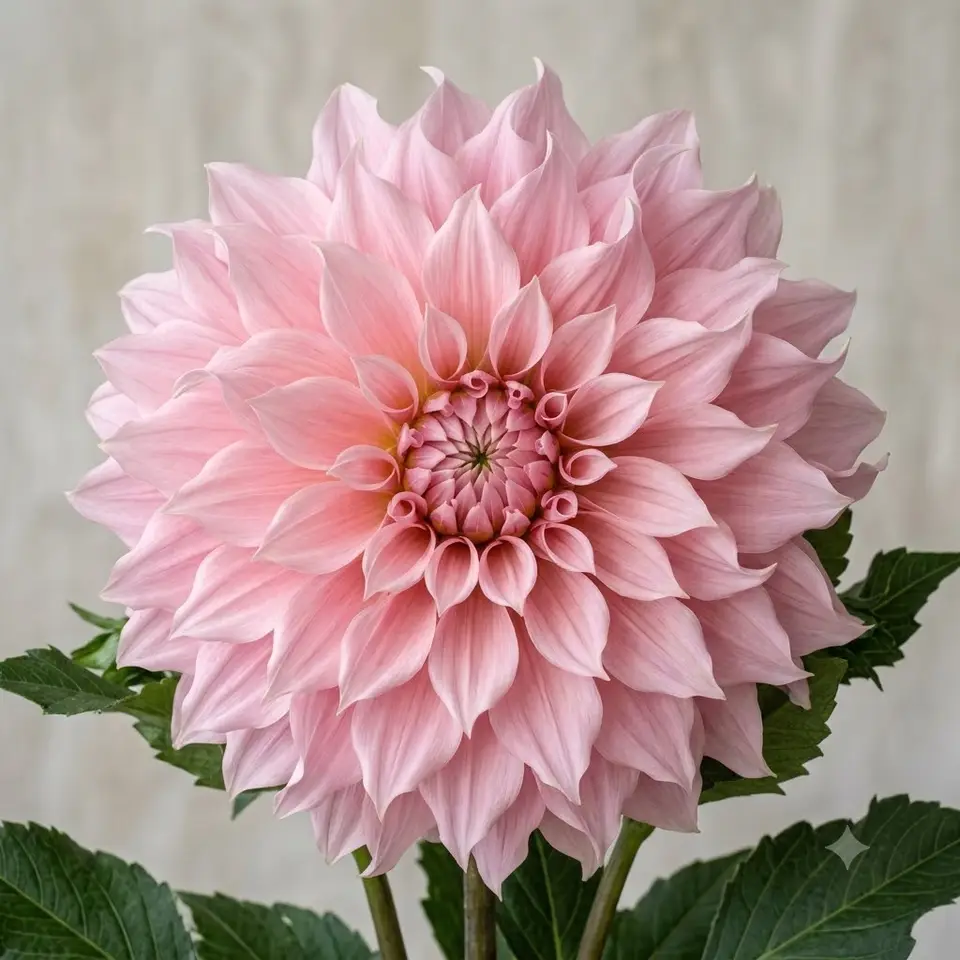
Otto's Thrill is a classic "dinnerplate" dahlia prized for its enormous soft-pink blooms that can reach 20 to 25 cm across on strong upright plants (Dahlia 'Otto's Thrill').
Last reviewed: September 2026
 AI illustration
 Overview
Otto's Thrill is a classic "dinnerplate" dahlia prized for its enormous soft-pink blooms that can reach 20 to 25 cm across on strong upright plants (Dahlia 'Otto's Thrill'). What sets it apart is the combination of that giant flower size with a clean, formal decorative petal arrangement and a gentle rose-pink colour that suits both cutting gardens and mixed borders. It is one of the most reliable large-flowered dahlias for gardeners who want maximum drama from a single stem.
Origin & Background
Garden dahlias descend from wild species native to the highlands of Mexico and Central America, where the genus grows in cool, well-drained mountain conditions. Centuries of breeding have produced tens of thousands of named cultivars in a huge range of forms. 'Otto's Thrill' is a modern decorative-type hybrid selected for its dinnerplate flower size and vigour, and it has become a widely distributed favourite in cut-flower and exhibition circles.
Appearance
The plant carries fully double, formal decorative flowers of clear light pink, often shading to a slightly deeper rose toward the centre and softening to near-blush at the petal tips. Individual blooms are very large, typically 20 to 25 cm in diameter, held on sturdy stems above mid-green, coarsely divided foliage. Mature plants reach about 1.1 to 1.2 m tall with a spread of roughly 45 to 60 cm. Flowering begins in mid-summer and continues in flushes until the first hard frost, with the biggest blooms appearing when side buds are removed.
Why People Grow It - Qualities & Benefits
- Produces genuine dinnerplate-sized blooms that make an immediate statement in the garden or the vase.
- Long flowering run from mid-summer through to frost when regularly deadheaded.
- Excellent, long-lasting cut flower with strong stems that support the heavy heads.
- Soft, versatile pink that blends easily with almost any colour scheme.
Care
Light: Full sun, at least 6 to 8 hours daily, for the strongest stems and best flower count. Water: Regular, deep watering once established and in active growth; avoid waterlogging, especially before shoots emerge. Soil: Fertile, humus-rich, well-drained soil with a slightly acidic to neutral pH of about 6.5 to 7.0. Hardiness: USDA zones 8 to 11 as a perennial; in zones 3 to 7 the tubers are lifted and stored, or grown as an annual. Bloom or Season: Blooms from mid-summer until the first frost, a span of roughly three to four months in most climates. Extra: The heavy heads need staking early to prevent snapping, and disbudding side buds channels energy into fewer, larger flowers. Note that dahlias are mildly toxic to cats and dogs, so site plants and stored tubers away from pets.
Planting & Propagation
Plant tubers outdoors after the last frost, laying them horizontally about 10 to 15 cm deep with the growing eye facing up, and insert a stake at planting time to avoid spearing the tuber later. In cold zones, lift the tuber clumps after the first frost blackens the foliage, dry and store them frost-free over winter, then replant in spring. Propagate by dividing the dormant tuber clumps so each division has at least one eye, or by taking basal cuttings from sprouting tubers in late winter; named cultivars are not grown from seed because seedlings will not come true.
Common Problems & Pests
- Slugs and snails shred young shoots in spring, and earwigs chew petals and foliage.
- Aphids, spider mites, and thrips can cluster on buds and new growth, sometimes spreading viruses.
- Powdery mildew and botrytis (grey mould) appear in humid conditions or on crowded, poorly ventilated plants.
Toxicity & Safety
Dahlias, including 'Otto's Thrill', are considered mildly toxic to cats and dogs. Ingestion of the foliage, flowers, or tubers can cause mild gastrointestinal upset such as vomiting, drooling, or loss of appetite, and contact with the sap may produce mild skin irritation or dermatitis in sensitive animals and people. Symptoms are generally mild and self-limiting, but keep pets from grazing on plants or chewing stored tubers, and wear gloves if you are prone to skin sensitivity.
Pros & Cons
Pros
- Spectacular dinnerplate blooms with a long, productive flowering season.
- Superb, long-vase-life cut flower in a soft, easy-to-combine pink.
Cons
- Heavy heads require staking and the tubers need lifting or protection in cold zones.
- Needs steady feeding, watering, and deadheading to perform at its best.
Best Suited For
- Cut-flower and cottage gardeners who want large, showy blooms for arrangements.
- Sunny mixed borders and dedicated dahlia beds where the plants can be staked and tended.
FAQ
How big do Otto's Thrill flowers actually get?
Under good conditions the blooms reach 20 to 25 cm across, and disbudding the side buds around each main flower helps push the heads toward the top of that range.
Do I need to dig up the tubers every year?
In USDA zones 8 to 11 the tubers can usually overwinter in the ground with a protective mulch. In zones 3 to 7 you should lift them after the first frost, store them frost-free over winter, and replant in spring.
Gear for growing otto's thrill dahlia
Links go to Amazon or a partner store (such as Adagio Teas) and may earn us a commission at no extra cost to you. As an Amazon Associate we earn from qualifying purchases. We link gear types, not sponsors' picks: you choose the exact product.