Kansas Peony
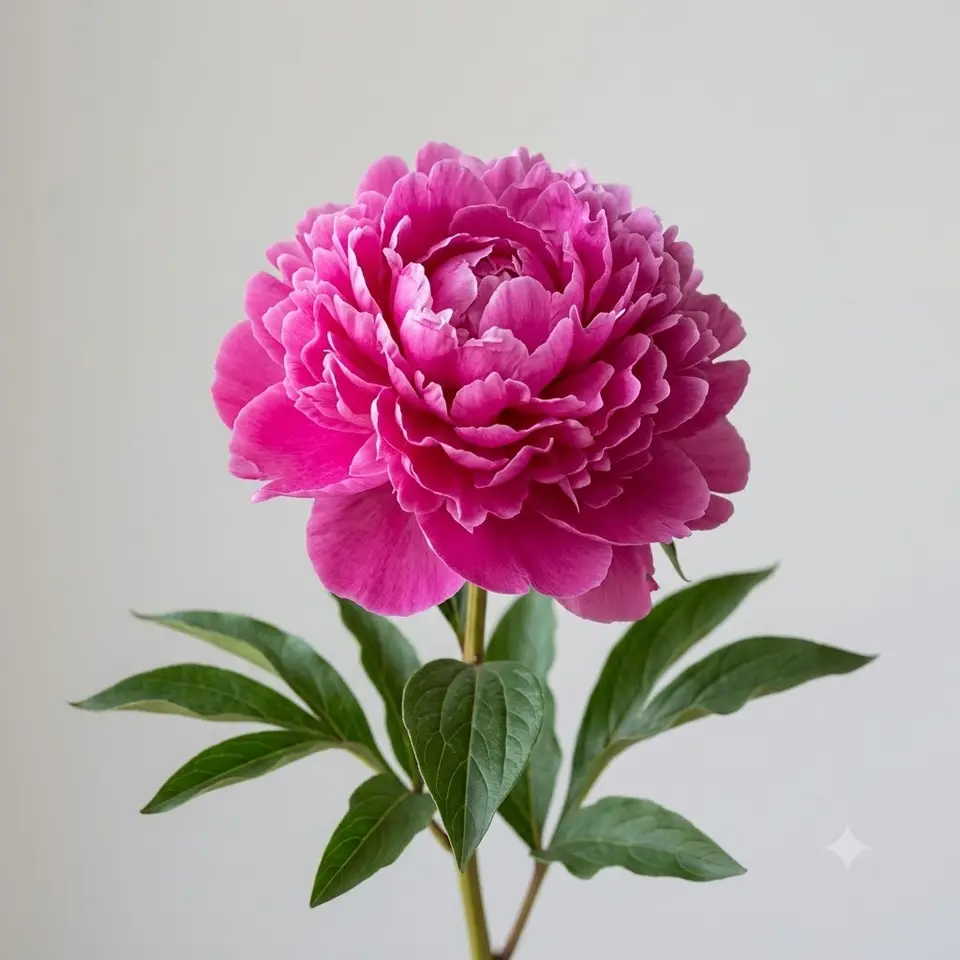
Kansas is a herbaceous peony prized for its intense, glowing watermelon-red to magenta-red bomb-type blooms that hold their colour well in strong sun rather than fading to pink (Paeonia 'Kansas').
Last reviewed: October 2026
 AI illustration
 Overview
Kansas is a herbaceous peony prized for its intense, glowing watermelon-red to magenta-red bomb-type blooms that hold their colour well in strong sun rather than fading to pink (Paeonia 'Kansas'). It is one of the more reliable red peonies for cutting, carrying big fragrant flowers on stems sturdy enough to stay upright. A classic mid-century introduction, it remains a garden staple where a saturated, dependable red is wanted.
Origin & Background
The garden peonies in this group descend largely from Paeonia lactiflora, a species native to northern and eastern Asia, including China, Mongolia, and eastern Siberia, where it grows in grasslands and open slopes. 'Kansas' itself is a named cultivar raised by the American breeder Myron Bigger and introduced around 1940. It earned the American Peony Society Gold Medal, which helped cement its long-running popularity in temperate gardens.
Appearance
Kansas produces large, fully double flowers in a bomb form, packed with ruffled petals in a vivid deep pink-red to magenta-red that resists bleaching in bright light. Individual blooms reach roughly 15 to 18 cm across and are lightly fragrant. It flowers in the mid-season window, generally late spring into early summer, on strong upright stems. The clump matures to about 80 to 90 cm tall with a similar spread, forming a rounded mound of glossy dark green divided foliage that turns bronze-red in autumn before dying back to the ground for winter.
Why People Grow It - Qualities & Benefits
- Bold, sun-fast red colour that does not wash out to pale pink in hot weather
- Long-lived and low maintenance, thriving for decades in the same spot once established
- Excellent, long-lasting cut flower with a light, pleasant scent
- Attractive mounded foliage that stays presentable all season and colours up in autumn
Care
Light: Full sun is best, at least six hours daily; tolerates light afternoon shade but blooms less freely in deeper shade. Water: Moderate and even during the growing season; established plants are fairly drought tolerant but dislike soggy soil. Soil: Deep, fertile, well-drained loam, ideally slightly acidic to neutral (pH about 6.5 to 7.0). Hardiness: USDA zones 3 to 8; needs a genuine cold winter dormancy to bloom well. Bloom or Season: Mid-season, late spring to early summer, with a display lasting about one to two weeks per clump. Extra: Plant the eyes only 2 to 5 cm deep - burying the crown too deeply is the most common reason a peony refuses to flower. Note that peonies are toxic to cats and dogs: they contain paeonol, concentrated in the bark and roots, and ingestion can cause vomiting and diarrhoea.
Planting & Propagation
Plant bare-root divisions in early autumn so the roots settle before winter. Set the tuberous roots with the pink growth buds (eyes) just 2 to 5 cm below the soil surface in a sunny, well-drained site, and avoid disturbing them afterwards. Propagate by lifting a mature clump in early autumn and dividing the tuberous roots with a clean sharp knife, leaving 3 to 5 eyes per piece. Growth from seed is possible but very slow and will not come true to the parent, so division is the standard method.
Common Problems & Pests
- Botrytis blight, which blackens buds and stems in wet springs; improve airflow and clear away dead foliage in autumn
- Failure to bloom, usually caused by planting too deeply, too much shade, or a very young division
- Occasional issues with powdery mildew or leaf blotch, and ants on the buds (harmless, feeding on nectar, not a pest to control)
Toxicity & Safety
Peonies are toxic to cats and dogs. The plant contains paeonol, a compound concentrated in the bark and roots, and ingestion can cause vomiting and diarrhoea. Reactions are usually mild to moderate and depend on how much is eaten, but it is sensible to site the plant away from pets that like to dig or chew, and to contact a vet if a pet consumes a significant amount.
Pros & Cons
Pros
- Reliable, sun-resistant red colour and strong cut-flower performance
- Extremely long-lived and undemanding once settled
Cons
- Toxic to cats and dogs if eaten
- Short main bloom window and needs cold winters, so unsuitable for mild or frost-free climates
Best Suited For
- Cold to temperate gardens (zones 3 to 8) wanting a long-term, low-effort perennial
- Cottage borders and cutting gardens where a vivid, dependable red is desired
FAQ
Why won't my Kansas peony flower?
The most likely cause is planting the crown too deep. The eyes should sit just 2 to 5 cm below the surface. Too much shade or a recently divided, immature clump can also delay blooming for a season or two.
Does Kansas need staking?
Its stems are relatively sturdy, but the heavy double blooms can flop after rain. A discreet grow-through ring or peony hoop set early in spring keeps the flowers upright.
Gear for growing kansas peony
Links go to Amazon or a partner store (such as Adagio Teas) and may earn us a commission at no extra cost to you. As an Amazon Associate we earn from qualifying purchases. We link gear types, not sponsors' picks: you choose the exact product.