Karl Rosenfield Peony
'Karl Rosenfield' is one of the best known deep red double peonies, prized for large, fully double crimson blooms on strong, upright stems (Paeonia 'Karl Rosenfield').
Last reviewed: July 2026
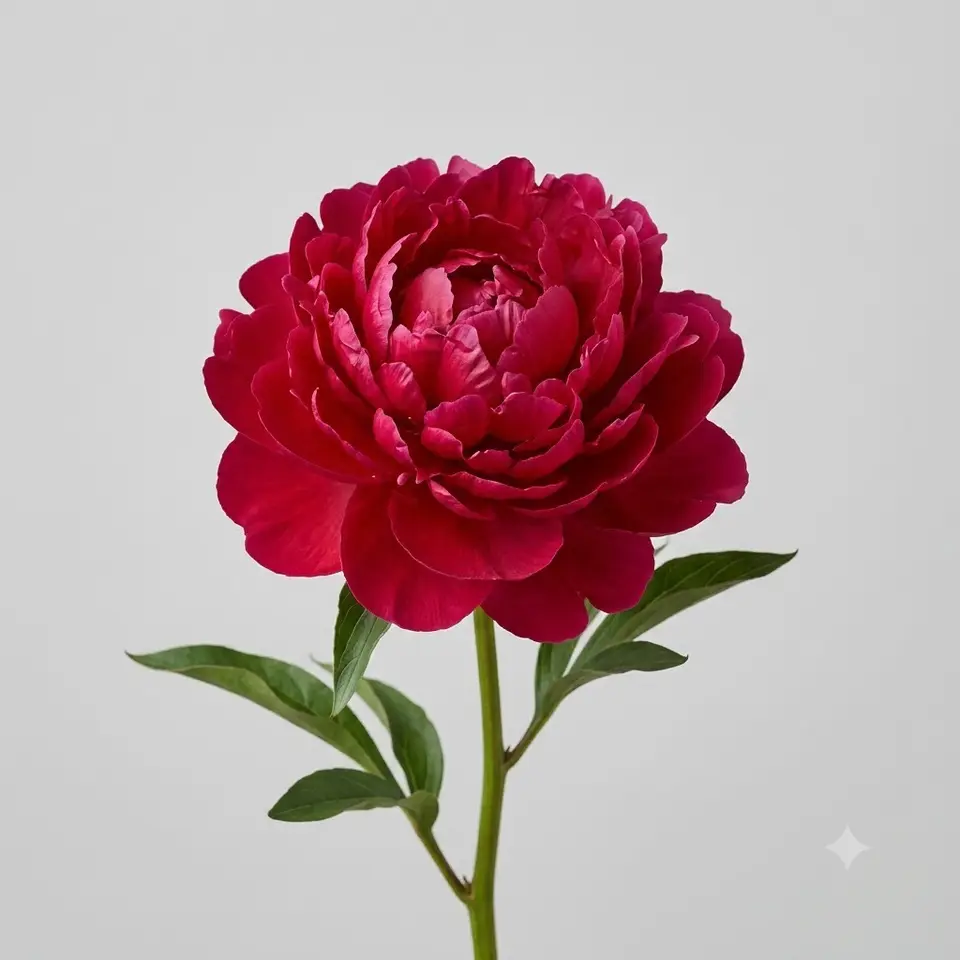 AI illustration
 Overview
'Karl Rosenfield' is one of the best known deep red double peonies, prized for large, fully double crimson blooms on strong, upright stems (Paeonia 'Karl Rosenfield'). It stands out from the many pink and white garden peonies for its saturated, almost velvety red colour and its reliable, long lived performance. A classic herbaceous perennial, it can hold its place in a border for decades with very little fuss.
Origin & Background
The garden peonies in this group descend largely from Paeonia lactiflora, a species native to central and eastern Asia, including parts of China, Mongolia, and Siberia, where it grows in meadows and open slopes. 'Karl Rosenfield' itself is an American introduction, raised by the breeder of the same name and brought into commerce in 1908. More than a century later it remains a benchmark red against which newer cultivars are still measured.
Appearance
The flowers are rich, deep crimson red, fully double, and often described as a bomb to rounded double form, opening 12 to 18 cm (roughly 5 to 7 inches) across. Blooms appear in late spring to early summer, carried on sturdy stems above a mound of glossy, deeply divided dark green foliage. The plant reaches about 80 to 90 cm (30 to 36 inches) tall with a similar spread at maturity. After flowering the foliage stays handsome through summer, then takes on bronze and russet tints in autumn before dying back for winter.
Why People Grow It - Qualities & Benefits
- Intense, saturated red colour that reads strongly from a distance in the border
- Long lived and low maintenance, often thriving for decades once established
- Large, full double blooms that also make excellent, long lasting cut flowers
- Attractive divided foliage that stays tidy and looks good long after the flowers fade
Care
Light: Full sun is best, at least 6 hours a day; it tolerates light afternoon shade but flowers most freely in the open. Water: Moderate and even during the growing season; established plants are fairly drought tolerant but bloom better with steady moisture. Soil: Deep, fertile, well drained soil rich in organic matter, ideally neutral to slightly alkaline (pH about 6.5 to 7.5). Hardiness: USDA zones 3 to 8. Bloom or Season: Late spring to early summer, with a display that typically lasts one to two weeks per plant. Extra: Plant the crown shallowly, with the eyes no more than 3 to 5 cm below the surface, since deep planting is the most common cause of a peony that will not flower. Note that this plant is toxic to cats and dogs.
Planting & Propagation
Plant bare root divisions in early autumn so the roots can settle before winter, setting the fleshy, tuberous roots with the pink eyes just below the soil surface. To propagate, lift a mature clump in early autumn and cut the root mass into pieces, each with 3 to 5 healthy eyes and a good section of root; replant promptly at the correct depth. Peonies can be grown from seed, but it is very slow and seedlings will not come true to the parent, so division is strongly preferred.
Common Problems & Pests
- Botrytis blight and other fungal diseases in wet, crowded conditions, causing blackened buds and stem rot
- Failure to flower, usually from planting too deeply, too much shade, or a very young or recently divided plant
- Flopping stems when heavy double blooms catch rain, which is best managed with grow through supports set early in the season
Toxicity & Safety
'Karl Rosenfield', like other peonies, is toxic to cats and dogs. The plant contains paeonol, a compound most concentrated in the bark and roots. If a pet chews or ingests these parts, it can lead to vomiting and diarrhoea. Reactions are generally mild to moderate, but it is sensible to site the plant away from pets that like to dig, and to contact a vet if a significant amount is eaten.
Pros & Cons
Pros
- Striking, long lasting deep red flowers with strong garden presence
- Extremely durable and long lived, needing little ongoing care once settled
Cons
- Short main bloom window of only a week or two each year
- Heavy double blooms may need staking, and the plant resents being moved
Best Suited For
- Cottage gardens, mixed perennial borders, and cutting gardens
- Gardeners in colder climates who want a permanent, low effort structural perennial
FAQ
Why is my Karl Rosenfield peony not flowering?
The most common reason is planting the crown too deep. Keep the eyes no more than 3 to 5 cm below the soil surface, give it full sun, and be patient, as newly planted or divided peonies often take two to three years to bloom well.
Do I need to cut it back in autumn?
Yes. As a herbaceous peony it dies back each year, so cut the stems down to the ground in late autumn and clear away the debris. This tidies the plant and helps reduce fungal problems the following season.
Gear for growing karl rosenfield peony
Links go to Amazon or a partner store (such as Adagio Teas) and may earn us a commission at no extra cost to you. As an Amazon Associate we earn from qualifying purchases. We link gear types, not sponsors' picks: you choose the exact product.