Labyrinth Dahlia
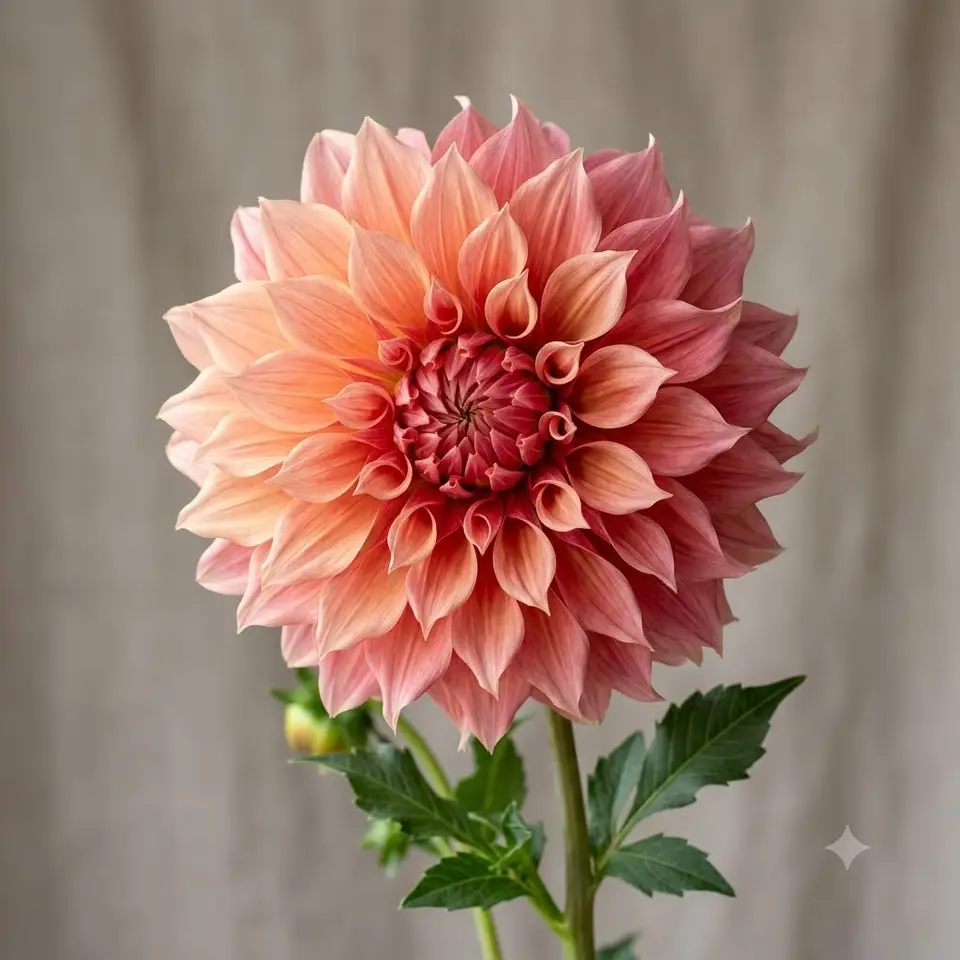
Labyrinth is a large decorative "dinnerplate" dahlia prized for its swirling, hand-painted blend of warm peach, salmon-pink and dusky rose that softens to a creamy reverse (Dahlia 'Labyrinth').
Last reviewed: September 2026
 AI illustration
 Overview
Labyrinth is a large decorative "dinnerplate" dahlia prized for its swirling, hand-painted blend of warm peach, salmon-pink and dusky rose that softens to a creamy reverse (Dahlia 'Labyrinth'). What sets it apart is the sheer size of the blooms, often 20 to 25 cm across, combined with tightly curled, wave-edged petals that give each flower a full, romantic, almost ruffled look. It is a favourite of cut-flower growers and wedding designers for its collectible colour that shifts with the light and the season.
Origin & Background
The garden dahlia descends from wild species native to the highlands of Mexico and Central America, where the genus Dahlia grows in cool mountain conditions. Modern named cultivars like Labyrinth are complex hybrids bred from these ancestors over many generations. Labyrinth is a contemporary decorative selection that gained wide popularity through the specialty and cut-flower dahlia trade, valued specifically for its large blooms and its blended peach-to-rose colouring rather than for a documented single breeder story.
Appearance
Labyrinth produces informal decorative blooms in the dinnerplate size class, typically 20 to 25 cm wide on strong stems. The petals are broad, softly curled and slightly ruffled at the edges, and they blend from peach and salmon through pink and rose, with paler cream and buff tones on the petal backs, so no two flowers look exactly alike. Foliage is the classic dahlia mid-green, divided and toothed. Mature plants generally reach about 1.1 to 1.4 m tall with a spread of roughly 60 to 75 cm. Flowering begins in mid-summer and continues in flushes until the first hard frost.
Why People Grow It - Qualities & Benefits
- Huge dinnerplate blooms that make an instant focal point in beds and bouquets
- Soft, collectible peach-to-rose colouring that suits weddings and romantic planting schemes
- Long bloom season from mid-summer to frost, especially when regularly cut or deadheaded
- Excellent, long-lasting cut flower with strong, upright stems
Care
Light: Full sun, at least 6 to 8 hours daily, for the strongest stems and most blooms; a little afternoon shade is tolerated in very hot climates. Water: Moderate and consistent; deep watering once or twice a week once established, keeping soil evenly moist but never waterlogged. Soil: Rich, fertile, well-drained loam with plenty of organic matter; slightly acidic to neutral pH of about 6.2 to 7.0. Hardiness: USDA zones 8 to 11 for tubers left in the ground; in zones 3 to 7 the tubers are lifted and stored over winter or the plant is grown as an annual. Bloom or Season: Mid-summer through the first frost, a span of roughly three to four months with repeat flushes. Extra: The tall stems and heavy dinnerplate blooms need staking or a support ring early, before the plant sizes up, or they can flop and snap. Note: Labyrinth Dahlia is mildly toxic to cats and dogs, so keep pets from chewing the foliage or dug tubers.
Planting & Propagation
Plant tubers in spring after the last frost, once the soil has warmed, setting them about 10 to 15 cm deep with the growing eye facing up and spacing plants 45 to 60 cm apart. Insert stakes at planting time to avoid spearing tubers later. The reliable way to increase a named cultivar like Labyrinth is to lift the clump in autumn after the foliage is blackened by frost, then divide the tuber clump so each division carries at least one eye; seed will not come true to type. Store cleaned, dry tubers in a cool, frost-free place in slightly moist material over winter. Basal cuttings taken from sprouting tubers in late winter are another way to bulk up stock.
Common Problems & Pests
- Slugs and snails shredding young shoots, plus earwigs and Japanese beetles chewing petals and leaves
- Aphids, thrips and spider mites, which can also spread viral disease that causes mottled or distorted growth
- Powdery mildew and botrytis (grey mould) in damp, crowded conditions, and tuber rot in cold, wet soil or storage
Toxicity & Safety
Labyrinth Dahlia is considered mildly toxic to cats and dogs. If a pet chews the leaves, stems or tubers, the plant sap can cause mild gastrointestinal upset, with signs such as drooling, vomiting and diarrhea, and skin contact with the sap may produce mild irritation or redness in sensitive animals. Reactions are usually mild and self-limiting rather than life-threatening, but it is best to discourage pets from nibbling the plants and to keep lifted tubers out of reach. Contact a veterinarian if a pet eats a large amount or symptoms persist.
Pros & Cons
Pros
- Dramatic dinnerplate blooms in a soft, sought-after colour blend
- Long flowering season and outstanding as a cut flower
Cons
- Tall, top-heavy stems need staking and can flop without support
- Tubers must be lifted and stored in cold zones, adding seasonal work
Best Suited For
- Cut-flower gardeners and event growers wanting large, romantic blooms
- Sunny mixed borders and dedicated dahlia beds where staking is practical
FAQ
How big do Labyrinth Dahlia flowers get?
They are a dinnerplate-class decorative dahlia, with blooms commonly reaching 20 to 25 cm across on plants around 1.1 to 1.4 m tall.
Do I have to dig up the tubers each winter?
In USDA zones 8 to 11 the tubers can usually stay in the ground with mulch. In zones 3 to 7 you should lift them after the first frost and store them somewhere cool and frost-free, or grow the plant as an annual.
Gear for growing labyrinth dahlia
Links go to Amazon or a partner store (such as Adagio Teas) and may earn us a commission at no extra cost to you. As an Amazon Associate we earn from qualifying purchases. We link gear types, not sponsors' picks: you choose the exact product.