Karma Choc Dahlia
Karma Choc is a decorative dahlia prized for its unusually dark, chocolate-red to near-black blooms held on strong, straight stems (Dahlia 'Karma Choc').
Last reviewed: September 2026
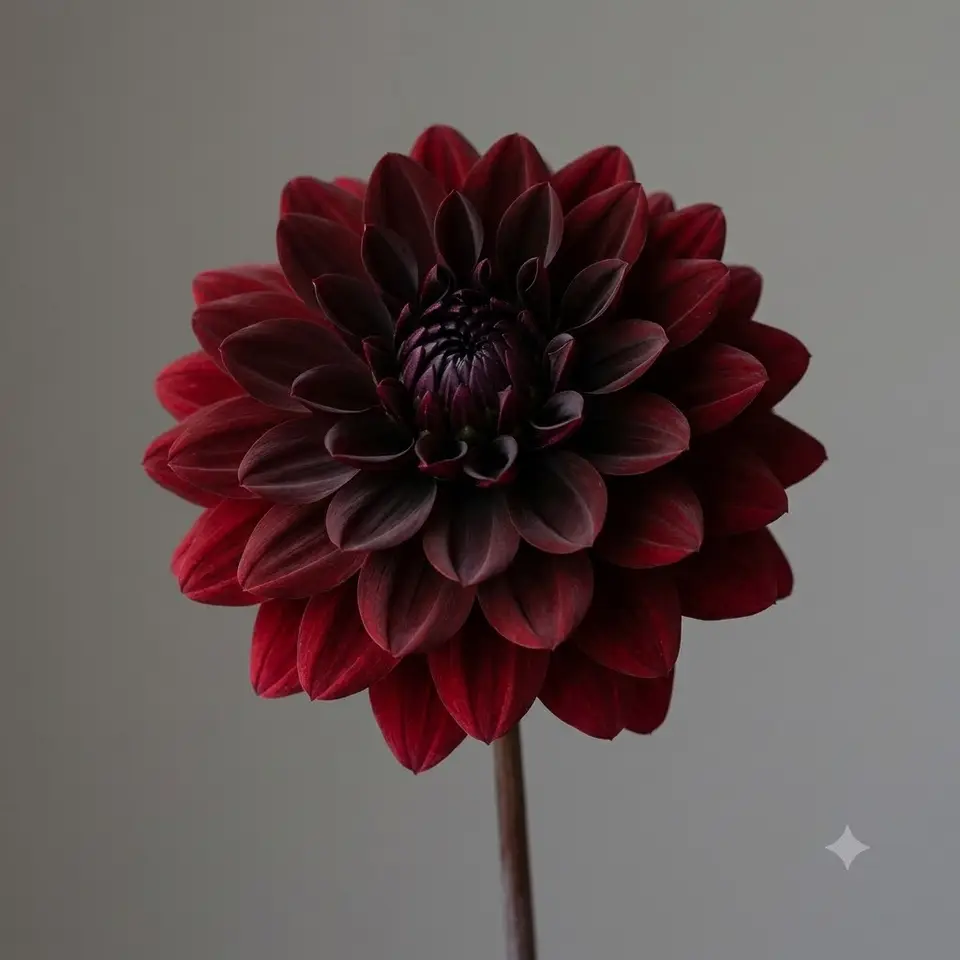 AI illustration
 Overview
Karma Choc is a decorative dahlia prized for its unusually dark, chocolate-red to near-black blooms held on strong, straight stems (Dahlia 'Karma Choc'). It belongs to the Karma series, a group bred specifically as cut flowers, so it earns its keep both in the border and in the vase. The moody, velvety colour and long vase life are what set it apart from brighter, more conventional dahlias.
Origin & Background
All garden dahlias descend from wild species native to the highland regions of Mexico and Central America, where they grow from tuberous roots in seasonally dry, sunny conditions. 'Karma Choc' is a modern cultivar introduced in the early 2000s as part of a Dutch-bred series developed for the commercial cut-flower trade, selected for sturdy stems, good bud count, and dependable vase performance rather than for exhibition size alone.
Appearance
The flowers are fully double, decorative-form blooms roughly 10 cm across, in a deep, saturated dark red that reads as chocolate or oxblood, deepening almost to black in the centre and in cool weather. Foliage is dark green with a bronze to purple flush that complements the flower colour. Plants reach about 90 to 100 cm tall with a spread of roughly 45 to 60 cm. Blooming runs from mid summer through to the first hard frost, with colour that tends to be richest in the cooler days of late summer and autumn.
Why People Grow It - Qualities & Benefits
- Rare dark, near-black flower colour that adds depth and drama to borders and bouquets
- Bred as a cut flower, so it offers long, straight stems and a good vase life
- Long bloom season from mid summer until frost when regularly deadheaded
- Vigorous, easy-to-divide tubers that multiply each year, so one plant becomes several over time
Care
Light: Full sun, at least 6 to 8 hours daily, for the strongest stems and richest colour. Water: Moderate and consistent; keep the soil evenly moist during active growth and flowering, but never waterlogged. Soil: Rich, fertile, free-draining soil high in organic matter, ideally slightly acidic to neutral (pH about 6.0 to 7.0). Hardiness: USDA zones 8 to 11 in the ground; in zones 3 to 7 the tubers are lifted and stored over winter. Bloom or Season: Mid summer to first frost, a span of roughly three to four months with regular deadheading. Extra: The dark colour can scorch or fade in relentless afternoon heat, so a spot with some relief in very hot climates keeps the blooms cleaner. Dahlias, including 'Karma Choc', are mildly toxic to cats and dogs, causing mild gastrointestinal upset and possible mild skin irritation from the sap.
Planting & Propagation
Plant tubers in spring after the last frost, setting them about 10 to 15 cm deep with the growing eye facing up, and stake tall plants early to support the heavy stems. Named cultivars like 'Karma Choc' do not come true from seed, so propagation is by lifting and dividing the tuber clumps in autumn or spring, making sure each division carries a piece of the crown with at least one eye. Basal cuttings taken from sprouting tubers in early spring are another reliable way to increase stock while keeping the plant identical to the parent.
Common Problems & Pests
- Slugs and snails, which shred young shoots and foliage, especially in wet spells
- Aphids, earwigs, and spider mites, which distort growth and disfigure buds
- Powdery mildew and tuber rot in poorly drained or overly wet soil, and grey mould on spent blooms
Toxicity & Safety
Dahlias are considered mildly toxic to cats and dogs. Ingestion of leaves, stems, or tubers can cause mild gastrointestinal upset, with signs such as drooling, vomiting, mild diarrhoea, and loss of appetite. The plant's sap may also cause mild skin irritation or contact dermatitis in sensitive pets and people. Reactions are generally mild and self-limiting, but keep tubers and cut stems away from curious pets, and wash hands after handling if your skin is prone to irritation.
Pros & Cons
Pros
- Striking dark, near-black colour that is hard to find in other easy-to-grow flowers
- Excellent cut flower with long stems and good vase life
Cons
- Not reliably winter hardy in cold zones, so tubers must be lifted and stored
- Needs staking, deadheading, and slug control to look its best
Best Suited For
- Cutting gardens and gardeners who want dramatic dark bouquets
- Sunny mixed borders where its moody tone contrasts with silvers, chartreuse, or hot colours
FAQ
Is Karma Choc a good cut flower?
Yes. It was bred for cutting, with straight, sturdy stems and a vase life that typically runs about 5 to 7 days when stems are cut just as the buds open.
Do I need to dig up the tubers for winter?
In USDA zones 8 and warmer you can usually leave them in the ground with a protective mulch. In zones 7 and colder, lift the tubers after the first frost blackens the foliage, then store them somewhere cool, dark, and frost-free until spring.
Gear for growing karma choc dahlia
Links go to Amazon or a partner store (such as Adagio Teas) and may earn us a commission at no extra cost to you. As an Amazon Associate we earn from qualifying purchases. We link gear types, not sponsors' picks: you choose the exact product.