Krossa Regal Hosta
Krossa Regal is one of the most architecturally striking hostas, prized for its upright, vase-shaped habit rather than the low flat mound most hostas form (Hosta 'Krossa Regal').
Last reviewed: September 2026
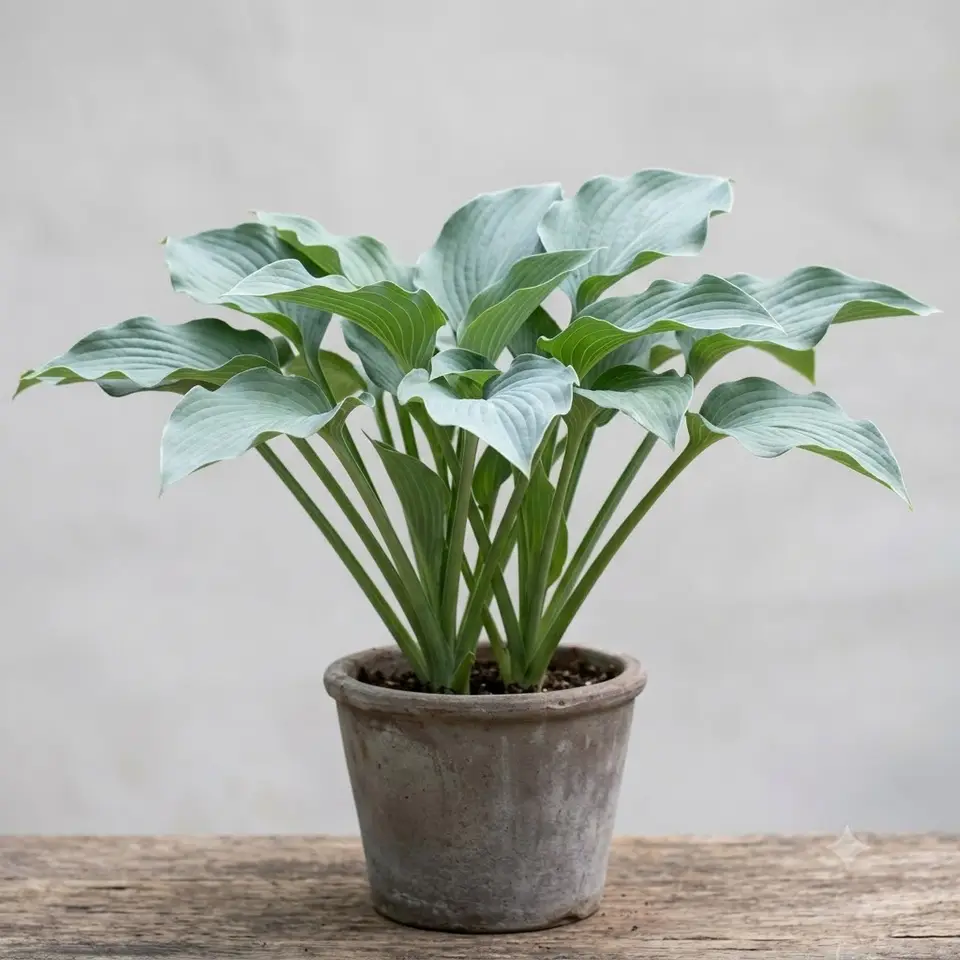 AI illustration
 Overview
Krossa Regal is one of the most architecturally striking hostas, prized for its upright, vase-shaped habit rather than the low flat mound most hostas form (Hosta 'Krossa Regal'). Its frosty blue-grey leaves arch upward and outward like a fountain, and tall lavender flower scapes tower well above the foliage in summer. This combination of vertical form and misty colour makes it a standout specimen plant for shade.
Origin & Background
The garden hostas trace back to wild species native to northeast Asia, chiefly Japan, China and Korea, where they grow on woodland floors, streambanks and shaded slopes. Krossa Regal was introduced by Gus Krossa and registered around 1980; it is generally thought to derive from or be closely related to Hosta nigrescens, a tall, upright-growing species, which explains its unusually erect architecture.
Appearance
The leaves are a soft, waxy blue-grey to frosted grey-green, broadly lance-shaped to oval, with a slight ripple and a powdery bloom that is heaviest in spring and fades as summer heat builds. Rather than mounding low, the foliage rises in a distinct vase shape, giving a clump that reaches roughly 60 to 90 cm tall and 75 to 120 cm wide at maturity. In mid to late summer, near-leafless scapes shoot up to 1.2 to 1.5 m carrying pale lavender, funnel-shaped flowers. In autumn the foliage yellows and dies back cleanly, with the plant going fully dormant for winter.
Why People Grow It - Qualities & Benefits
- Bold upright, vase-shaped silhouette that adds height and structure to shade beds
- Frosty blue-grey foliage that reads as cool and calming in low light
- Tall lavender flower spikes that lift colour well above the leaves in summer
- Reliably hardy, long-lived and low-maintenance once established
Care
Light: Partial to full shade; morning sun with afternoon shade keeps the blue colour best, while deep shade is tolerated but slows growth. Water: Consistent, even moisture; water deeply in dry spells and never let it bake out. Soil: Rich, humusy, well-drained soil that holds moisture; prefers slightly acidic to neutral pH. Hardiness: USDA zones 3 to 9. Bloom or Season: Foliage from spring emergence through autumn dieback, with lavender bloom in mid to late summer and a clean yellow fade in fall. Extra: The blue-grey colour comes from a waxy leaf coating, so avoid overhead spraying and hot direct sun, which melt the bloom and turn leaves greener. Toxic to cats and dogs; keep pets from grazing on the foliage.
Planting & Propagation
Plant in spring or early autumn, setting the crown level with the soil surface in a hole enriched with compost, spaced to allow for the wide mature clump. The easiest and most reliable way to propagate is division in early spring just as the shoots (pips) emerge: lift the whole clump, split it into sections each with roots and several eyes using a sharp spade or knife, and replant promptly at the same depth, keeping the divisions watered until re-established.
Common Problems & Pests
- Slugs and snails chew holes in the leaves, especially in damp shade
- Deer and rabbits browse the foliage heavily where present
- Crown or root rot in soggy, poorly drained soil, and leaf scorch in too much sun
Toxicity & Safety
Hostas are toxic to cats and dogs. The leaves and other parts contain saponins, and when an animal chews or swallows them these compounds irritate the digestive tract, causing vomiting, diarrhoea and depression or lethargy. Signs are usually mild to moderate, but watch pets closely and contact a veterinarian if a large amount is eaten or symptoms persist.
Pros & Cons
Pros
- Distinctive upright, vase-shaped form that few other hostas offer
- Tough, hardy and long-lived with minimal care
Cons
- Highly attractive to slugs, deer and rabbits
- Toxic to cats and dogs, so a poor fit for pet households
Best Suited For
- Shade and woodland gardens wanting a bold vertical accent or specimen
- Gardeners in cooler climates seeking a low-maintenance, structural foliage plant
FAQ
How big does Krossa Regal Hosta get?
Expect a mature clump around 60 to 90 cm tall and up to 75 to 120 cm wide, with summer flower scapes rising to 1.2 to 1.5 m.
Why is it more upright than other hostas?
Its likely parentage from the tall species Hosta nigrescens gives it a naturally erect, vase-shaped habit instead of the low mound most hostas form.
Gear for growing krossa regal hosta
Links go to Amazon or a partner store (such as Adagio Teas) and may earn us a commission at no extra cost to you. As an Amazon Associate we earn from qualifying purchases. We link gear types, not sponsors' picks: you choose the exact product.