June Hosta
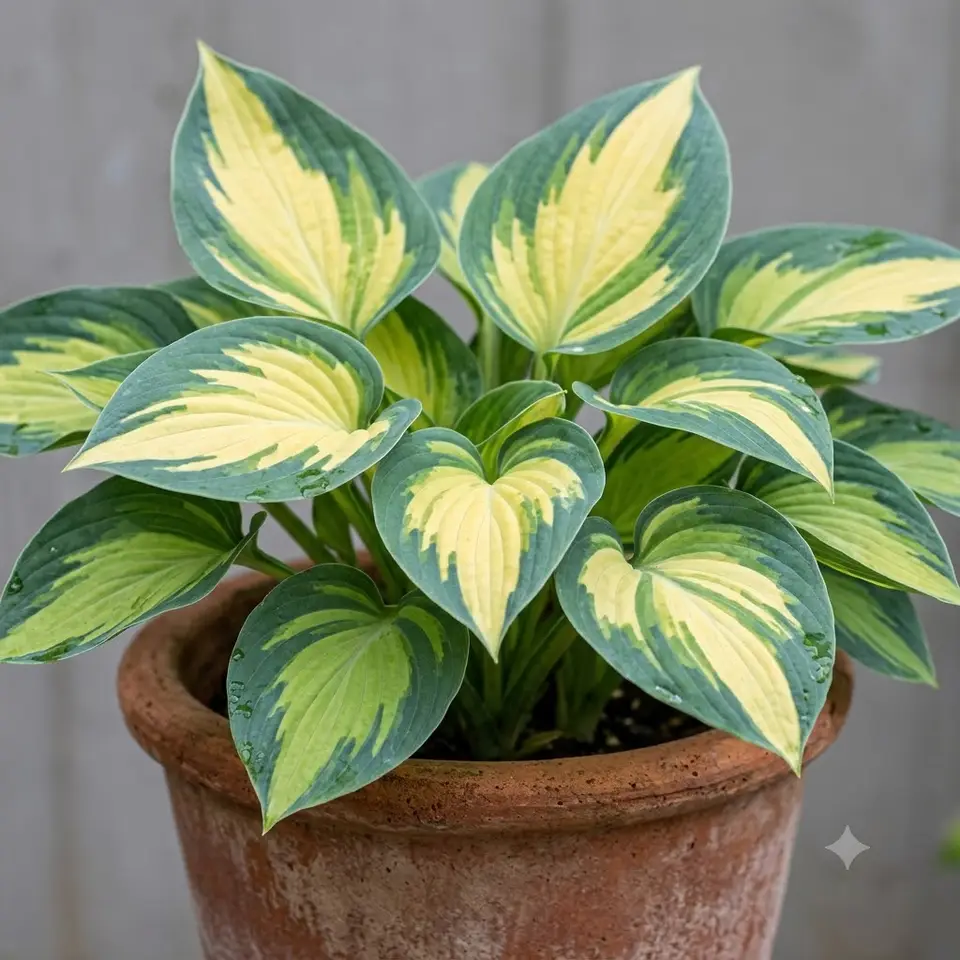
June Hosta (Hosta 'June') is a compact, colour-shifting foliage plant prized for leaves that pair a bright gold-chartreuse centre with cool blue-green margins.
Last reviewed: September 2026
 AI illustration
 Overview
June Hosta (Hosta 'June') is a compact, colour-shifting foliage plant prized for leaves that pair a bright gold-chartreuse centre with cool blue-green margins. What sets this cultivar apart is how its colouring changes with the light - more golden where it catches morning sun, more blue-grey in deeper shade. It is one of the most widely grown small hostas and was named American Hosta Growers Association Hosta of the Year in 2001.
Origin & Background
The genus Hosta is native to East Asia - chiefly Japan, China and Korea - where the species grow on woodland floors, streambanks and shaded slopes. 'June' is not a wild plant but a garden cultivar: it arose as a sport (a spontaneous mutation) of the blue-leaved 'Halcyon', part of the Tardiana group, and was introduced through UK breeders around 1991. Its stable, two-tone variegation is why it became a nursery staple.
Appearance
'June' forms a neat, mounding clump of thick, slightly puckered, heart-shaped to oval leaves. Each leaf shows a creamy-gold to chartreuse centre framed by irregular blue-green to dark green margins, and the contrast intensifies as the season warms. Mature height is roughly 30 to 40 cm with a spread of about 60 to 90 cm. In mid to late summer it sends up slender scapes of pale lavender, bell-shaped flowers held above the foliage. In autumn the leaves fade to soft yellow before the plant dies back to the ground for winter dormancy.
Why People Grow It - Qualities & Benefits
- Reliable colour in shade, where many plants only offer plain green
- Compact size that suits containers, edging and small beds
- Thick-substance leaves that shrug off wind and resist slug damage better than thin-leaved hostas
- Low-maintenance and long-lived, returning larger each year with almost no fuss
Care
Light: Part shade to full shade; a little gentle morning sun deepens the gold centre, but hot afternoon sun scorches the leaves. Water: Consistent, even moisture - water during dry spells and never let the crown bake out. Soil: Rich, humus-heavy, well-drained soil that stays evenly moist; slightly acidic to neutral pH (about 6.0 to 7.0) is ideal. Hardiness: USDA zones 3 to 8 (tolerates zone 9 in cooler microclimates). Bloom or Season: Foliage plant from spring through autumn, with lavender flowers in mid to late summer and soft yellow colour before dormancy. Extra: The signature quirk is its light-driven colour shift - the same clump reads more gold in brighter spots and more blue in shade, so placement changes its look. Note: Hostas are toxic to cats and dogs - the saponins they contain cause vomiting, diarrhoea and depression if eaten.
Planting & Propagation
Plant in spring or early autumn, setting the crown level with the soil surface and spacing clumps about 60 to 90 cm apart to allow for spread. Work in compost at planting and mulch to hold moisture. Propagate by division in early spring as the shoots (called eyes) emerge: lift the clump, split it into sections each with roots and a few eyes using a sharp spade or knife, and replant promptly. Division every few years also keeps large clumps vigorous.
Common Problems & Pests
- Slugs and snails chew holes in the foliage, though 'June' resists them better than thinner-leaved hostas
- Scorched, bleached leaf centres from too much direct sun or dry soil
- Crown and root rot in soggy, poorly drained sites, plus occasional damage from deer and voles
Toxicity & Safety
Hostas are toxic to cats and dogs. All parts of the plant contain saponins, and ingestion causes vomiting, diarrhoea and depression (lethargy). If a pet chews the leaves or flowers, remove access to the plant and contact a veterinarian, especially if signs persist.
Pros & Cons
Pros
- Bright, shifting foliage colour that lights up shady corners
- Tough, easy-care and long-lived with good slug resistance
Cons
- Toxic to cats and dogs
- Dies back completely in winter, leaving a bare gap until spring
Best Suited For
- Shade and woodland gardens, borders and container displays
- Beginner gardeners wanting dependable colour without high maintenance
FAQ
How much sun can June Hosta take?
It does best in part shade to shade. A touch of morning sun brings out the gold centre, but hot afternoon sun will scorch and bleach the leaves, so avoid full exposure.
How big does June Hosta get?
Expect a compact mound around 30 to 40 cm tall and 60 to 90 cm wide at maturity, which makes it a good fit for edging, small beds and pots.
Gear for growing june hosta
Links go to Amazon or a partner store (such as Adagio Teas) and may earn us a commission at no extra cost to you. As an Amazon Associate we earn from qualifying purchases. We link gear types, not sponsors' picks: you choose the exact product.