Scarlet Elf Cup
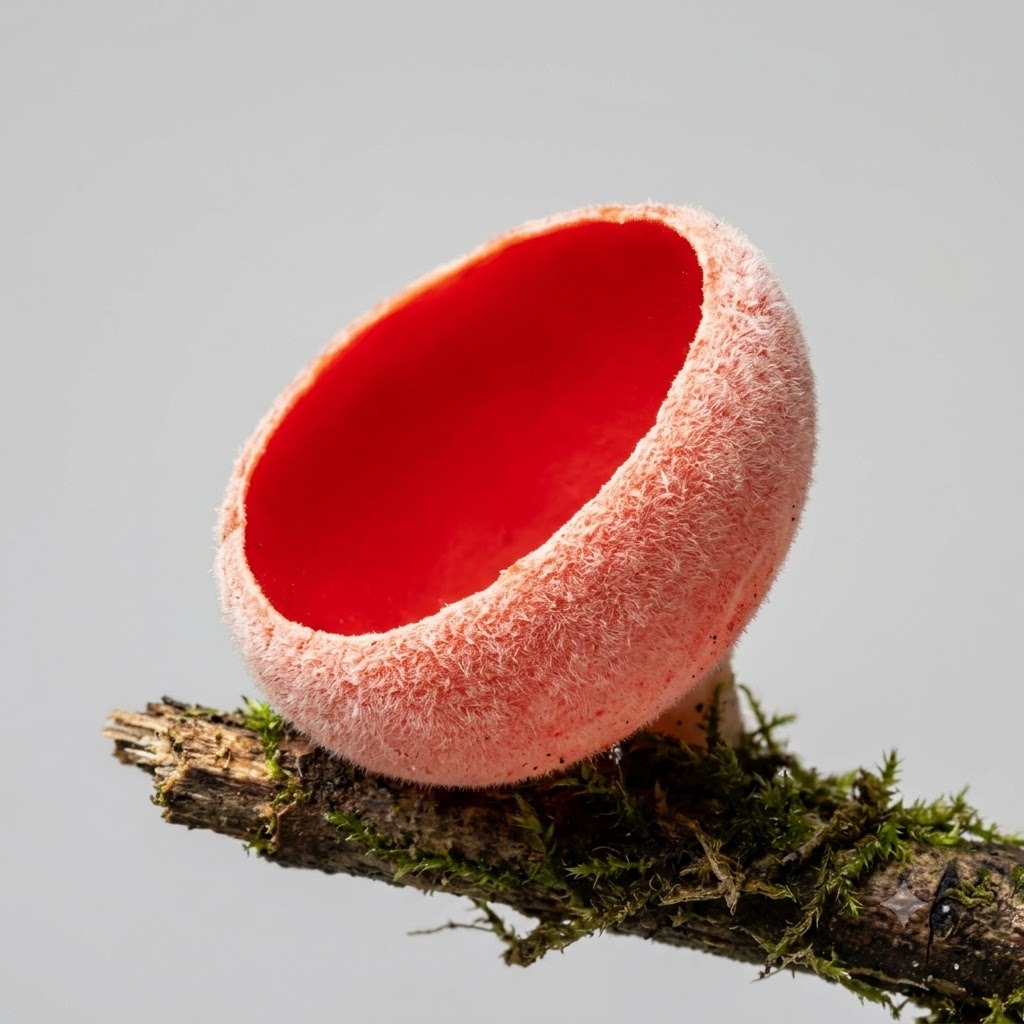
The scarlet elf cup (Sarcoscypha austriaca and the closely related Sarcoscypha coccinea) is the small brilliant red bowl that appears on damp mossy sticks in late winter and early spring, when the woods are otherwise bare and brown.
🗓️ Last reviewed: August 2026
Overview
The scarlet elf cup (Sarcoscypha austriaca and the closely related Sarcoscypha coccinea) is the small brilliant red bowl that appears on damp mossy sticks in late winter and early spring, when the woods are otherwise bare and brown. It is one of the earliest fungi of the year and one of the most photographed, since a scatter of scarlet cups on a wet mossy branch is startling against a February woodland floor. It is edible in the technical sense, mild and crunchy, and it is used more as decoration than as food. In parts of North America it has a documented history of traditional use, and among the Oneida it was reportedly applied as a dressing on wounds, a use recorded in ethnobotanical literature rather than practised today.
Identification & Appearance
The fruit body is a shallow cup or bowl, 1-5 cm across, brilliant scarlet to vermilion on the inner surface and whitish to pale pink and finely downy on the outside. It sits on a short pale stalk, sometimes almost stalkless, attached to buried or mossy dead wood. The texture is firm and slightly rubbery rather than fleshy. There are no gills and no pores; this is an ascomycete, a cup fungus, and it releases spores in a fine puff from the inner surface, sometimes visibly, when disturbed or warmed. Separating the two main species reliably needs a microscope, since it depends on spore and hair characteristics, and both are treated identically. The bright red interior, pale downy exterior, cup shape, and late winter timing on mossy hardwood sticks are unmistakable at the genus level; nothing else in a temperate winter wood looks like it.
Where It Grows
Scarlet elf cups are saprotrophs on damp, mossy, decaying hardwood sticks and branches lying on the woodland floor, often partly buried in moss or leaf litter so that the cup seems to emerge from the ground. Favoured hosts include willow, hazel, elm, beech, and other broadleaves in damp woodland, riversides, and shaded hedge banks. The season runs from midwinter to early spring, roughly January to April in much of Europe, occasionally starting in late autumn. The species is widespread across Europe, North America, and Asia. Damp, shaded, humid sites with plenty of fallen wood and thick moss are the classic habitat, and once found, the same sticks and banks often produce for several years running.
How to Grow at Home
It is not commercially cultivated and no spawn is sold. As a wood saprotroph it can be cultured in a laboratory, but there is no home method and no commercial reason for one, since it is thin, small, and barely edible. The realistic approach is habitat: leave damp hardwood sticks and branches on the ground in a shaded, moist corner of a garden, allow moss to grow over them, and do not tidy. In woodland gardens with willow or hazel this species arrives on its own surprisingly often. That is genuinely worth doing for its own sake, since a scatter of scarlet cups in February is one of the more cheerful things a garden can produce at that time of year.
Growing Conditions
Light
Shade to deep shade. It fruits in damp shaded woodland and hedge banks; the bright colour is not related to light exposure and specimens in deep shade are just as vivid.
Watering
Constant dampness is the requirement. This is a species of wet moss and waterlogged sticks, and it fruits during the wettest, coldest part of the year. It disappears in dry conditions.
Temperature & Substrate
Fruiting spans roughly 0-10°C in midwinter and early spring, making it one of the most cold-tolerant fruiting fungi in temperate woodland. The substrate is damp decaying hardwood sticks and branches, usually moss-covered and often partly buried.
Culinary Use
Edible, but this is a garnish rather than a meal. The flesh is thin, firm, and slightly crunchy, with almost no flavour, and it holds its red colour well when lightly cooked, which is the reason chefs occasionally use it. Traditional uses include filling the cups with a stuffing and baking them, floating them in clear soup for colour, or slicing them into salads after cooking. Cook them; the general rule against eating wild mushrooms raw applies to ascomycetes as much as to gilled fungi. They should be brushed clean carefully, since moss and grit lodge in the cup and the outer surface. Given how small each cup is and how little flavour it carries, the honest position is that most people should photograph them and leave them where they are.
Health & Nutrition
Nutritionally negligible, since the quantities involved are tiny and the flesh is thin. There is no significant toxicity concern with correctly identified scarlet elf cups. The ethnobotanical record includes use as a wound dressing among some Indigenous North American peoples, and that history is interesting, but it is history rather than a recommendation; putting fungal tissue on a wound risks introducing infection and has no place in modern first aid. As with any wild species, gather only from clean woodland and cook before eating. Anyone eating it for the first time should have a small portion. This is a species where the main value is ecological and aesthetic rather than nutritional.
Common Problems
- Grit and moss lodged in the cup - unavoidable given the habitat. Brush carefully or leave them alone.
- Species-level identification - separating the two main Sarcoscypha species requires microscopy. It has no practical consequence, since both behave the same.
- Almost no flavour - accurate. Use it for colour and texture, not taste.
- Very small yield - a large number of cups makes a small dish, which conflicts with leaving enough to sporulate.
- Fragile in transport - they crush easily. Carry them in a rigid box.
Pros & Cons
Pros
- Spectacular colour at the bleakest time of year.
- Unmistakable at the genus level with no dangerous look-alikes.
- Holds its red colour when lightly cooked.
- Easy to encourage simply by leaving damp mossy sticks in a shaded garden corner.
Cons
- Almost no flavour and very thin flesh.
- Tiny yield for the effort.
- Requires careful cleaning because of the mossy habitat.
- Species-level identification needs a microscope.
Best Suited For
- Photographers and winter woodland walkers.
- Chefs wanting a striking natural garnish.
- Gardeners with a damp shaded corner who want winter interest.
Not ideal for anyone looking for a wild mushroom to actually eat in quantity.
FAQ
When should I look for it? Midwinter to early spring, roughly January to April in much of Europe. It is one of the very first fungi of the year and often fruits in frost.
Is it really edible? Technically yes, cooked, but it is thin and nearly flavourless. It is used for colour rather than substance, and most foragers leave it.
How do I tell the two species apart? You generally cannot without a microscope, since the differences are in the spores and surface hairs. It makes no practical difference.
Never eat a scarlet elf cup without 100% expert identification. Even in a distinctive group, confirm the cup shape, brilliant red interior, pale downy exterior, and attachment to damp hardwood with an experienced identifier before eating.
🪴 Foraging kit worth a look
Nothing here identifies a mushroom for you - identification stays with your field guides and local experts. These are simply the basics foragers carry.
Links go to Amazon or a partner store (such as Adagio Teas) and may earn us a commission at no extra cost to you. As an Amazon Associate we earn from qualifying purchases. We link gear types, not sponsors' picks: you choose the exact product.