Philodendron Gloriosum
Philodendron Gloriosum (Philodendron gloriosum) is a prized crawling aroid grown for its large, velvety, heart-shaped leaves veined in bright silvery-white.
Last reviewed: September 2026
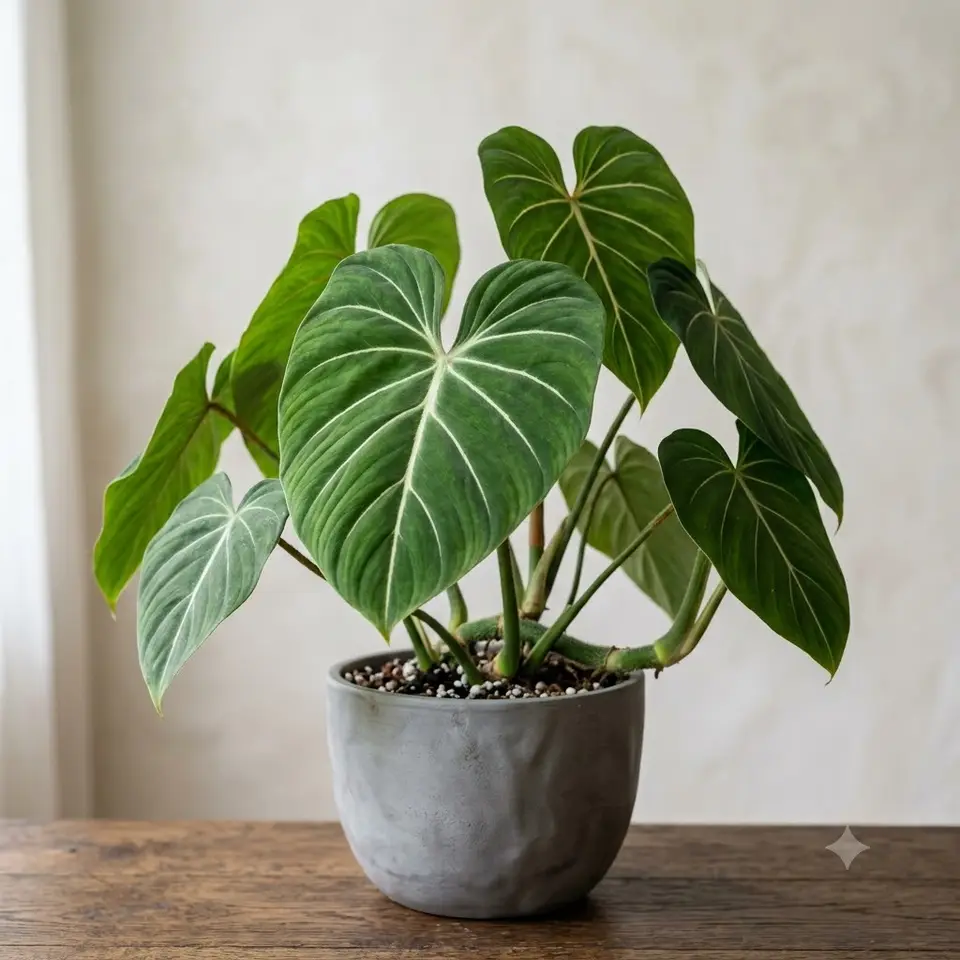 AI illustration
 Overview
Philodendron Gloriosum (Philodendron gloriosum) is a prized crawling aroid grown for its large, velvety, heart-shaped leaves veined in bright silvery-white. Unlike most climbing philodendrons, it is a terrestrial creeper: its thick rhizome runs horizontally along the soil surface rather than climbing upward. It is a slow grower and a long-standing collector favourite, valued for the plush texture and dramatic vein contrast of each new leaf.
Origin & Natural Habitat
Philodendron gloriosum is native to Colombia. In the wild it grows as a terrestrial plant on the shaded, humid forest floor of tropical lowland and foothill rainforest, where its rhizome creeps across leaf litter and damp soil. It lives in warm, consistently moist, low-light understorey conditions rather than up in the canopy.
Appearance
The leaves are large, heart-shaped (cordate) and held on sturdy petioles that rise from a creeping surface rhizome. Each leaf has a deep velvety, almost matte texture in dark green, patterned with striking silvery-white to pale-green veins and often a subtle pink to pale margin. Indoors, mature leaves commonly reach around 20 to 60 cm long, and larger with age and space; in ideal conditions leaves can grow bigger still. Growth is horizontal and spreading rather than upright, so a wide, shallow container suits it better than a tall pot.
Why People Grow It - Qualities & Benefits
- Dramatic velvety foliage with high-contrast silver veins that reads as a living statement piece.
- A creeping rhizome habit that is unusual and interesting compared to typical climbing philodendrons.
- Relatively compact footprint in height, since it spreads sideways rather than up.
- A satisfying collector plant that rewards patience with progressively larger, more impressive leaves.
Care
Light: Bright, indirect light. Avoid direct midday sun, which can scorch the velvety leaves; too little light gives smaller, dull foliage and leggy petioles. Water: Keep the mix lightly and evenly moist during active growth, letting the top few centimetres dry before watering again. Ease off in winter. It dislikes both drying out fully and sitting in soggy soil, which rots the rhizome. Soil: A chunky, airy, well-draining aroid mix - for example potting soil blended with orchid bark, perlite and coco coir. Good aeration around the rhizome is essential. Temperature & Humidity: Warm, roughly 18 to 29°C, and protected from cold draughts and temperatures below about 13°C. It prefers high humidity, ideally 60% or more; it tolerates average room humidity but grows slower and can develop crisp edges in dry air. Feeding: Feed with a balanced, diluted liquid fertiliser roughly monthly during spring and summer, and pause in the darker, colder months. Extra: The key quirk is the rhizome: plant it on top of the soil, not buried, and pot it in a wide, shallow container so it has room to crawl forward. Growth is slow, so patience is part of the deal. Note that this plant is toxic to cats and dogs if chewed (insoluble calcium oxalate crystals), causing oral irritation, drooling and vomiting - keep it out of reach of pets.
Propagation
Propagate by rhizome or stem cuttings. Cut a section of the creeping rhizome that includes at least one node and, ideally, an existing leaf and some roots. Let the cut surface dry and callus for a few hours, then lay it on top of moist, chunky mix so the node contacts the surface, keep it warm and humid, and wait for new roots and a growth point to establish. It roots slowly, so give it time.
Common Problems & Pests
- Rhizome or root rot from overwatering, burying the rhizome, or dense, poorly draining soil.
- Sap-sucking pests such as spider mites, mealybugs, thrips and scale, especially in dry indoor air.
- Yellowing, small or crisping leaves from overwatering, too little light, low humidity or cold draughts.
Toxicity & Safety
Philodendron gloriosum is toxic to cats and dogs. Like other philodendrons, its tissues contain insoluble calcium oxalate crystals; when a pet bites or chews the leaves or stems, these needle-like crystals are released and irritate the mouth and throat. Typical signs include intense oral pain and irritation, pawing at the mouth, excessive drooling, difficulty swallowing and vomiting. It is also irritating to people if chewed, so keep it away from pets and small children, and wash your hands after handling cut tissue or sap.
Pros & Cons
Pros
- Show-stopping velvety leaves with bold silver veining.
- Stays relatively low and spreading, so it fits shelves and wide planters well.
Cons
- Slow growing, so it takes patience to reach impressive size.
- Toxic to pets, and fussy about humidity and correct rhizome planting.
Best Suited For
- Collectors and enthusiasts who enjoy a slower, more deliberate grow and can offer warmth and humidity.
- Pet-free or carefully managed homes where the foliage can be kept out of reach.
FAQ
Why is my Gloriosum growing so slowly?
That is normal for this species; it is a naturally slow grower. Steady bright indirect light, warmth, high humidity and a chunky moist mix will speed it up as much as possible, but expect only a few new leaves per year.
Should I bury the rhizome when I pot it?
No. Lay the rhizome on top of the soil with only the roots in the mix. Burying it traps moisture against the rhizome and greatly increases the risk of rot.
Sources
Pet toxicity: checked against the ASPCA Animal Poison Control Center lists of toxic and non-toxic plants for cats and dogs, genus-wide entry "Philodendron Pertusum" (Philodendron spp): toxic to cats and dogs. Lists read on 10 October 2026.
Gear for growing philodendron gloriosum
Links go to Amazon or a partner store (such as Adagio Teas) and may earn us a commission at no extra cost to you. As an Amazon Associate we earn from qualifying purchases. We link gear types, not sponsors' picks: you choose the exact product.