Nelly Moser Clematis
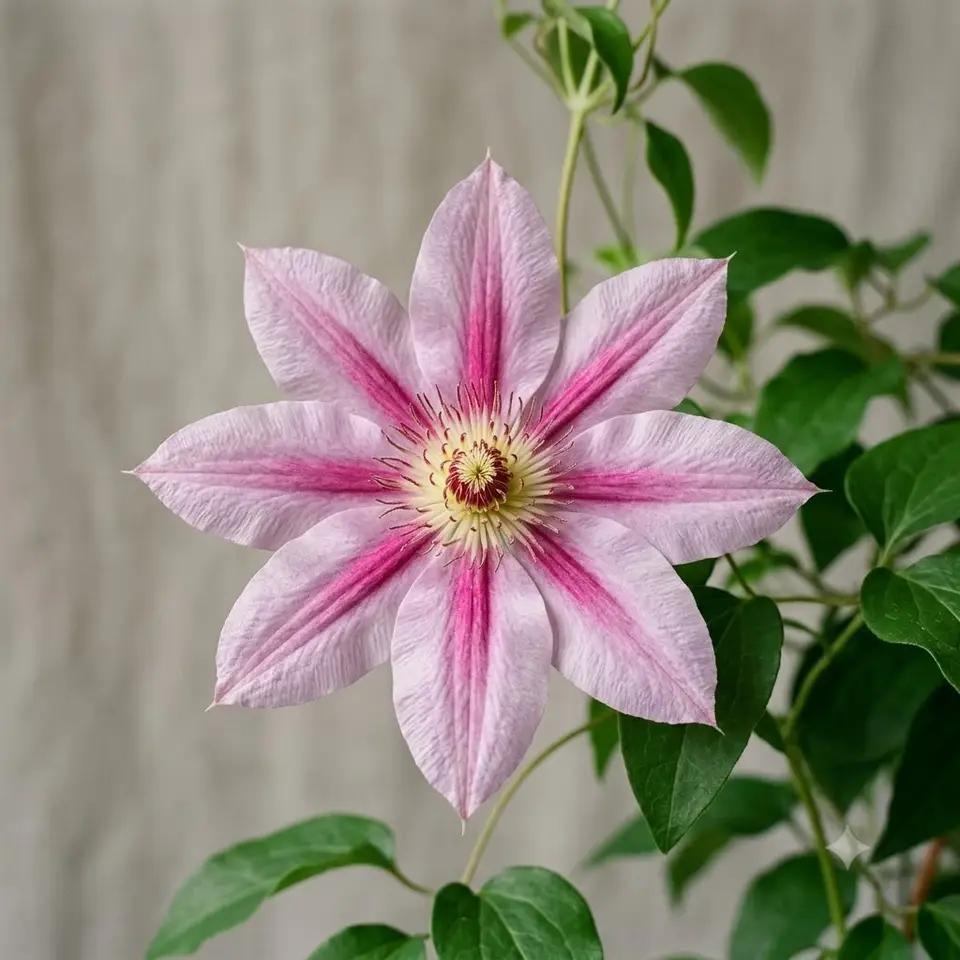
Nelly Moser is one of the most recognisable large-flowered clematis, prized for enormous pale mauve-pink blooms each striped down the centre with a deep carmine bar (Clematis 'Nelly Moser').
Last reviewed: September 2026
 AI illustration
 Overview
Nelly Moser is one of the most recognisable large-flowered clematis, prized for enormous pale mauve-pink blooms each striped down the centre with a deep carmine bar (Clematis 'Nelly Moser'). It is a vigorous, hardy deciduous climber that flowers heavily in early summer and again in late summer, making it a longtime favourite for walls, fences and trellises. Its forgiving nature and reliable display make it a good first clematis.
Origin & Background
The genus Clematis is widespread across the temperate Northern Hemisphere, with species native to Europe, Asia and North America; the large-flowered garden hybrids descend largely from East Asian species such as C. patens and C. lanuginosa. 'Nelly Moser' itself is an old French cultivar, raised by Marcel Moser and introduced around 1897, and it has remained in cultivation ever since as a classic garden clematis.
Appearance
The flowers are very large, typically 15 to 20 cm across, with usually eight broad, overlapping tepals of soft pale mauve-pink. Each tepal carries a striking deep pink to carmine central bar, giving the bloom a bold pinwheel or "banded" look, set off by reddish-purple anthers at the centre. The main flush comes in late spring to early summer (roughly May to June) on old wood, with a lighter repeat flush in late summer to early autumn. It climbs by twining leaf stalks to a mature height of about 2.5 to 3.5 m with a spread of around 0.9 to 1.2 m. Being deciduous, it dies back over winter and re-shoots in spring; the pale flowers can bleach if grown in strong direct sun.
Why People Grow It - Qualities & Benefits
- Huge, showy bicolour blooms that create instant impact on a wall or fence
- Two flushes of flower, in early summer and again in late summer
- Tolerates part shade and cooler aspects better than many large-flowered clematis
- Hardy, vigorous and beginner-friendly, with a long track record of reliability
Care
Light: Best in partial shade or morning sun; the pale flowers fade in hot afternoon sun, so an east or north aspect suits it well, ideally with the roots shaded and the top in gentle light. Water: Keep evenly moist, especially in the first couple of years and during dry spells; it dislikes drying out but also resents waterlogging. Soil: Fertile, moisture-retentive but well-drained soil; neutral to slightly alkaline pH is ideal. Hardiness: USDA zones 4 to 9. Bloom or Season: Main flush late spring to early summer, with a second lighter flush in late summer to early autumn. Extra: This is a Pruning Group 2 clematis - prune lightly in late winter or early spring, removing dead or weak stems and shortening others to a strong pair of buds, so the early flowers on old wood are preserved. Shade the root zone with a mulch, low planting or nearby perennials to keep the roots cool. Note for pet owners: clematis is toxic to cats and dogs, so site it where pets are unlikely to chew the stems.
Planting & Propagation
Plant in spring or autumn, setting the crown about 5 to 8 cm deeper than it sat in the pot to encourage strong basal shoots and help the plant recover if wilt strikes; provide a support such as a trellis or wires and water in well. As a named cultivar it will not come true from seed, so propagate it vegetatively: take semi-hardwood cuttings in summer, or peg down a low stem to layer it into the soil in summer and separate it once rooted the following season.
Common Problems & Pests
- Clematis wilt, a fungal dieback that can collapse shoots suddenly; cut affected stems back to healthy tissue and deep planting helps recovery
- Powdery mildew in warm, still conditions, and aphids on soft new growth
- Slugs, snails and earwigs damaging young shoots and buds in spring
Toxicity & Safety
Clematis 'Nelly Moser' is toxic to cats and dogs. The sap contains protoanemonin, an irritant compound released when the plant is chewed or bruised. Contact and ingestion can cause drooling, mouth and skin irritation, vomiting and diarrhoea. Poisoning is usually mild because the bitter, acrid taste discourages animals from eating much, but it is sensible to plant it out of reach of pets and to wash hands after handling cut stems.
Pros & Cons
Pros
- Large, eye-catching bicolour flowers with two seasons of bloom
- Hardy, adaptable and tolerant of part shade, so it is easy to place
Cons
- Flower colour bleaches in strong direct sun
- Susceptible to clematis wilt, and toxic to cats and dogs
Best Suited For
- Gardeners wanting a reliable, high-impact climber for a shaded or cooler wall, fence or trellis
- Beginners looking for a forgiving first clematis with a long flowering season
FAQ
Why do the flowers of my Nelly Moser look washed out?
The pale mauve-pink tepals bleach in strong, direct sunlight. Growing it in partial shade or on an east or north-facing aspect keeps the colour and central bar much richer.
How and when should I prune it?
It is a Pruning Group 2 clematis. In late winter or early spring, remove dead or damaged stems and lightly trim the rest back to a strong pair of buds. Avoid hard pruning, or you will cut off the early-summer flowers that form on last year's wood.
Gear for growing nelly moser clematis
Links go to Amazon or a partner store (such as Adagio Teas) and may earn us a commission at no extra cost to you. As an Amazon Associate we earn from qualifying purchases. We link gear types, not sponsors' picks: you choose the exact product.