'New Dawn' Rose
'New Dawn' holds patent #1 - literally the first plant ever patented (granted 1931), and earned it: the pearl-pink climber that repeat-blooms where others quit, tolerates north-ish walls and poor spots, and remains the world's default 'first climbing rose'.
Last reviewed: October 2026
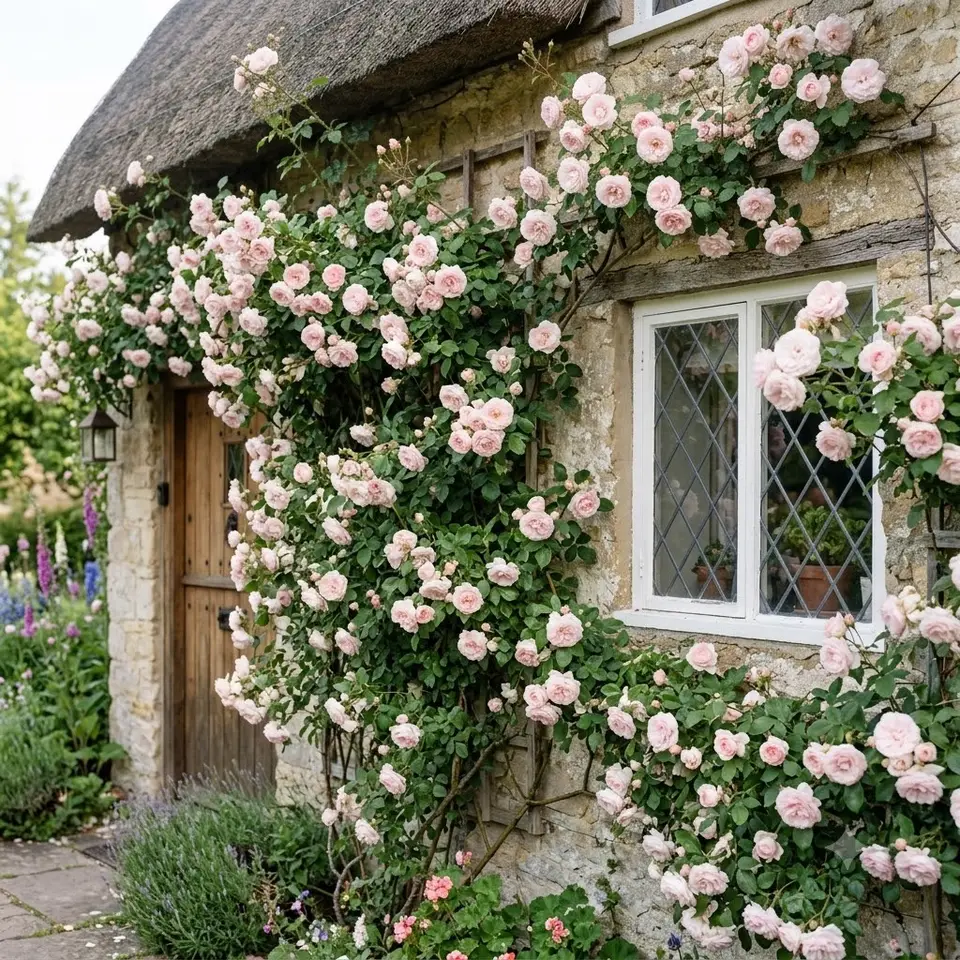 AI illustration
 Overview
'New Dawn' holds patent #1 - literally the first plant ever patented (granted 1931), and earned it: the pearl-pink climber that repeat-blooms where others quit, tolerates north-ish walls and poor spots, and remains the world's default 'first climbing rose'. (Rosa 'New Dawn', climber.)
Origin & Natural Habitat
USA 1930, a repeat-blooming sport of 'Dr. W. Van Fleet'; US Plant Patent No. 1; WFRS Hall of Fame 1997.
Appearance
Vigorous climber 3-5 m; glossy near-evergreen foliage and continuous soft pearl-pink 8 cm blooms with a light apple scent.
Why People Grow It - Qualities & Benefits
- Repeat bloom on a genuinely tough climber
- Tolerates less sun than any major climbing rose
- Glossy healthy foliage
- A century of proof on real walls
Care
Light: Famously performs with as little as 4-5 hours sun - the shade-tolerant exception (more sun = more bloom still).
Water: Deep soak at the base about once a week, more in heat.
Soil & Feeding: As for every garden rose - the full routine is in the rose care guide.
Temperature & Hardiness: Zones 4-9 - iron-hardy for a climber.
Pruning & Maintenance: Climber rules: train canes horizontal for bloom-spurs, spring-prune side shoots to 2-3 buds, renew old canes occasionally.
Planting & Propagation
Off-patent for generations - own-root cuttings strike readily; everywhere in commerce.
Common Problems & Pests
- Vigor needs managing on small structures
- Thorns are serious: glove up
- Some seasons pause bloom mid-heat, resume in fall
Toxicity & Safety
Roses are non-toxic to dogs and cats - the thorns are the only hazard.
Pros & Cons
Pros
- Beauty + toughness + repeat
- Cold- and shade-tolerant
- History in your fence line
Cons
- Big and thorny
- Soft pink only
- Light scent
Best Suited For
- First climbing roses
- North- and east-ish walls
- Cold-climate arches and fences
- Cottage classics
FAQ
Will it really flower on a shady wall?
Better than any comparable climber - 4-5 hours of decent light produces a respectable show where other roses go blind. Full sun is still fuller.
Why train canes horizontally?
Rose physiology: horizontal canes break into flowering side-shoots along their whole length; vertical canes bloom only at the tip. The single most valuable climbing-rose trick.
Gear for growing 'new dawn' rose
Links go to Amazon or a partner store (such as Adagio Teas) and may earn us a commission at no extra cost to you. As an Amazon Associate we earn from qualifying purchases. We link gear types, not sponsors' picks: you choose the exact product.