Duchesse de Nemours Peony
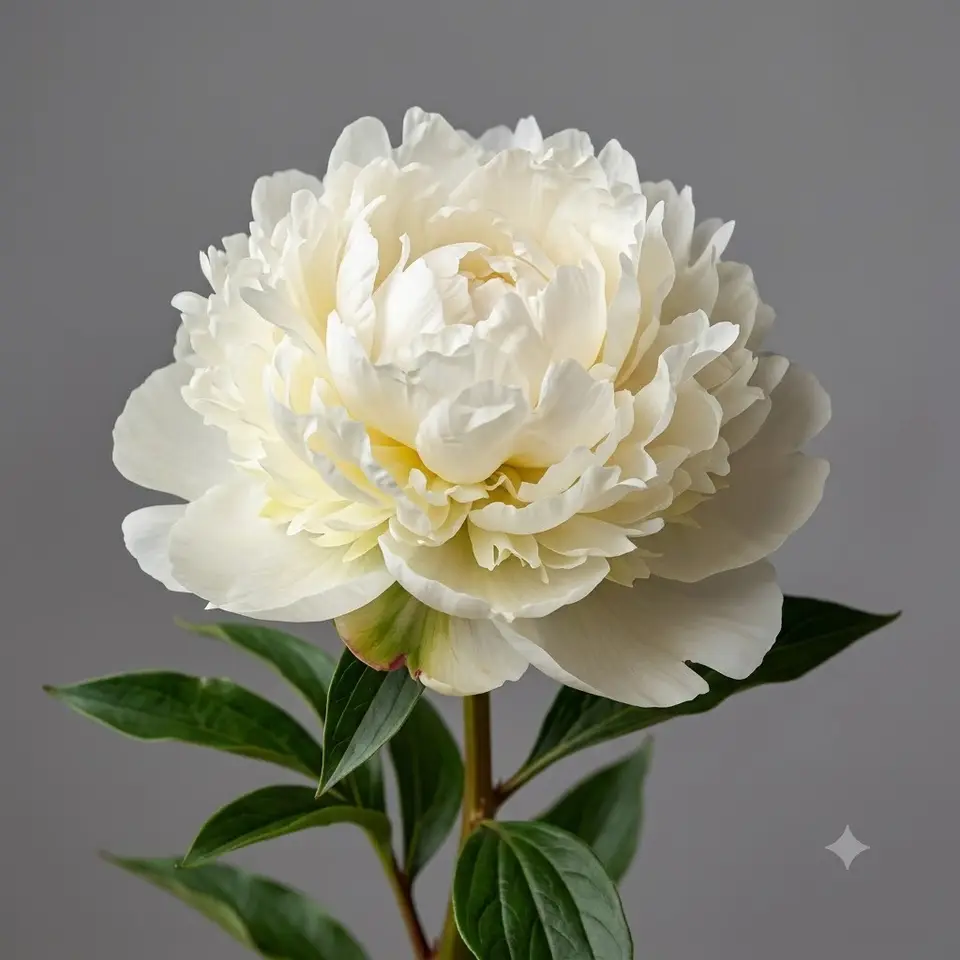
'Duchesse de Nemours' is one of the oldest and most beloved white herbaceous peonies, prized for large, fully double, cup-to-bombe blooms that open with a faint greenish-yellow flush at the heart before ageing to pure milk white (Paeonia lactiflora 'Duchesse de Nemours').
Last reviewed: July 2026
 AI illustration
 Overview
'Duchesse de Nemours' is one of the oldest and most beloved white herbaceous peonies, prized for large, fully double, cup-to-bombe blooms that open with a faint greenish-yellow flush at the heart before ageing to pure milk white (Paeonia lactiflora 'Duchesse de Nemours'). What sets this cultivar apart is its powerful, sweet fragrance - often likened to lily-of-the-valley - paired with strong stems that make it a classic cut flower. It is a proven garden performer that can live and bloom for decades once established.
Origin & Background
The garden peonies in this group descend largely from Paeonia lactiflora, a species native to eastern Asia, including northern China, Mongolia, and eastern Siberia, where it grows in grassland and scrubby slopes. 'Duchesse de Nemours' itself is a French heritage cultivar raised by the breeder Calot and introduced in 1856, making it one of the enduring survivors of the great 19th-century era of peony breeding.
Appearance
The flowers are large, typically 12 to 18 cm across, fully double, and formed of densely packed, ruffled petals. They emerge cream to pale sulphur-yellow at the centre and mature to a clean, luminous white, sometimes keeping a soft primrose glow deep in the bloom. Flowering falls in the early-to-mid part of the peony season, generally late spring into early summer. The plant is herbaceous, forming a rounded, bushy clump of glossy, deeply divided green foliage about 80 to 90 cm tall and 70 to 90 cm wide. The leaves take on bronze and reddish tints in autumn before the whole plant dies back to the ground for winter.
Why People Grow It - Qualities & Benefits
- Intensely fragrant, romantic white blooms that scent a whole border or vase
- Exceptional longevity - an undisturbed clump can thrive for 30 years or more
- Excellent cut flower with strong stems and good vase life
- Reliable, low-maintenance perennial once settled, with attractive foliage after flowering
Care
Light: Full sun is best, ideally six or more hours daily; it tolerates light afternoon shade but flowers more freely and stands more upright in sun. Water: Moderate and even; keep soil moist during the first seasons and through dry spells, but never waterlogged. Soil: Deep, fertile, humus-rich and well-drained soil with a near-neutral pH around 6.5 to 7.0. Hardiness: USDA zones 3 to 8; it needs a period of winter cold to bloom well. Bloom or Season: Early-to-mid peony season, roughly late spring to early summer, with a main flush lasting about one to two weeks per clump. Extra: Plant the growth buds (eyes) only 2 to 5 cm below the soil surface - burying them too deep is the most common reason a healthy plant fails to flower. Note that this plant is toxic to cats and dogs: peonies contain paeonol, concentrated in the bark and roots, and ingestion causes vomiting and diarrhoea.
Planting & Propagation
Plant bare-root divisions or potted plants in early autumn so roots establish before winter. Set them in a permanent, sunny spot with the eyes just below the surface, as peonies resent disturbance and dislike being moved. Propagate by lifting and dividing the tuberous roots in early autumn, cutting the crown into sections that each carry 3 to 5 eyes and a good portion of root. Growing from seed is possible but very slow and will not come true to the parent, so division is the standard method.
Common Problems & Pests
- Botrytis (grey mould), which blackens buds and stems in cool, wet springs; improve airflow and clear old foliage
- Failure to flower, usually from planting too deeply, too much shade, or a clump still too young
- Flopping stems when blooms are heavy or rain-laden, often needing discreet ring supports
Toxicity & Safety
This peony is toxic to cats and dogs. The plant contains paeonol, a compound concentrated in the bark and roots, and ingestion typically causes vomiting and diarrhoea. Cases are usually mild, but keep curious pets from digging up or chewing the roots, and contact a veterinarian if a pet eats a significant amount or seems unwell.
Pros & Cons
Pros
- Superb fragrance and elegant, pure-white double blooms
- Extremely long-lived and hardy with minimal ongoing care
Cons
- Short main bloom window of only a week or two each year
- Slow to establish, and heavy flowers may need staking
Best Suited For
- Cottage gardens, mixed borders, and dedicated cut-flower beds in cold-winter climates
- Gardeners wanting a plant-once, enjoy-for-decades perennial with strong scent
FAQ
Why is my Duchesse de Nemours not flowering?
The most frequent cause is planting the eyes too deep; they should sit only 2 to 5 cm below the surface. Too much shade, recent transplanting, or a young clump can also delay blooming, so give it full sun and patience for two or three seasons.
Does it need staking?
Often yes. The large double flowers can bow the stems, especially after rain, so a discreet grow-through ring or peony hoop placed in spring keeps the display upright without looking obtrusive.
Gear for growing duchesse de nemours peony
Links go to Amazon or a partner store (such as Adagio Teas) and may earn us a commission at no extra cost to you. As an Amazon Associate we earn from qualifying purchases. We link gear types, not sponsors' picks: you choose the exact product.