Dutch Iris
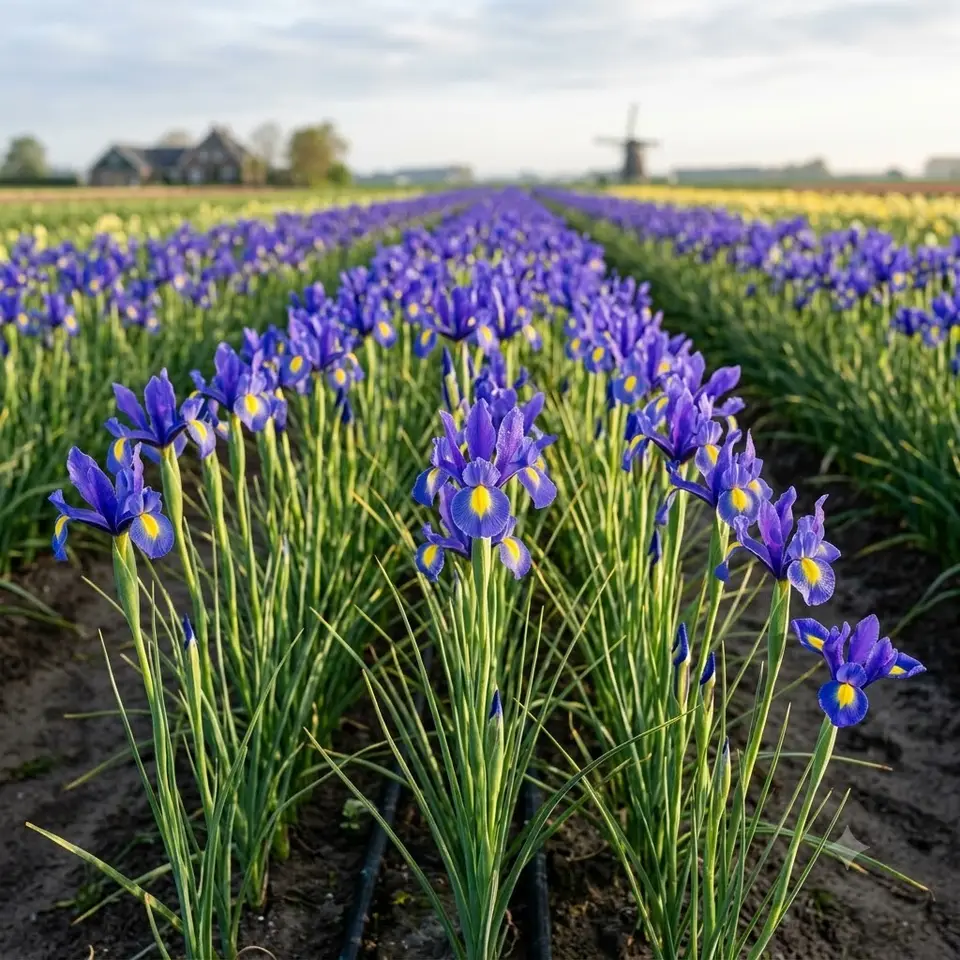
Dutch iris are the florist's iris from a cheap fall bulb - orchid-elegant blooms in blues, yellows, whites and bronzes on 50 cm stems, effortless in the cutting row and dotted through borders.
Last reviewed: October 2026
 AI illustration
 Overview
Dutch iris are the florist's iris from a cheap fall bulb - orchid-elegant blooms in blues, yellows, whites and bronzes on 50 cm stems, effortless in the cutting row and dotted through borders. Plant in October, cut by June, spend almost nothing. (Iris × hollandica.)
Origin & Natural Habitat
Dutch-bred hybrids of Spanish and North African species; the commercial cut-flower iris worldwide.
Appearance
50-60 cm wiry stems with classic three-falls iris blooms 8-10 cm - 'Professor Blaauw' blue the standard - over sparse grassy leaves; late May-June.
Why People Grow It - Qualities & Benefits
- Florist flowers at bulk-bulb prices
- The easiest iris (no rhizome fuss)
- Cutting-garden royalty
- Slots between perennials invisibly
Care
Light: Full sun.
Water: Ordinary spring moisture, drier summer rest.
Soil: Well-drained, average; unfussy.
Planting: Fall, 10-12 cm deep in rows or scatters; treat as cheaply renewable (see FAQ).
Hardiness: Zones 6-9 reliably perennial; colder = mulch or replant-annually economics.
After flowering: Cut freely (it's the point); let remaining foliage feed down; some gardens repeat-bloom them for years, others refresh bulbs.
Propagation
Offsets in good sites; most gardeners simply top up bulbs each fall - the price makes it rational.
Common Problems & Pests
- Petering out after year 1-2 in cold/wet gardens (renew: they're pennies)
- Slugs on emergence
- Nothing more serious
Toxicity & Safety
Mildly toxic if eaten (iris rule) - rodents respectfully decline.
Pros & Cons
Pros
- Instant elegant cuts
- Trivially cheap and easy
- Slim footprint anywhere
Cons
- Shorter garden career in cold zones
- One bloom flush
- Sparse foliage = no presence off-bloom
Best Suited For
- Cutting rows and allotments
- Border gap-dotting
- Beginner bulb success
- Blue-and-yellow June schemes
FAQ
Why did they vanish after two springs?
Cold-wet summers rot the summer-resting bulbs in zones 5-6 - the professional answer: replant each fall like tulip growers do; a bag costs less than one florist bunch.
When to cut for the vase?
At 'pencil stage' - color showing, bloom furled; they unfurl indoors and last a week-plus.
Sources
Pet toxicity: checked against the ASPCA Animal Poison Control Center lists of toxic and non-toxic plants for cats and dogs, genus-wide entry "Iris" (Iris species): toxic to cats and dogs. Lists read on 10 October 2026.
Gear for growing dutch iris
Links go to Amazon or a partner store (such as Adagio Teas) and may earn us a commission at no extra cost to you. As an Amazon Associate we earn from qualifying purchases. We link gear types, not sponsors' picks: you choose the exact product.