Blue Angel Hosta
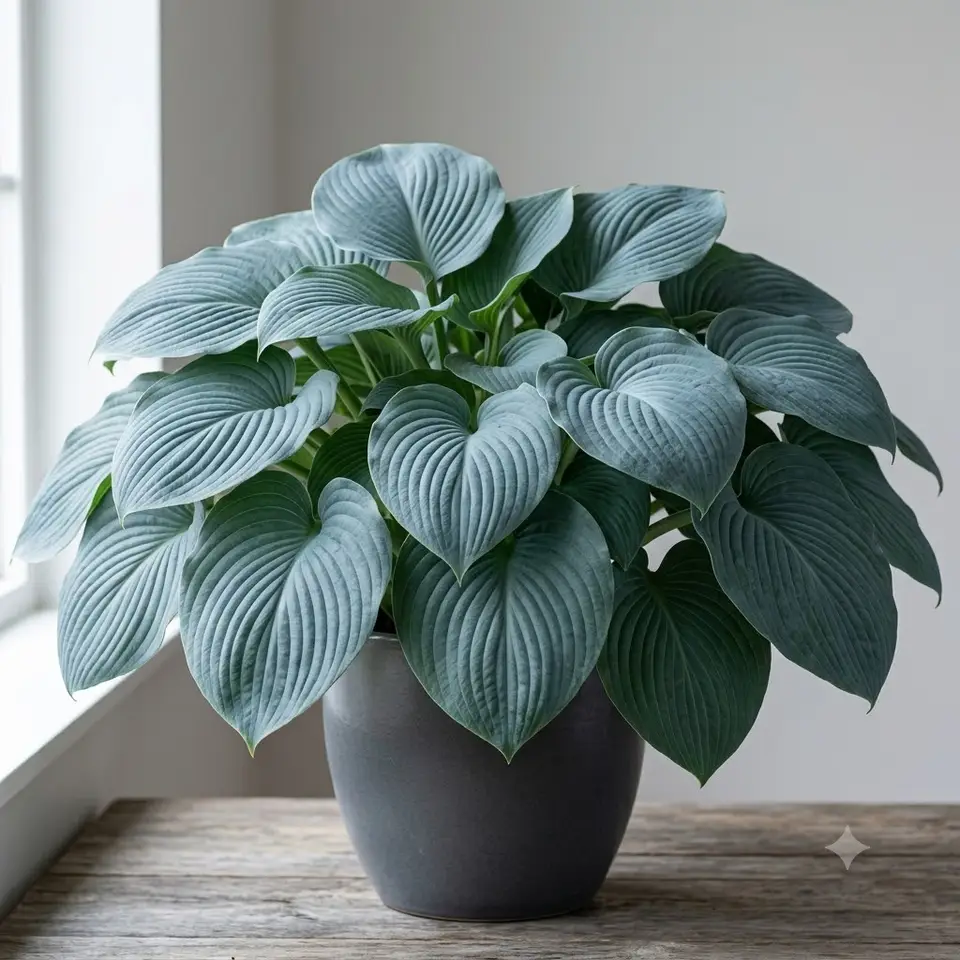
Blue Angel is one of the largest and most dramatic blue-leaved hostas, forming a giant mound of huge, heavily textured blue-green leaves (Hosta 'Blue Angel').
Last reviewed: September 2026
 AI illustration
 Overview
Blue Angel is one of the largest and most dramatic blue-leaved hostas, forming a giant mound of huge, heavily textured blue-green leaves (Hosta 'Blue Angel'). What sets it apart is sheer scale combined with a cool, waxy blue finish that holds up well in shade. It is a landscape anchor plant rather than a filler, and a single mature clump can dominate a shaded border.
Origin & Background
The genus Hosta is native to northeast Asia, chiefly Japan, China and Korea, where wild species grow in woodland margins, streamsides and rocky slopes. Blue Angel is a garden cultivar credited to American breeder Paul Aden and introduced in the mid 1980s. Like most blue hostas, its colour comes not from pigment but from a waxy (glaucous) coating on green leaf tissue.
Appearance
Blue Angel produces very large, broadly heart-shaped leaves that are frosty blue-green, thick, and deeply corrugated with age. Mature clumps typically reach around 90 cm tall and spread 120 to 150 cm wide, making it a true giant. Near-white to palest lavender bell-shaped flowers rise on tall scapes above the foliage in early to midsummer. The blue tone is strongest in spring and cool weather; heat and strong sun gradually melt the waxy bloom toward green, and the plant dies back completely in winter.
Why People Grow It - Qualities & Benefits
- Massive, architectural clump that anchors a shade bed on its own
- Cool blue foliage that brightens dark corners and pairs with almost anything
- Thick, corrugated leaves that resist slug damage better than thin-leaved hostas
- Long-lived and low-maintenance once established, returning bigger each year
Care
Light: Part shade to full shade; morning sun with afternoon shade keeps the blue colour best. Water: Consistent, even moisture; never let a large clump dry out in heat. Soil: Rich, humus-heavy, well-drained soil that stays moist; slightly acidic to neutral pH. Hardiness: USDA zones 3 to 8. Bloom or Season: Foliage plant from spring emergence to autumn dieback, with pale summer flowers; leaves yellow before dying back for winter dormancy. Extra: Give it room from the start, since it grows far wider than most gardeners expect, and protect the waxy blue coating by keeping it out of hot afternoon sun. Note: hostas are toxic to cats and dogs.
Planting & Propagation
Plant in spring or early autumn, setting the crown at soil level in ground enriched with compost, and space it generously to allow for the eventual 1.2 to 1.5 m spread. Water deeply while establishing. The simplest way to propagate is division in early spring as the shoots emerge: lift the clump and cut or pull it into sections, each with roots and several eyes, then replant at the same depth.
Common Problems & Pests
- Slugs and snails chew holes, though thick leaves make this cultivar more resistant than most
- Leaf scorch and faded, browned edges from too much sun or dry soil
- Deer and voles, which browse foliage and gnaw crowns respectively
Toxicity & Safety
Blue Angel, like all hostas, is toxic to cats and dogs. The leaves, flowers and roots contain saponins, and ingestion can cause vomiting, diarrhoea and depression (lethargy). Signs are usually mild to moderate, but keep pets from grazing on the plants and contact a veterinarian if a pet eats a significant amount or seems unwell.
Pros & Cons
Pros
- Bold, giant blue clump with strong landscape presence
- Tough, textured leaves with good slug resistance
Cons
- Needs a lot of space and steady moisture
- Toxic to cats and dogs, and dies back to nothing in winter
Best Suited For
- Shaded borders, woodland gardens and large containers needing a focal point
- Gardeners in cool to temperate zones who want a low-fuss, long-lived perennial
FAQ
How big does Blue Angel Hosta actually get?
Expect roughly 90 cm tall and 1.2 to 1.5 m across at maturity, so give it plenty of room; it is one of the largest blue hostas available.
Why is my Blue Angel turning green instead of blue?
The blue is a waxy surface coating, not pigment. Heat, watering overhead and strong sun wear it away, so more shade and gentler conditions help keep the blue.
Gear for growing blue angel hosta
Links go to Amazon or a partner store (such as Adagio Teas) and may earn us a commission at no extra cost to you. As an Amazon Associate we earn from qualifying purchases. We link gear types, not sponsors' picks: you choose the exact product.