Why Houseplants Get Leggy
Long bare stems, wide gaps between leaves and a plant leaning at the window are the usual signs of too little light. How to tell leggy growth from other problems, how to give the plant more light without scorching it, and how to prune and reuse the stretched stems.
A leggy houseplant is almost always asking for more light. When a plant gets less light than it needs, it puts its energy into growing longer stems to reach a brighter spot, so you see tall thin stems, long bare gaps between leaves and a plant that leans toward the window. The UC Statewide IPM Program describes exactly this: low light often causes elongated, spindly shoots, so plants grow taller than normal on thin stems. Stretched stems stay stretched. What you can do is fix the cause, prune the plant into shape and root the cuttings.
How to recognise leggy growth
Leggy growth has a recognisable look:
- Long gaps between leaves. The bare section of stem between two leaves (the internode) gets longer than on older growth lower down.
- Thin, weak stems that flop or need support.
- Leaning or growing to one side, toward the window.
- Leaves that look different. UC IPM notes that foliage can turn paler or darker depending on the species, and that leaves can grow larger and thinner than normal and drop early, starting with the most shaded ones.
- A bare base with all the leaves crowded at the stem tips.
Autumn and winter make all of this more likely. Days are shorter, the sun sits lower and a plant that was happy on a shelf in July may now get a fraction of the light it had. The stretch is easiest to see on the newest growth.
Rule out the lookalikes
Not every stretched, pale plant is short of light. UC IPM points out that poor aeration in the root zone and some plant growth regulators can cause symptoms that look like low light. In practice, check two things before you move the plant:
- The roots and soil. Soil that stays wet for days, a sour smell or soft brown roots suggest a drainage problem, which our guide on saving an overwatered plant walks through.
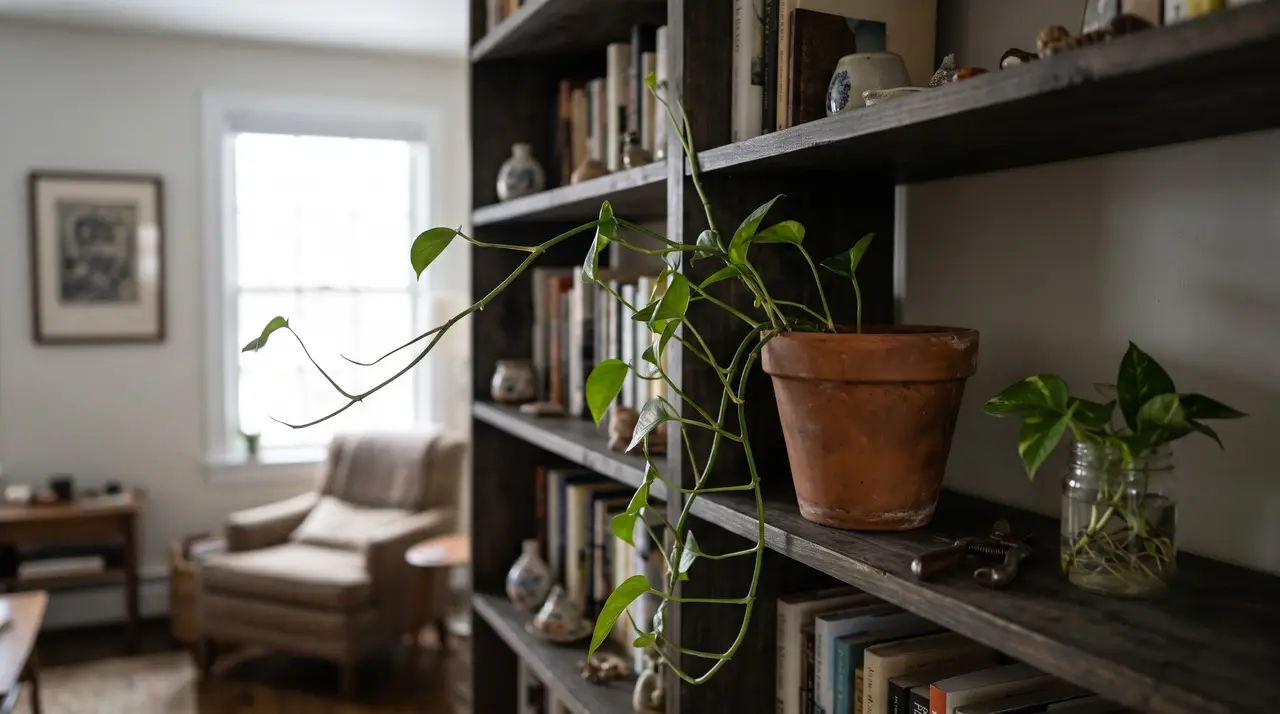
- The growth habit of the species. Some plants are vines or trailers by nature. A pothos with long trailing stems is doing what pothos do; it is leggy only if the gaps between leaves are much longer than on healthy older growth.
If the soil is fine and the new growth is clearly more stretched than the old, light is the likely cause.
Give the plant more light, gradually
The fix starts with light. You have three options, and you can combine them.
Move it closer to a window. Our light checker tool helps you judge how bright a spot is and which plants suit it. Make the change in stages over several days rather than going straight from a dim corner to a hot sunny sill, since a plant used to low light can scorch in sudden strong sun.
Turn the plant regularly. A quarter turn every time you water keeps one side from doing all the reaching and helps the plant grow evenly. Turning stops the lopsided lean, though the plant still needs enough light overall.
Add a grow light. In a dark room or a northern winter, a window may not be enough whatever you do. An LED grow light on a timer gives a consistent day length. Our grow light guide explains what to look for. Follow the maker’s instructions for the distance between lamp and leaves, as this varies between models.
Hold back on fertiliser while you sort out the light. Feeding does not make up for missing light.
Prune the stretched stems
Once the plant is in a brighter spot, cut it back to encourage bushier growth.
- Use clean, sharp snips or scissors. Wipe the blades first, particularly if you are moving between plants.
- Cut just above a leaf node, the slight bump on the stem where a leaf joins. Many plants send out new shoots from the nodes just below a cut, which fills the plant in.
- Take the worst stems first. You do not have to cut everything at once; trimming the longest few stems and letting the plant respond is gentler.
- Expect new growth to be compact only if the light has improved. If you prune and leave the plant in the same dim spot, the new shoots will stretch the same way.
If you prefer, trim lightly now and make a harder cut once growth picks up in spring.
Root the cuttings
The pieces you cut off are often the start of new plants. Many vining houseplants such as pothos and heartleaf philodendron root from stem cuttings with at least one node. Our guide to propagating houseplants covers rooting in water and in soil. Once the cuttings have roots, you can plant them back into the original pot to thicken up the bare base.
Stretched succulents are a special case. They will not tighten back up, so the usual approach is to cut off the compact top, let the cut dry and replant it.
Preventing it next time
- Match the plant to the spot before you buy, using its light needs on our plant profiles.
- Move plants closer to the glass, or under a grow light, as autumn days shorten.
- Turn pots a little each week.
- Watch new growth: wider gaps between new leaves are the first sign the plant wants more light.
Recommended Gear on Amazon
- LED grow lights with timers - browse current options and reviews on Amazon.
- Pruning snips - browse current options and reviews on Amazon.
- Plant caddies with wheels - browse current options and reviews on Amazon.
As an Amazon Associate, we earn from qualifying purchases - at no extra cost to you. This helps us keep producing free, in-depth guides.