Keeping a Poinsettia Alive Indoors
How to pick a healthy poinsettia at the shop, get it home without a chill, and keep its leaves through the holidays: light, temperature, drafts, watering through the foil sleeve, and what it takes to make it colour up again next year.
A poinsettia stays good-looking through the holidays when it gets bright indirect light, steady room warmth away from drafts, and soil that stays evenly moist without ever sitting in water. Most leaf drop comes from one of three things: a chill on the way home or by a cold window, a hot dry spot next to a heater, or water trapped in the decorative sleeve. The care sheet from Clemson University’s Home & Garden Information Center is the source for the specific numbers below.
Choosing a healthy plant
The coloured “petals” of a poinsettia are bracts, modified leaves. The true flowers are the small yellow-green buds in the middle of each bract cluster. At the shop, Clemson advises looking for plants with fully mature, thoroughly coloured bracts and plenty of dark green foliage all the way down the stem.
A few more things to check before you buy:
- Lower leaves present. Bare stems near the soil can mean the plant has already been stressed by cold, drought or poor light.
- Soil feel. Press a finger into the mix. Bone-dry soil or a soggy, sour-smelling pot are both warning signs.
- Where it stood. A plant parked next to the automatic doors or outside on a cold pavement may already be chilled, even if it looks fine today.
- Pests. Turn over a few leaves and look for whiteflies. If you find any, keep the plant away from your other houseplants until they are dealt with.
Getting it home without a chill
Poinsettias are tropical plants and sensitive to cold. Clemson warns that chilling injury can cause premature leaf drop if the temperature falls below 50 °F. On a cold day, ask for the plant to be sleeved or bagged, carry it straight to a warm car, and do not leave it in the car while you run other errands. Take the bag off once you are home, because a closed sleeve keeps the leaves crushed and damp.
Light, warmth and drafts
Light. Clemson recommends a bright spot with at least 6 hours of bright, indirect sunlight each day. A table near an east- or south-facing window, out of direct midday sun through the glass, often suits it. In a dim corner the plant will hold its colour for a while and then start shedding lower leaves.
Temperature. The same factsheet says the daytime temperature should not exceed 70 °F. Ordinary room temperature suits it well.
Drafts and heat sources. Keep it away from drafts, excessive heat or dry air from appliances, fireplaces or ventilating ducts. In practice that rules out:
- the floor by a front door that opens onto cold air;
- a windowsill where the leaves touch cold glass at night;
- the top of a radiator, the mantelpiece over a fire, or a spot in the stream of a heating vent.
Watering through the foil sleeve
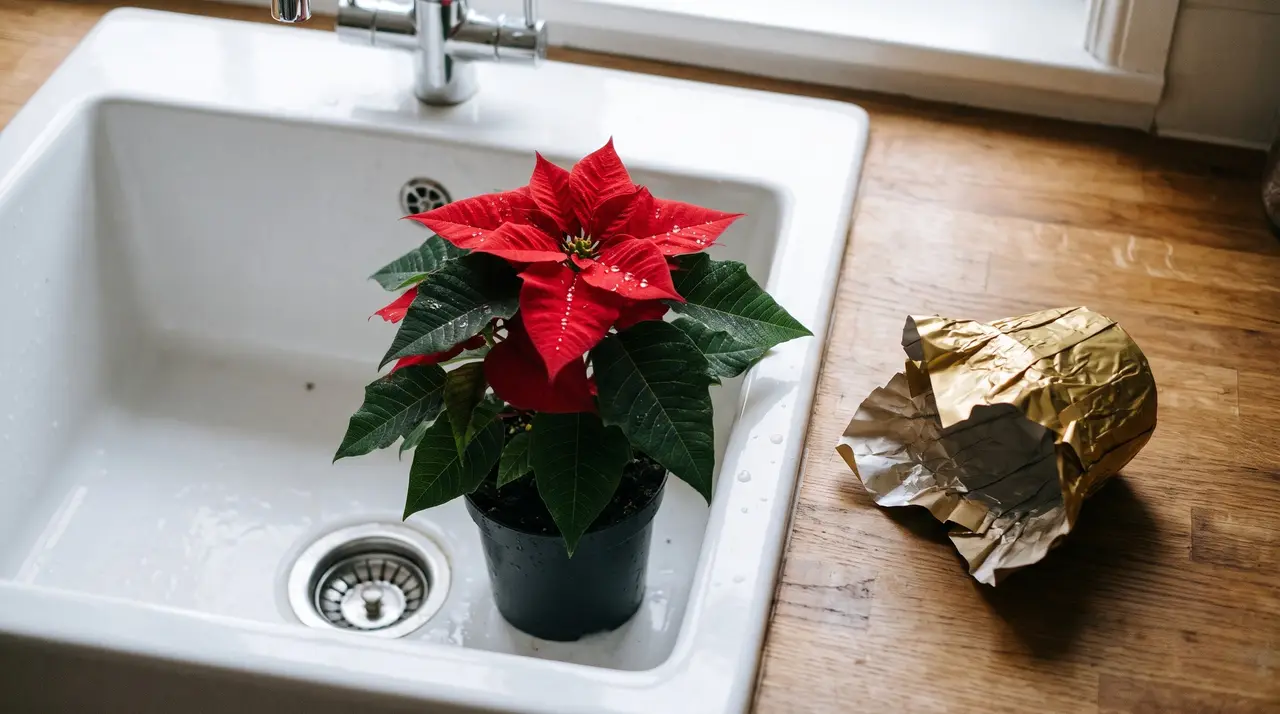
The decorative foil or plastic sleeve that most poinsettias come in is where many of them get into trouble. It holds water around the roots after every watering, and roots that sit in water start to rot.
Clemson’s advice is to keep the mix moderately moist, never letting it dry out completely and never letting the plant sit in standing water. The factsheet also says to take the plant out of its decorative pot cover when watering, and water until water seeps out of the drainage hole. A simple routine:
- Check the soil with a finger every couple of days. Water when the top of the mix starts to feel dry.
- Lift the plant out of the sleeve, or tear a few holes in the bottom of the foil.
- Water at the sink until it drains from the bottom of the nursery pot.
- Let it finish dripping, then put it back in the sleeve with no water left in the bottom.
Wilting can mean too dry or too wet, so always feel the soil before adding more. Our general guide on how to water houseplants goes through the signs of each.
Feeding. Clemson says not to fertilize a poinsettia while it is in bloom. The plant needs no feed through the holidays.
Pets and children
Clemson states that poinsettias are not considered toxic, and that chewing the foliage may lead to stomach upset. It is still sensible to stand the plant where pets and small children cannot pull it down or chew it. For a wider list, see our pet-safe houseplants guide, and ask your vet or a poison helpline if your pet has eaten part of any plant.
Getting it to colour up again
You can treat a poinsettia as a seasonal plant, and that is a perfectly fine choice. Keeping it for another year takes some work. Clemson explains that the poinsettia is a short-day plant that needs a continuous long dark period each night to form its coloured bracts, and that from the first week of October, for an eight- to ten-week period, it has to be kept in total darkness every night. Total darkness means no lamp or streetlight reaching the plant, so one way is to move it into a closet or cover it with a box each evening and bring it back into the light in the morning. The factsheet gives the full schedule.
If you enjoy a reblooming project, the Christmas cactus guide covers another holiday plant that responds to long nights and is much less fussy about it. For the rest of your plants through the cold months, our winter houseplant care guide covers light, watering and heating.
Recommended Gear on Amazon
- Plant saucers - browse current options and reviews on Amazon.
- Soil moisture meters - browse current options and reviews on Amazon.
- Indoor thermometers - browse current options and reviews on Amazon.
As an Amazon Associate, we earn from qualifying purchases - at no extra cost to you. This helps us keep producing free, in-depth guides.