Winter Houseplant Care
Houseplants struggle most in winter. A complete guide to winter houseplant care - watering, light, heating, humidity, and what to stop doing.
Most houseplant deaths happen in winter - and most of them are caused by owners who keep doing exactly what worked in summer. Winter is a different season for a plant: less light, shorter days, cold draughts, dry heated air. Care that was perfect in July becomes harmful in January.
The single biggest principle of winter care is do less. Here’s exactly what to change.
What Happens to Houseplants in Winter
As days shorten and light weakens, most houseplants slow down or go fully dormant. They stop putting out new growth and conserve energy. A dormant plant:
- Uses far less water - soil stays wet much longer.
- Needs no fertilizer - there’s no growth to feed.
- Grows slowly or not at all - and that’s normal, not a problem.
Trying to push a dormant plant with summer levels of water and feed just leads to root rot and salt build-up. Let it rest. If a plant declines every winter, browse our houseplant care guides for species that cope better with low light.
Winter Care: What to Change
1. Water much less
This is the most important change. In winter, soil dries slowly, so plants need water far less often - sometimes half as often as in summer, or less. Always check the soil first: push a finger in, and only water if it’s dry to the depth that plant likes. A schedule that worked in summer will drown a plant in winter.
2. Stop fertilizing
A dormant plant can’t use fertilizer, and unused fertilizer salts build up and burn the roots. Stop feeding from roughly mid-autumn until growth restarts in spring. (Plants that genuinely keep growing under good light or grow lights can have a much-reduced winter feed.)
3. Maximise the light
Winter light is weak and brief. Help your plants get it:
- Move plants closer to windows - even right onto sills.
- Clean the windows and wipe dust off the leaves; every bit of light counts.
- Rotate pots so all sides get the limited light.
- Consider a grow light - winter is when grow lights earn their keep, extending the short day and rescuing plants that decline every year.
4. Beware cold and draughts
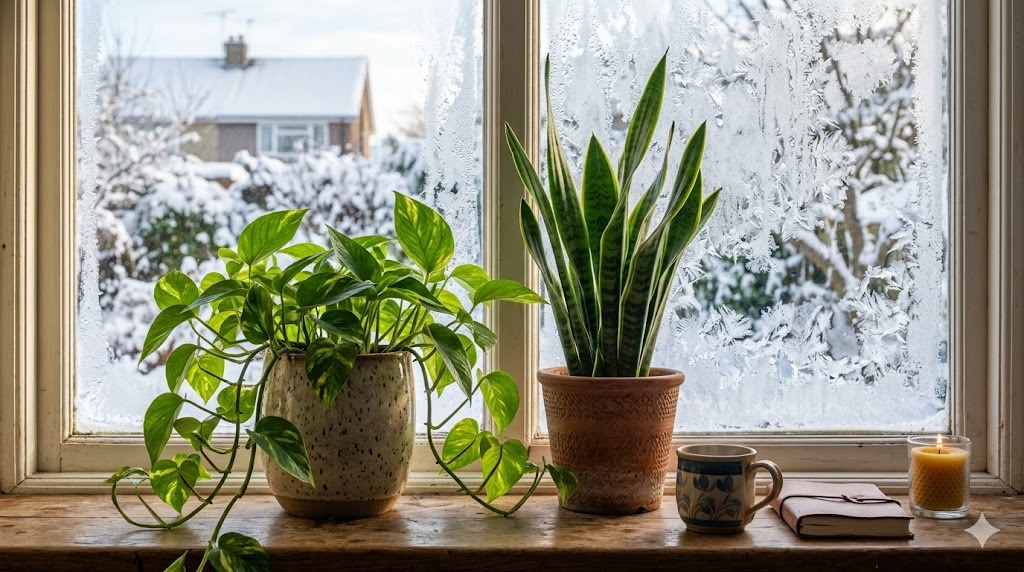
- Keep plants away from cold draughts - gaps around windows and doors, and the cold air pooling against winter window glass at night.
- Don’t let leaves touch freezing window panes.
- Move tender tropicals back from the window on the coldest nights.
- Most houseplants want to stay above ~12-15 °C.
5. Watch out for heating
Radiators and heating vents create hot, bone-dry air. Never place a plant directly above or beside a radiator - it bakes the roots and crisps the leaves. Heated air also drops humidity sharply.
6. Manage the dry air
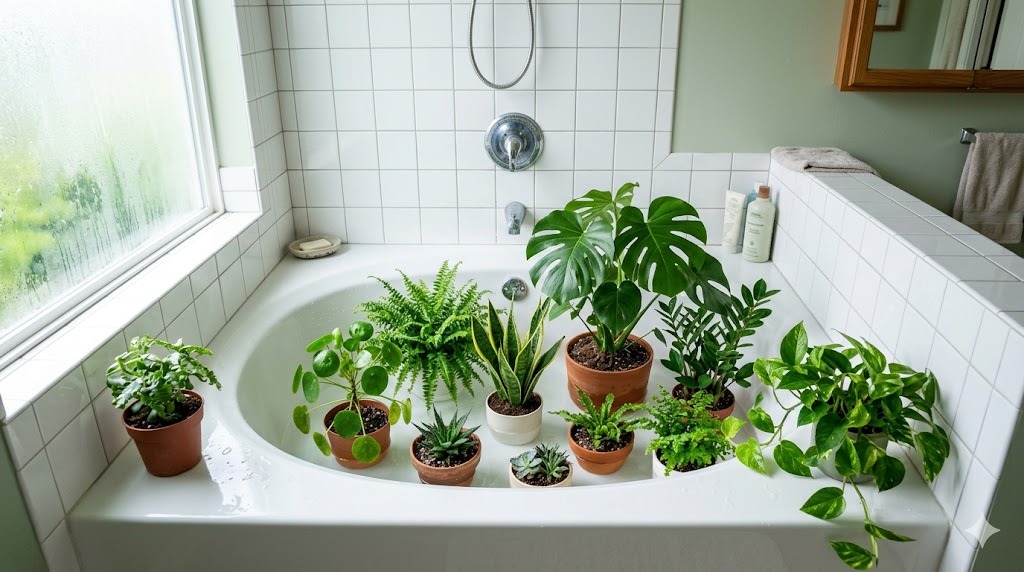
Central heating can pull indoor humidity down to 20-30%. Humidity-loving plants (calatheas, ferns) suffer. Group plants together, use a humidifier, or move sensitive plants to a humid bathroom. (Misting won’t fix it.)
7. Hold off on repotting
Winter is the wrong time to repot - a dormant plant can’t recover from the disturbance. Wait for spring, unless it’s an emergency like root rot; when the time comes, our repotting calculator helps you pick the right pot size.
8. Skip the pruning
Don’t do major pruning in winter; save it for spring when the plant can heal and regrow. Removing the odd dead or yellow leaf is fine.
Winter Problems and What They Mean
- Leaf drop - often just a reaction to lower light or a move; common and usually not fatal. Sudden heavy drop points to a cold draught or temperature shock.
- Yellowing lower leaves - frequently winter overwatering. Cut back on water.
- Leggy, pale new growth - not enough light. Move it brighter or add a grow light.
- Crispy brown tips - dry heated air. Raise humidity.
- No growth at all - usually normal winter dormancy. Don’t try to force it.
The Winter Mindset
Think of winter as your plants’ rest period - and partly your own. Resist the urge to fuss. Water sparingly and only when needed, give all the light you can, keep plants warm and away from draughts and radiators, and otherwise leave them alone. They’re not dying; they’re sleeping. When spring light returns, they’ll wake up and grow - and that’s when you ramp care back up.
Frequently Asked Questions
Why are my houseplants dying in winter?
Almost always winter overwatering. Plants use far less water when growth slows, so the summer watering routine leaves soil soggy and rots the roots. Cut back and check the soil before watering.
Should I fertilize houseplants in winter?
No. Most plants are dormant and can’t use it; unused fertilizer salts build up and damage the roots. Stop feeding in autumn and resume in spring.
Do houseplants need less water in winter?
Yes - significantly less. Lower light and dormancy mean soil dries slowly. Many plants need watering only half as often, or less. Always check the soil first.
Is it normal for houseplants to lose leaves in winter?
Some leaf drop is normal as plants adjust to lower light. Heavy, sudden leaf drop usually means a cold draught or a temperature shock - check the plant’s location.
Should I repot a houseplant in winter?
No - wait for spring. A dormant plant can’t recover well from repotting. The only exception is an emergency like root rot.
🛒 Recommended Gear on Amazon
- Full-spectrum LED grow light - browse current options and reviews on Amazon.
- Plant humidifier - browse current options and reviews on Amazon.
- Soil moisture meter - browse current options and reviews on Amazon.
As an Amazon Associate, we earn from qualifying purchases - at no extra cost to you. This helps us keep producing free, in-depth guides.