How to Clean Houseplant Leaves
Dusty leaves are worth cleaning, and clear water does almost all of it. How to wipe large leaves, rinse small ones, brush fuzzy ones and handle cacti - plus why soap and leaf shine are best left on the shelf.
The short version: wipe large smooth leaves with a soft cloth dampened in plain lukewarm water, rinse small-leaved plants under a gentle lukewarm shower, and use a soft dry brush on fuzzy leaves. You do not need soap, oil or leaf shine. Clear water and a light hand do the job.
Autumn is a good moment for it. Windows are closed, heating is on, dust settles faster and daylight is getting shorter, so a plant has less light to work with in the first place.
Why dusty leaves matter
A leaf makes its food from light, and a layer of dust sits between the leaf and the light. Indoors there is no rain to wash it off, so it builds up, most visibly on plants with broad, flat leaves.
Iowa State University Extension, in its answer on cleaning dusty houseplants, gives three reasons to bother: cleaning improves a plant’s appearance, stimulates growth, and may help control insects and mites.
There is a quieter fourth benefit. Cleaning is the one time you look closely at both sides of every leaf. That is when you notice webbing, sticky patches or small pale specks while they are still a small problem. If you find something, our houseplant pests guide helps you work out what it is.
Large, smooth leaves: wipe
This is the method for plants like the rubber plant, monstera and fiddle leaf fig.
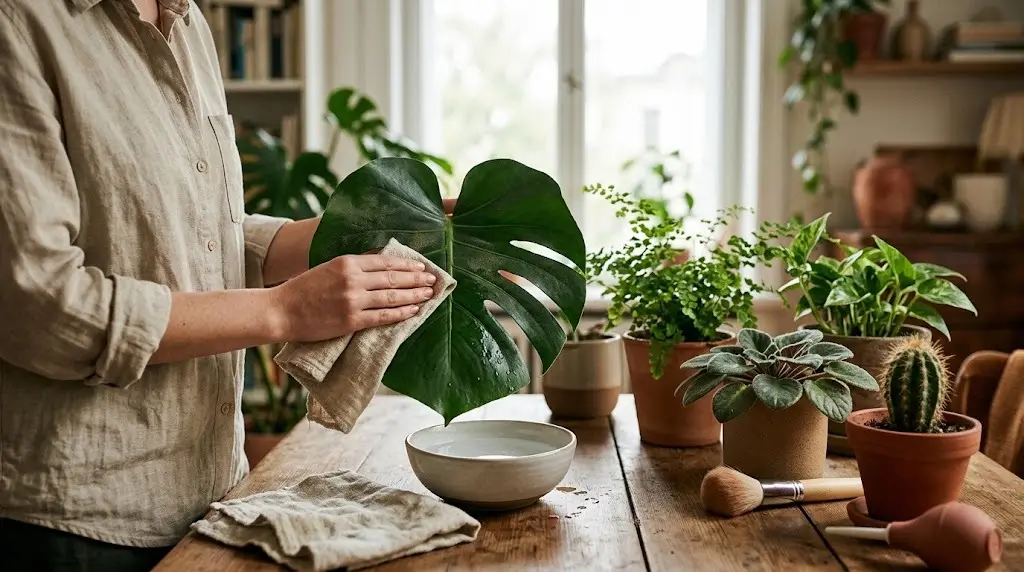
- Dampen a soft cloth or sponge with lukewarm water and wring it out. It should be damp, not dripping.
- Support the leaf from underneath with your free hand. A leaf wiped without support can crease or snap at the stalk.
- Wipe from the stalk towards the tip, top side first, then the underside.
- Rinse the cloth when it gets dirty, so you are lifting dust off and not spreading it around.
The Iowa State page describes exactly this: a damp soft sponge or cloth, rinsed as it picks up dirt. Take a fresh cloth, or rinse very well, when you move from one plant to the next. If one plant has pests, a shared cloth is an easy way to carry them along the shelf.
Young leaves that have just unfurled are soft and mark easily. Leave them alone until they have firmed up.
Small or many leaves: rinse
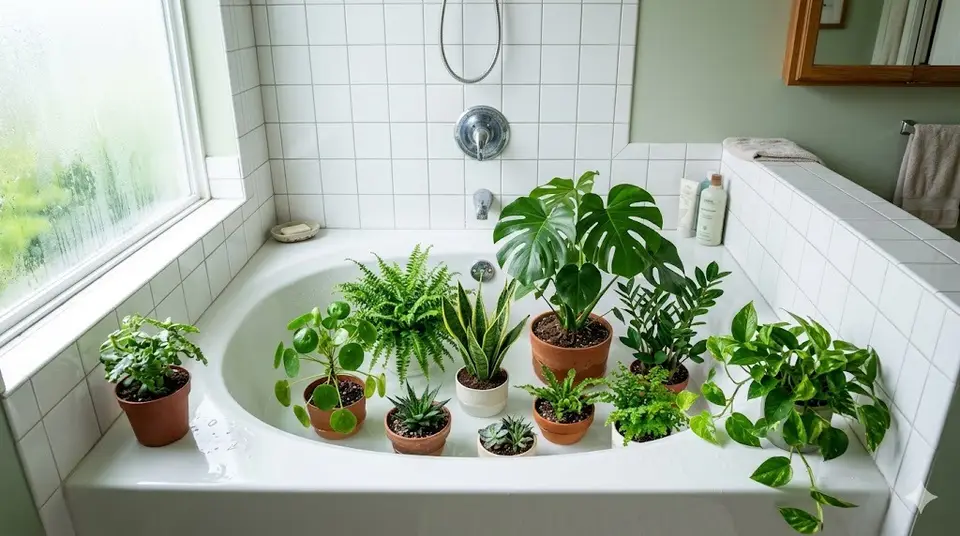
Wiping a fern or a trailing plant leaf by leaf is not realistic. For these, the extension service suggests putting the plant in the sink or shower and spraying it gently with lukewarm water, adjusting the pressure and temperature before the water touches the plant.
A few things make this go well:
- Test the water on your wrist first. Cold water straight from the tap can mark the leaves of some tropical plants, and hot water can scald them.
- Keep the spray soft. A strong jet tears thin leaves and blasts potting mix out of the pot.
- Tilt the pot, or cover the surface of the mix with a bag or a cloth, so the pot does not fill with water. A rinse should not turn into an accidental heavy watering.
- Let the plant drain and drip dry out of direct sun before it goes back to its spot.
If the mix did get soaked, count that as a watering and wait until it has dried to its usual level before you water again. Our guide on how to water houseplants explains how to check.
Fuzzy leaves: brush
Leaves covered in fine hairs hold on to dust and hold on to water, and they are easy to mark. The classic example is the African violet.
Iowa State University Extension says African violets and other fuzzy-leaved plants can be cleaned with a damp, soft cloth or a soft-bristled brush. A small clean paintbrush or a soft makeup brush works well: support the leaf and stroke gently from the base towards the tip. If you use any water, keep it lukewarm, use very little, and keep the plant out of direct sun until the leaves are dry.
Cacti and succulents
Spines make a cloth useless and fingers unwelcome. A soft dry brush gets between them. For dust lodged deep in the ribs of a cactus, a few puffs from a rubber air blower of the kind sold for camera lenses will shift it without touching the plant.
Many succulents carry a pale, powdery coating on their leaves. That is a natural waxy layer, not dust, and it does not grow back where it has been rubbed off. On those plants, brush lightly or use air only, and skip the cloth.
What to leave on the shelf
Soap. The Iowa State page allows that a mild dishwashing soap solution can be used, but warns that household soaps can damage the waxy cuticle of the leaf and cause discolouration and browning, and adds that in nearly all cases a cloth with clear water cleans dust effectively with no potential for damage. If water alone does the job, there is no reason to take the risk.
Leaf shine sprays and home recipes. Oils, milk, mayonnaise and similar tricks leave a film on the leaf. A film is the thing you were trying to remove, and a sticky surface collects new dust faster. Healthy, clean leaves have their own natural sheen. We have not tested commercial leaf shine products, so we will not rank them - we simply do not see what problem they solve that water does not.
Feather dusters. They move dust from one plant to the next, and they can move mites and insects along with it.
How often
There is no schedule to follow. Look at the leaves in good light, or run a finger along one. If you can see or feel a film, it is time. Plants near a busy road, an open window, a kitchen or a heating vent will need it more often than plants in a quiet bedroom.
A quick look every time you water is enough to keep on top of it, and it fits naturally into the rest of your winter houseplant care.
🛒 Recommended Gear on Amazon
- Soft microfibre cloths - browse current options and reviews on Amazon.
- Soft-bristled detail brushes - browse current options and reviews on Amazon.
- Rubber air blower - browse current options and reviews on Amazon.
As an Amazon Associate, we earn from qualifying purchases - at no extra cost to you. This helps us keep producing free, in-depth guides.