10 Cheap Houseplants That Look Expensive
Ten budget houseplants that multiply at home - how each one propagates, the light it needs and which are toxic to cats and dogs, per NC State Extension and the ASPCA.
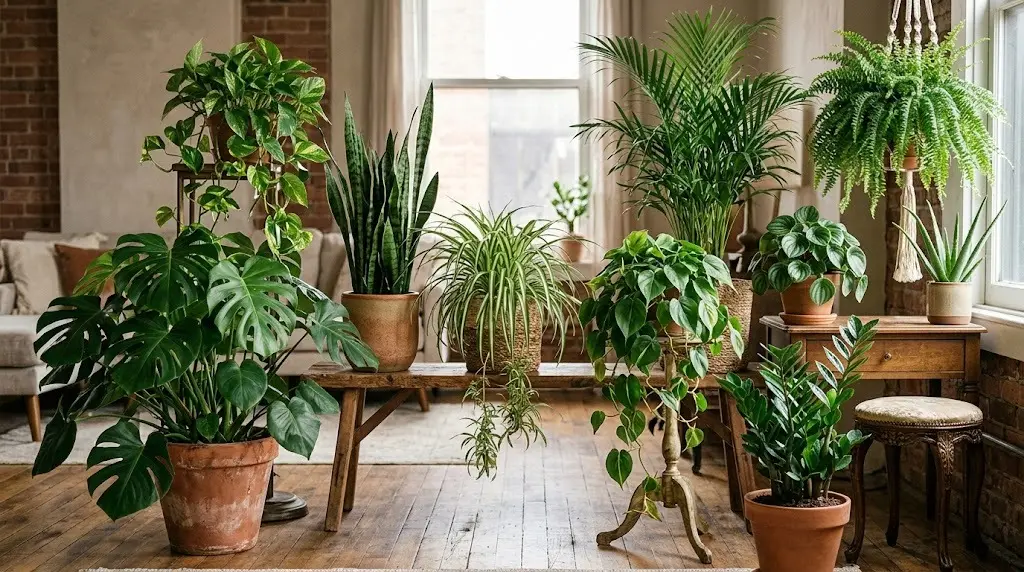
One houseplant can become several if you multiply it at home, and that is the idea behind this list. We picked these ten because NC State Extension’s Plant Toolbox names a home propagation method for every one of them - stem cuttings, leaf cuttings, plantlets, offsets or division.
The table gives each plant’s method, the light the Toolbox describes and its ASPCA entry for cats and dogs; the sections below say how each one multiplies. We do not compare prices or shops, so there are none here.
How We Put This Together
We compared ten houseplants on three points: how NC State Extension’s Plant Toolbox says each one is propagated, the light it describes, and the plant’s entry in the ASPCA lists of plants toxic and non-toxic to cats and to dogs. Every record was read on 14 November 2026. We have not grown or propagated these plants for this article and did not test anything by hand. The list is not a ranking; where the Toolbox calls propagation easy, we say so in its words.
At a Glance: 10 Budget Houseplants
| Plant | How it multiplies | Light (NC State) | Cats and dogs (ASPCA) |
|---|---|---|---|
| Pothos | Stem cuttings; vines root easily in water | Bright, indirect; survives long periods in low light | Toxic |
| Spider plant | Plantlets or division | Medium; tolerates deep shade, not direct sun | Non-toxic |
| Heartleaf philodendron | Stem cuttings | Medium; tolerates low light | Toxic |
| Tradescantia | Stem cuttings | Bright, indirect | Toxic (entry: inch plant) |
| Snake plant | Division or cuttings | Direct sun part of the day; tolerates very low light | Toxic |
| Succulents | Leaf or stem cuttings, offsets | Full sun to partial shade | Depends on the species: blue echeveria non-toxic, jade plant toxic |
| Aloe vera | Offsets, division | Full sun to partial shade | Toxic |
| Coleus | Stem cuttings; root easily in water or potting soil | Bright light indoors | No entry for garden coleus |
| Peace lily | Division | Partial to deep shade; no direct sun | Toxic |
| Chinese evergreen | Division or stem cuttings | Diffuse sun or good indirect light | Toxic |
Sources: NC State Extension Gardener Plant Toolbox records for each plant (linked in its section below) and the ASPCA lists of plants toxic and non-toxic to cats and to dogs, with every entry linked in the Sources section at the end; the ASPCA’s coleus entry is Coleus amboinicus, a different plant from garden coleus. All read on 14 November 2026.
If you share the house with a cat or a dog, check before you buy: the ASPCA lists pothos, heartleaf philodendron, snake plant, aloe and peace lily as toxic to both, and the spider plant as non-toxic. We are not vets: if you think a pet has eaten a toxic plant, the ASPCA’s pages say to call ASPCA Poison Control or your local veterinarian as soon as possible. Our guide to houseplants for homes with pets covers more plants.
The Ten Plants - and How to Multiply Them
Pothos
NC State’s pothos record says pothos vines root easily in water, so a cut length of vine can start a new plant. The same record says it prefers bright, indirect light and survives for long periods in low light, and that low light can cause loss of variegation (NC State).
Spider Plant
The spider plant “propagates easily by plantlets or division”, says NC State’s Plant Toolbox: the plantlets form on long stolons. The same record warns that over-fertilizing decreases plantlet formation (NC State).
Heartleaf Philodendron
Heartleaf philodendron is propagated by stem cuttings, according to NC State’s Plant Toolbox, which also says it can survive for long periods in extremely low light.
Tradescantia
NC State’s record for Tradescantia fluminensis says it is easily propagated by stem cuttings and prefers bright, indirect sun. The Tradescantia zebrina record adds that cutting back leggy growth gives you stem cuttings to propagate.
Snake Plant & Chinese Evergreen
NC State’s Plant Toolbox lists division and stem cuttings for both the snake plant and Chinese evergreen. If you want a low-maintenance plant, it describes the snake plant as “quite durable, easily grown, and difficult to kill” and says it will tolerate very low light (NC State). Chinese evergreen does well in diffuse sun or good indirect light, though houseplants may not flower if the light level is low (NC State).
Succulents
Some succulents can be multiplied from a single leaf: NC State says jade plant propagation “is easily achieved by leaf cutting” (NC State), and that echeveria is easily propagated from cuttings, leaves or the offsets (“pups”) it produces (NC State).
Aloe Vera
Aloe vera spreads by offsets, and NC State says propagation can be done by division (NC State), so the offsets can be separated and potted on their own.
Coleus
NC State says coleus cuttings “are easily rooted in water or clean potting soil”, and that as a houseplant it requires bright light (NC State).
Peace Lily
Peace lily is propagated by division, according to NC State, which notes that the plants flower freely with no specific bloom time and prefer partial to deep shade, out of direct sun (NC State).
The Budget Strategy: Buy One, Make Many
The saving comes from multiplying one plant rather than buying many:
- Buy one healthy plant from the list above.
- Multiply it the way its record says - stem cuttings for pothos, heartleaf philodendron, tradescantia and coleus; plantlets for the spider plant; division for aloe, peace lily, snake plant and Chinese evergreen (NC State Plant Toolbox). Our propagation guide has the steps.
- Root the cuttings - NC State says pothos vines root easily in water (NC State) and coleus cuttings root in water or clean potting soil (NC State).
- Pot them up in reused pots with a drainage hole (Clemson Extension).
- Repeat with the new plants as they grow.
More Ways to Save
- Buy small. A young plant in a small pot usually costs less than a large one.
- Swap cuttings. Plant swaps and online plant groups trade cuttings, and every plant on this list multiplies from cuttings, plantlets, offsets or division.
- Reuse pots. Nursery pots and second-hand containers work if they drain: Clemson Extension says a pot planted directly should have a drainage hole and a tray to catch the excess water, or the plant can stay in its own pot inside a decorative container, which it calls “double-potting” (Clemson Extension).
- Look before buying gadgets. Our tools guide covers the common ones.
Feeding Cheap Houseplants (Less Than You Think)
Houseplants in low light need less fertilizer. Clemson Extension says indoor plants in dim interiors have reduced fertilizer needs, that plants resting in winter should get none, and that foliage plants need at least 200 foot-candles for 12 hours a day before they show any benefit from fertilizing. When they are growing, it suggests the label rate every two or three months, or about one-tenth of the label rate at every watering, with a balanced fertilizer such as 20-20-20 for foliage plants; a white crust on the soil or pot rim may mean too much (Clemson Extension).
| Product | Type | What the maker states | Links |
|---|---|---|---|
| Espoma Indoor! | Organic liquid plant food | For all houseplants; 2 teaspoons per quart of water, every 2 to 4 weeks | See on Amazon · Maker’s page |
| Espoma Organic Potting Mix | Potting mix | For indoor and outdoor containers; processed forest products, sphagnum peat moss, perlite, humus and limestone, with organic nutrients and mycorrhizae | See on Amazon · Maker’s page |
The products are described from the maker’s own pages, checked on 26 October 2026; we have not trialed them. There are no prices here: the Amazon links search for the exact product, and we may earn a commission if you buy through them. For a plant in a dim corner, feed less, as Clemson advises.
Frequently Asked Questions
Do low-light houseplants need fertilizer?
Much less than plants in bright light. Clemson Extension notes that foliage plants need at least 200 foot-candles for 12 hours a day to benefit from fertilizer at all, and that resting plants should not be fed in winter (Clemson Extension).
Which of these houseplants cope with low light?
NC State says pothos survives for long periods in low light, heartleaf philodendron can survive for long periods in extremely low light, the snake plant will tolerate very low light and the spider plant can tolerate deep shade (NC State Plant Toolbox).
What is the cheapest houseplant to buy?
We do not track prices, so we cannot name the cheapest. What keeps the cost down is multiplying: NC State says pothos vines root easily in water, the spider plant propagates easily by plantlets and coleus cuttings root easily (NC State Plant Toolbox), so one plant can become several.
How can I build a houseplant collection cheaply?
Buy one plant from this list and multiply it the way its NC State record describes - cuttings, plantlets, offsets or division (NC State Plant Toolbox) - then add plant swaps, small plants and reused pots that drain (Clemson Extension).
Which of these plants are safe for cats and dogs?
Of the plants named here, the ASPCA lists the spider plant and blue echeveria as non-toxic to cats and dogs; pothos, heartleaf philodendron, inch plant, snake plant, jade plant, aloe, peace lily and Chinese evergreen are on its toxic list (ASPCA).
Recommended Gear on Amazon
- Spider plant (live) - browse current options and reviews on Amazon.
- Pothos (live) - browse current options and reviews on Amazon.
- Nursery pots set - browse current options and reviews on Amazon.
As an Amazon Associate, we earn from qualifying purchases - at no extra cost to you. This helps us keep producing free, in-depth guides.
Sources
- NC State Extension Gardener Plant Toolbox: Epipremnum aureum, Chlorophytum comosum, Philodendron hederaceum, Tradescantia fluminensis, Tradescantia zebrina, Dracaena trifasciata, Aglaonema, Crassula ovata, Echeveria elegans, Aloe vera, Coleus scutellarioides and Spathiphyllum. Read on 14 November 2026.
- ASPCA Animal Poison Control Center: plants toxic and non-toxic to cats and to dogs; entries for golden pothos, spider plant, heartleaf philodendron, inch plant, snake plant, blue echeveria, jade plant, aloe, peace lily, Chinese evergreen and coleus; ASPCA Poison Control. Read on 14 November 2026.
- Clemson Cooperative Extension, Home & Garden Information Center: Indoor Plants - Cleaning, Fertilizing, Containers & Light Requirements (HGIC 1450). Read on 14 November 2026.