How to Save an Overwatered Plant
Caught your plant drowning? A step-by-step rescue guide to save an overwatered houseplant - including how to treat root rot and when it's too late.
Overwatering is the number-one killer of houseplants - but a plant that’s been overwatered is not automatically a dead plant. If you catch it in time and act decisively, the odds of rescue are good. This is your step-by-step plan.
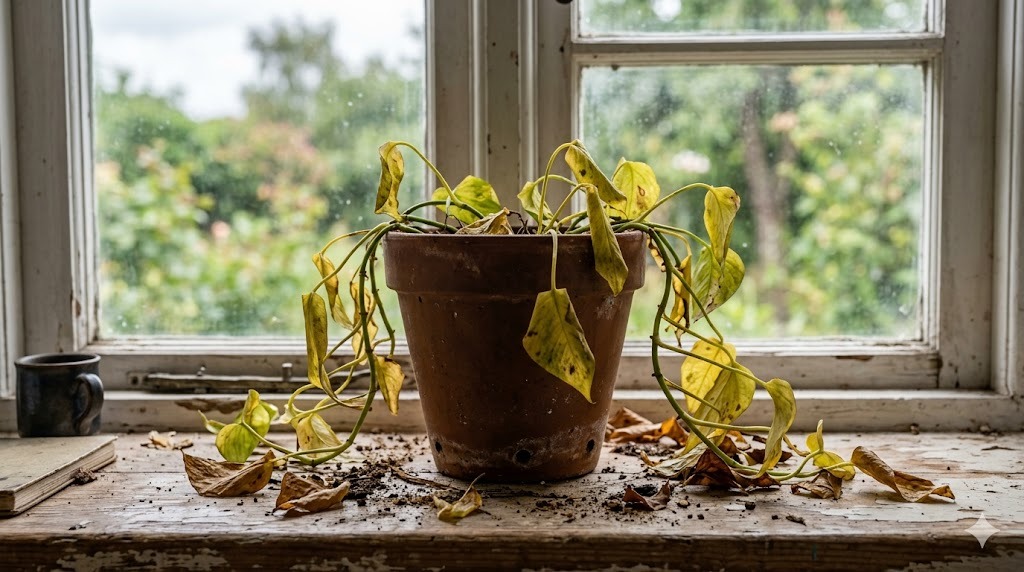
First, be sure that’s the problem. An overwatered plant droops or yellows while the soil is still wet, the lower leaves go soft and mushy (not crispy), and the soil may smell sour. If your plant is drooping but the soil is dry, it’s thirsty - water it and stop reading.
Why Overwatering Kills
It’s a common misconception that overwatering “drowns” a plant directly. What actually happens: waterlogged soil has no air pockets, so roots can’t take in oxygen. Starved of oxygen, roots begin to die and rot. Rotting roots can no longer absorb water or nutrients - so, cruelly, an overwatered plant shows the same drooping, wilting symptoms as a thirsty one. The plant is “thirsty” because its roots are dying.
This is why the rescue is urgent: every day in soggy soil kills more roots.
Rescue Step 1: Stop Watering and Assess
Put the watering can away. Then judge the severity:
- Mild - a few yellow leaves, soil damp but not swampy, no smell. The plant may just need to dry out.
- Severe - many soft yellow leaves, soil waterlogged for days, a sour or rotten smell, soft mushy stem base. This needs full root surgery.
Rescue Step 2 (Mild Cases): Just Dry It Out
If the case is mild:
- Move the plant to brighter light and good airflow - both speed up soil drying.
- Don’t water again until the top 3-5 cm of soil is properly dry.
- Tip out any water sitting in the saucer or cachepot.
- If the soil is staying wet for days despite this, escalate to the full rescue below.
Often, drying out is all a mildly overwatered plant needs.
Rescue Step 3 (Severe Cases): Root Surgery
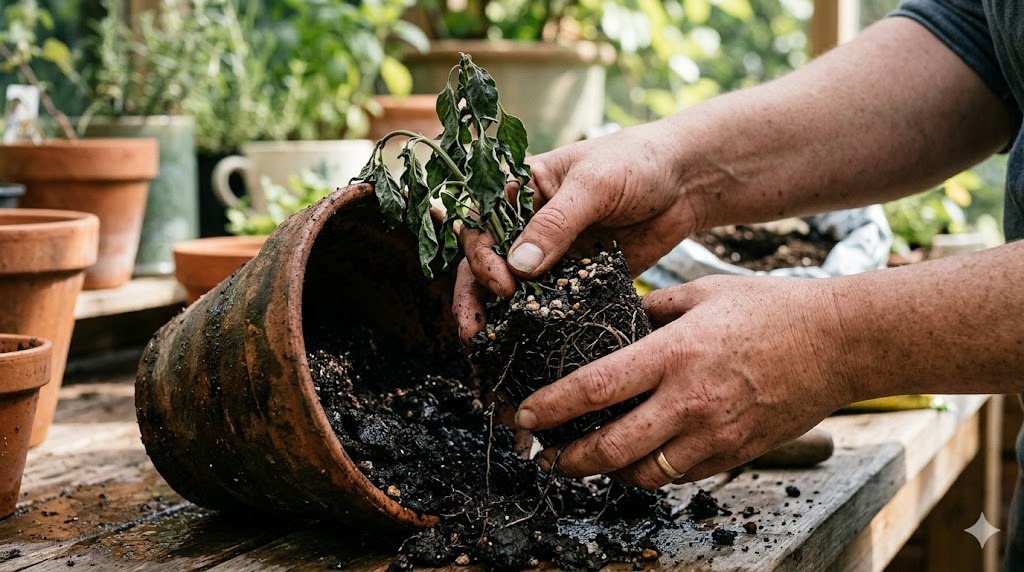
If the soil smells sour or stays soggy, you must unpot and inspect:
- Remove the plant from its pot. Support the base of the stems and ease the root ball out.
- Clear away the soggy soil. Gently crumble or rinse the wet soil off the roots so you can see them.
- Inspect the roots:
- Healthy roots are firm and pale (white, cream, or tan), and don’t smell.
- Rotten roots are brown or black, soft, slimy, fall apart when touched, and smell foul.
- Cut away every rotten root with clean, sharp scissors or snips. Don’t be timid - leaving rot behind lets it spread. It’s better to remove too much than too little.
- Trim back the top growth too. A plant with fewer roots can’t support all its leaves. Remove some foliage so the reduced root system isn’t overwhelmed - this rebalances the plant.
- Optional: rinse the remaining healthy roots and let them air for an hour; some growers dust the cuts with cinnamon (a mild natural antifungal).
Rescue Step 4: Repot Into Fresh, Dry Soil
- Use a clean pot - wash the old one or use a new one - with a drainage hole. If you suspect the old pot was the problem (no drainage), don’t reuse it.
- Choose the right pot size. With fewer roots, the plant may need a smaller pot than before - a too-large pot holds excess wet soil.
- Use fresh, dry, well-draining mix. Never reuse the old soggy soil. Add perlite or bark for airflow.
- Repot the plant, firming the soil gently.
- Water lightly - just enough to settle the soil, no more. The roots are damaged; they can’t handle a soaking.
Rescue Step 5: Aftercare and Recovery
- Bright indirect light - not harsh sun, which a weakened plant can’t handle.
- Don’t water again until the topsoil is dry. This is the hardest part - resist. A recovering plant uses little water.
- No fertilizer for at least a month. Feeding damaged roots burns them.
- Be patient. A recovering plant may still drop leaves for a week or two as it stabilizes. New growth is the sign you’ve won - it usually appears within a few weeks if the rescue worked.
When It’s Too Late
Sometimes a plant is past saving. If, when you unpot it:
- All the roots are brown, black, and mushy with nothing firm left, or
- The stem base itself is soft, brown, and mushy (rot has climbed into the plant)
…then the plant likely can’t be rescued as-is. But check whether the upper stem is still firm and green - if so, you can often take a healthy cutting from the top and propagate it, saving the plant’s genetics even when the roots are lost. That cutting becomes a brand-new, root-rot-free plant.
Preventing It Next Time
- Check the soil with your finger before every watering - water only when it’s dry to the depth that plant likes. A watering calculator can give you a sensible starting rhythm for each plant.
- Every pot needs a drainage hole. No exceptions.
- Never let a plant sit in standing water - empty the saucer.
- Use well-draining soil, and water less in winter when growth slows.
Frequently Asked Questions
Can an overwatered plant recover?
Yes - if caught early. A mildly overwatered plant often just needs to dry out. A severely overwatered plant with root rot can still be saved by trimming the rotten roots and repotting into fresh dry soil.
How do I know if my plant has root rot?
Unpot it and look: healthy roots are firm and pale; rotten roots are brown or black, soft, mushy, and smell foul. A sour smell from the soil is an early warning.
Should I let an overwatered plant dry out completely?
For a mild case, yes - let the soil dry fully before watering again. For a severe case, drying out isn’t enough; you need to unpot, remove rotten roots, and repot.
My overwatered plant’s stem is mushy - can I save it?
If the rot has reached the stem base, the plant itself is likely lost. But if the upper stem is still firm and green, take a healthy cutting from the top and propagate it into a fresh new plant.
How long does an overwatered plant take to recover?
With a successful rescue, expect new growth within a few weeks. The plant may drop some old leaves first as it rebalances - that’s normal.
🛒 Recommended Gear on Amazon
- Soil moisture meter - browse current options and reviews on Amazon.
- Perlite - browse current options and reviews on Amazon.
- Terracotta pots with drainage - browse current options and reviews on Amazon.
As an Amazon Associate, we earn from qualifying purchases - at no extra cost to you. This helps us keep producing free, in-depth guides.