Phoenix Oyster Mushroom
The phoenix oyster (Pleurotus pulmonarius) is the warm-weather counterpart to the common oyster mushroom, and the species that keeps a growing shelf productive through a hot summer when other strains sulk.
🗓️ Last reviewed: August 2026
Overview
The phoenix oyster (Pleurotus pulmonarius) is the warm-weather counterpart to the common oyster mushroom, and the species that keeps a growing shelf productive through a hot summer when other strains sulk. It is also known as the Indian oyster, the summer oyster, and the lung oyster, the last from the Latin pulmonarius, a reference to the lung-shaped cap. Compared with the blue and grey strains of Pleurotus ostreatus it is paler, thinner-fleshed, and longer-stemmed, with a slightly more delicate flavour. Growers value it for two practical reasons: it fruits at temperatures that would stall its cousins, and it is one of the most aggressive colonisers in gourmet cultivation, which makes it forgiving of imperfect technique on straw and other bulk substrates.
Identification & Appearance
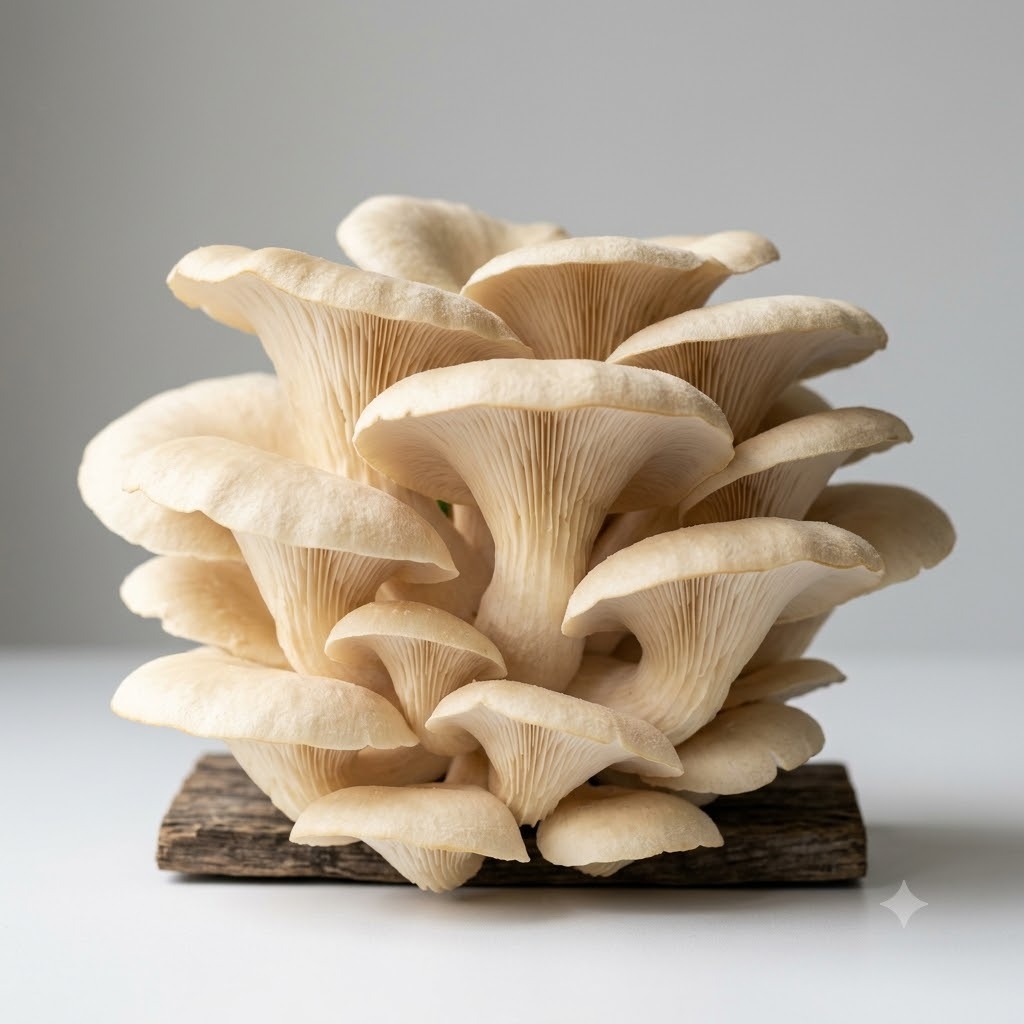
Caps are 4-12 cm across, fan or tongue shaped, and noticeably paler than the common oyster, running from off-white through pale tan to light greyish-buff. They are thinner and often more irregular in outline, with a wavy margin that splits with age. Gills are white to cream and decurrent, running down onto a stem that is usually more developed and more off-centre than on a common oyster. The flesh is white, thin, and pleasant-smelling, with a faint aniseed note when fresh. Spore print is white to pale lilac. Clusters shelve on dead hardwood in overlapping tiers. Distinguishing it in the wild from Pleurotus ostreatus is genuinely difficult and comes down to season, paler colour, thinner flesh, and a longer stem; both are edible, so the stakes are low, but that is exactly why wild oyster identification still demands the standard checks for gilled mushrooms growing on wood.
Where It Grows
Phoenix oysters are wood-decay saprotrophs found across Europe, Asia, and North America on dead and dying hardwoods, favouring beech, oak, poplar, and birch, and appearing more often on standing dead wood and fallen logs in warm months than in the cold season when common oysters dominate. In the tropics and subtropics it is a mainstay of small-scale mushroom farming, grown on rice straw, banana leaves, sawdust, and cotton waste. It is the strain that made oyster cultivation viable in hot climates without cooling equipment, and it remains one of the highest-yielding gourmet species per kilo of substrate anywhere.
How to Grow at Home
Phoenix oysters are among the easiest mushrooms to grow, and the honest route for a first attempt is a pre-colonised block: cut the bag, mist, and harvest inside two weeks. Growing from spawn is only slightly harder. Pasteurised wheat or rice straw is the classic bulk substrate, chopped to a few centimetres, soaked, held at 65-75°C for an hour or so, drained to field capacity, then mixed with grain spawn at around five per cent of wet weight and packed into perforated bags or buckets. Colonisation at 24-28°C usually takes ten to eighteen days, faster than most gourmet species because this fungus grows so vigorously. Once the substrate is uniformly white, move it to fruiting conditions with high humidity, light, and generous fresh air. The single biggest mistake is treating a humid box as a growing chamber without ventilation, which produces spindly stems and no caps. Expect three flushes, with the first the largest, then compost the spent block.
Growing Conditions
Light
Indirect light for about 12 hours a day is enough. Light tells the fungus where the open air is, so blocks grown in the dark send out long, pale, poorly formed stems. Avoid direct sun, which dries the fruiting surface far faster than misting can replace.
Watering
Keep humidity in the 85-95 per cent range during fruiting, misting the air and the exposed substrate face two or three times a day. The thin flesh dries out faster than that of the common oyster, so this strain is less forgiving of a dry spell, but equally quick to rot if water sits on the caps.
Temperature & Substrate
This is the warm-season strain: it colonises at 24-28°C and fruits comfortably at 18-30°C, which is precisely the range where blue and grey oysters stall. Straw, sawdust with bran, cotton waste, cardboard, and spent coffee grounds all work. Because it is such a strong coloniser it tolerates a slightly rougher pasteurisation than most species, but a sour smell in the substrate still means the batch is lost.
Culinary Use
Phoenix oysters are mild, faintly sweet, and more delicate than the common oyster, with thinner flesh that cooks quickly and can go limp if it is overworked. Tear the clusters into strips rather than slicing them, and start them in a dry hot pan so the water leaves before the fat goes in; crowding the pan is what turns oyster mushrooms slippery. They suit fast cooking, stir fries, quick sautés with garlic, tempura, and being folded into eggs at the last moment. The stems are edible but tougher and better used for stock. They dry easily thanks to their thin flesh and rehydrate well for soups, though the flavour is modest compared with shiitake. As with all mushrooms, cook them thoroughly; raw oyster mushrooms are poorly digested and can cause stomach upset.
Health & Nutrition
Nutritionally this is a typical oyster mushroom: low in calories, useful protein and fibre, B vitamins, potassium, phosphorus, and copper, plus the beta-glucans that make the genus a standing subject of immune-function research. Exposure to ultraviolet light raises the vitamin D content substantially, so drying them gill-side up in sunshine is worth doing. Pleurotus species contain naturally occurring lovastatin, which explains recurring headlines about oyster mushrooms and cholesterol, but the quantities on a dinner plate are far below any medical dose and this is food, not treatment. The practical health note for growers is respiratory rather than dietary: oyster mushrooms release very heavy spore loads, and repeated exposure in a poorly ventilated room has been linked to allergic lung reactions in commercial growers. Harvest before the caps flatten and ventilate the space.
Common Problems
- Spindly stems with pinhead caps - carbon dioxide build-up. This species is more sensitive to poor airflow than most, so ventilate harder.
- Caps splitting and drying at the edges - humidity too low for such thin flesh, or a dry draught hitting the block.
- Green mould after inoculation - Trichoderma. Discard the block rather than salvaging it.
- Heavy white dust on shelves and floor - a spore load, not contamination. Harvest earlier and improve airflow.
- Slow, patchy colonisation - substrate too wet or too coarsely pasteurised; squeeze-test the straw so only a few drops come out.
Pros & Cons
Pros
- Fruits in genuine summer heat where other oyster strains stop.
- Extremely fast and aggressive coloniser, tolerant of beginner errors.
- Very high yields on cheap straw and agricultural waste.
- Quick from block to harvest, often ten to fourteen days.
Cons
- Thin flesh means short shelf life and easy drying-out.
- Very heavy spore release, a real irritant in closed rooms.
- Milder, less substantial flavour than shiitake or king oyster.
- Hard to distinguish from other oysters in the wild.
Best Suited For
- Growers in warm climates or hot summers with no cooling equipment.
- Beginners who want a forgiving, high-yield first species.
- Cooks who like fast-cooking mushrooms for stir fries and egg dishes.
Not ideal for anyone wanting a meaty, steak-like mushroom, or growers who cannot ventilate a fruiting space properly.
FAQ
What is the difference between a phoenix oyster and a normal oyster mushroom? Phoenix oysters are a separate species, Pleurotus pulmonarius. They are paler, thinner, longer-stemmed, and fruit in warm conditions, while common oysters prefer cooler air.
Can I grow them outdoors on straw bales? Yes. Outdoor straw bed cultivation works well in warm months in a shaded spot, though yields are less predictable than indoor blocks and slugs will find them.
Why is there white dust everywhere? Those are spores, released once caps flatten. Harvest a little earlier and improve ventilation, especially if anyone in the house has asthma.
Never eat a wild oyster mushroom without 100% expert identification. Wild pale gilled mushrooms growing on wood need proper checks: decurrent gills, white to lilac spore print, and growth on dead hardwood. If any of those cannot be confirmed, leave it.
🪴 Foraging kit worth a look
Nothing here identifies a mushroom for you - identification stays with your field guides and local experts. These are simply the basics foragers carry.
Links go to Amazon or a partner store (such as Adagio Teas) and may earn us a commission at no extra cost to you. As an Amazon Associate we earn from qualifying purchases. We link gear types, not sponsors' picks: you choose the exact product.