King Alfred's Cakes
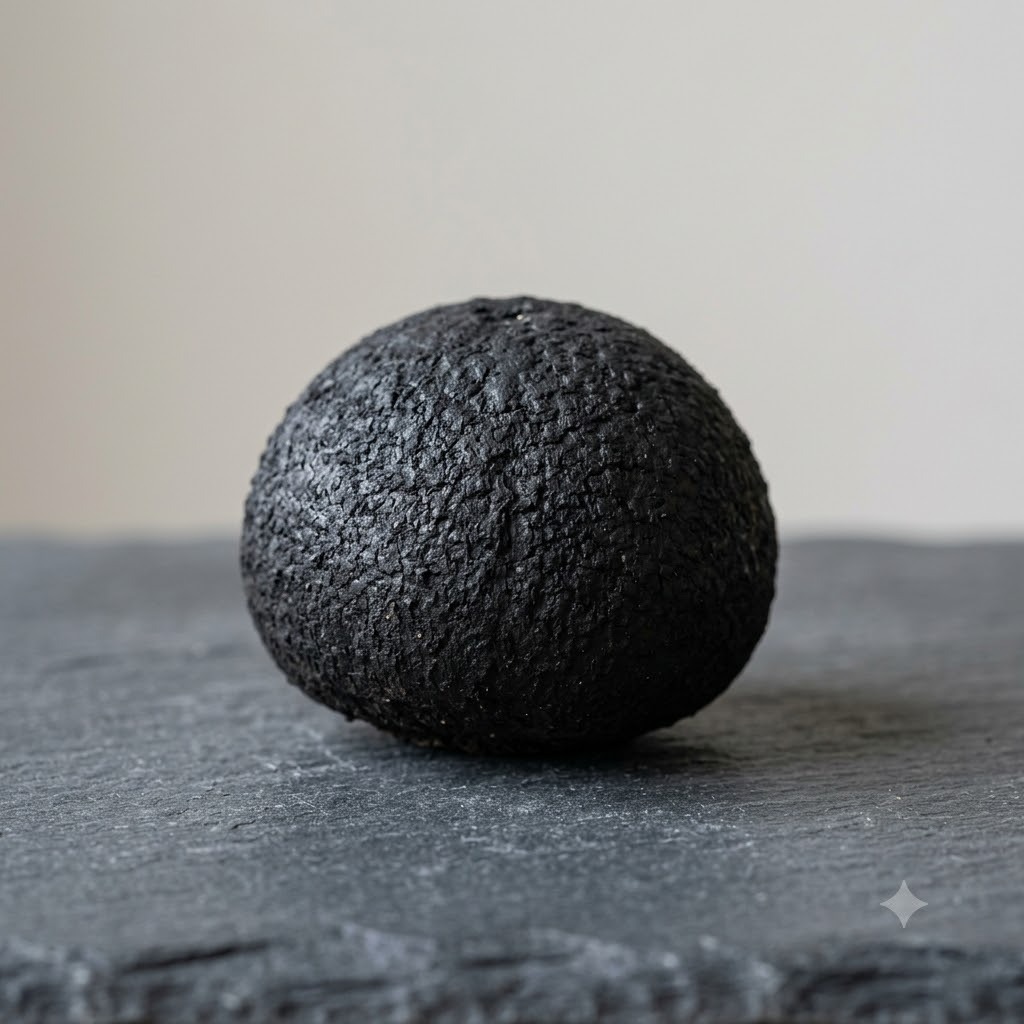
King Alfred's cakes (Daldinia concentrica) are the hard black hemispheres that stud dead ash branches like lumps of charcoal, and they carry one of the better folk names in British natural history.
🗓️ Last reviewed: August 2026
Overview
King Alfred's cakes (Daldinia concentrica) are the hard black hemispheres that stud dead ash branches like lumps of charcoal, and they carry one of the better folk names in British natural history. The legend refers to King Alfred hiding in the Somerset marshes and letting a peasant woman's cakes burn, which is exactly what these look like. They are also called cramp balls, from a folk belief that carrying one in a pocket wards off cramp, and coal fungus, which describes both their appearance and their most practical use. They are completely inedible and genuinely useful: dried, they take a spark and hold a glowing ember for a long time, which makes them one of the best natural coal-extenders in the woods.
Identification & Appearance
The fruit body is a hard, hemispherical or cushion-shaped ball, 2-7 cm across, attached firmly to dead wood. Young specimens are reddish brown to purplish brown, maturing to a hard, matt or slightly shiny black with a faintly bumpy surface. The identifying feature is internal: cut or break one in half and it shows concentric silvery-grey and black rings, like tree rings or an onion, alternating layers laid down as the fungus grows. The texture is hard and brittle, snapping rather than cutting cleanly. Mature specimens release black spores that dust the wood beneath them. Spore print is black. Nothing else in temperate woodland combines a hard black hemisphere on dead wood with concentric internal banding, so identification is straightforward.
Where It Grows
King Alfred's cakes are saprotrophs on dead hardwood, with a strong preference for ash, and they also occur on beech and occasionally other broadleaves. They grow on standing dead branches, fallen limbs, and dead wood still attached to living trees, and they are present year-round since the fruit bodies are hard and persist for a long time. They are common across Europe and occur widely elsewhere, and they are particularly abundant in ash woodland. The recent spread of ash dieback across Europe has, incidentally, created a great deal more dead ash, and this species has not struggled for habitat. Look along the undersides of dead ash branches at head height and they are usually not hard to find.
How to Grow at Home
Not cultivated and not worth cultivating for any purpose. It is a wood-decay fungus that colonises dead ash on its own and will appear in any garden or woodland with dead ash branches lying around. For anyone wanting a supply for firelighting, the method is simply to leave dead ash wood in place and collect the fruit bodies when they are needed. The one thing that matters for practical use is dryness: a fresh, damp specimen will not take a spark at all, and collected specimens need drying thoroughly, ideally for weeks in a warm dry place, before they are any use. Many people collect them opportunistically and keep a few in a tin with their firelighting kit.
Growing Conditions
Light
Not relevant to the fungus, which grows on dead wood in shade or open woodland alike.
Watering
Fruit bodies form in damp conditions and then persist year-round regardless of weather. For practical firelighting use the opposite matters: they must be thoroughly dry before they will take a spark, so specimens collected in wet weather need weeks of drying.
Temperature & Substrate
Present year-round, with new fruit bodies developing mainly in the warmer half of the year. The substrate is dead hardwood, overwhelmingly ash and sometimes beech.
Traditional & Practical Uses
Not food, and not remotely edible: the texture is that of charcoal. The genuine use is fire. A well-dried specimen, broken open to expose the internal layers, will catch a spark from a ferrocerium rod or from flint and steel, and will then hold a glowing ember for a remarkably long time, smouldering slowly rather than flaring. That makes it a coal-carrier as much as a tinder: the traditional use is to catch a spark, then transfer the smouldering fungus into a tinder bundle of dry grass and blow it into flame. It also works as an ember carrier for moving fire between camps. The folk use as a cramp charm carried in a pocket has no basis beyond tradition. The fungus is also used in laboratory work as a model organism, and it is a favourite of woodland educators for exactly the reason it is described here.
Health & Nutrition
There is no nutritional or medicinal dimension worth reporting; this is not a species anyone consumes. It is not known to be toxic, but it is hard, indigestible, and completely unsuitable as food, so the question is academic. Two practical safety points apply to using it. First, breathing the black spore dust when breaking open mature specimens is unpleasant and worth avoiding; break them outdoors and downwind. Second, a smouldering ember in a fungus is a genuine fire source and behaves like one, staying hot far longer than it looks like it should, which is exactly what makes it useful and exactly what makes it a hazard if it goes into a pocket or a bag before it is fully out.
Common Problems
- Will not take a spark - the specimen is damp. They need thorough drying, often weeks, before they work.
- Crumbling to dust - very old specimens degrade. Take firm ones that still show clean internal banding.
- Black dust everywhere - mature specimens are full of spores. Break them outdoors.
- Confusing it with other black fungi - the concentric internal rings are decisive; break one open to check.
- Underestimating the ember - a smouldering piece stays alive far longer than expected. Extinguish it properly.
Pros & Cons
Pros
- Excellent natural spark-catcher and ember-holder once dried.
- Abundant on dead ash, which is plentiful across Europe.
- Present all year and easy to identify.
- Requires no processing beyond drying, unlike amadou.
Cons
- Completely inedible.
- Useless when damp, which in a wet climate is most of the time.
- Messy black spore dust.
- Fragile when old.
Best Suited For
- Bushcraft and firelighting practitioners.
- Woodland educators demonstrating fungi with an immediate practical use.
- Anyone who walks in ash woodland and wants a reliable tinder source.
Not ideal for foragers looking for food, or anyone expecting instant results from a freshly collected damp specimen.
FAQ
Can I eat it? No. It has the texture of charcoal and is not a food species in any sense.
Why will mine not light? It is almost certainly still damp. Dry it thoroughly for several weeks in a warm dry place, break it open, and try again with a ferrocerium rod.
Why is it called cramp balls? From a folk belief that carrying one in a pocket prevents cramp. It is tradition rather than medicine.
Never eat any hard black fungus from wood. This species is not food. Identify it for craft use by the concentric internal rings and its ash host, and use it only for firelighting.
🪴 Foraging kit worth a look
Nothing here identifies a mushroom for you - identification stays with your field guides and local experts. These are simply the basics foragers carry.
Links go to Amazon or a partner store (such as Adagio Teas) and may earn us a commission at no extra cost to you. As an Amazon Associate we earn from qualifying purchases. We link gear types, not sponsors' picks: you choose the exact product.