Shrub Begonia
Shrub begonias are one of the classic horticultural groups within the genus Begonia, defined by their bushy, multi-stemmed growth from a fibrous root system rather than a single cane or a tuber.
Last reviewed: September 2026
 AI illustration
 Overview
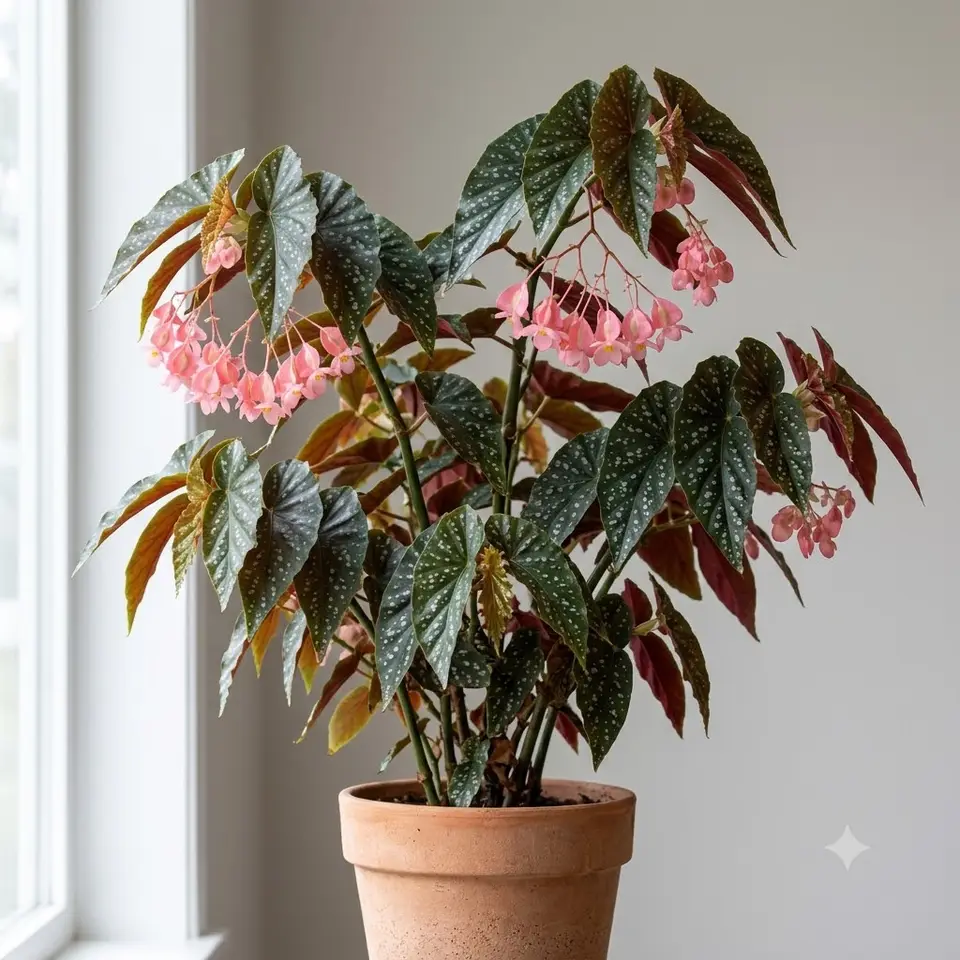
Shrub begonias are one of the classic horticultural groups within the genus Begonia, defined by their bushy, multi-stemmed growth from a fibrous root system rather than a single cane or a tuber. Collectors prize them for their textured, often hairy or glossy foliage and their tendency to form full, self-branching plants that look good as living specimens. This is a group name rather than one species, covering many treasured plants such as the palm-leaf begonia and the fuzzy-leaved paper begonia (Begonia spp., Shrub Group).
Origin & Natural Habitat
Shrub begonias are native to warm, humid tropical and subtropical forests, with many of the best-known species originating in Brazil and other parts of Central and South America, plus Africa and Asia. In the wild they grow as understorey plants on shaded slopes, forest floors and rocky banks where the air stays moist and the light is filtered.
Appearance
Leaf shape varies widely across the group, from the deeply cut, palm-like fronds of Begonia luxurians to the small, densely packed leaves of Begonia foliosa and the felted, silver-hazed leaves of Begonia venosa. Foliage may be smooth, glossy, hairy or waxy, in shades of green, olive and bronze, sometimes with red undersides. These are upright, freely branching plants that build into rounded bushes, and depending on the species they can reach anywhere from about 30 cm to well over 1 m tall in a pot.
Why People Grow It - Qualities & Benefits
- Bushy, self-branching habit that fills a pot without much training
- Huge variety of leaf textures and forms across the group, so collectors can build a whole shelf from one type
- Many are evergreen and stay attractive year round, without the die-back of tuberous begonias
- Small clusters of white, pink or coral flowers appear on healthy plants as a seasonal bonus
Care
Light: Bright, indirect light. An east window or a spot set back from a south or west window is ideal. Direct midday sun scorches the leaves, while deep shade makes growth thin and leggy.
Water: Keep the mix lightly moist but never soggy. Water when the top 2 to 3 cm feels dry, then let excess drain fully. Begonias rot easily, so err on the drier side and avoid leaving the pot standing in water.
Soil: A light, airy, well-draining mix. A peat or coir base cut with perlite, orchid bark and a little coarse sand works well, giving the fibrous roots moisture without staying waterlogged.
Temperature & Humidity: Warmth-loving, happiest at about 18 to 24°C, and unhappy below roughly 13°C. They genuinely want higher humidity, ideally 50% or more. In dry indoor air the leaf edges brown and growth stalls, so a pebble tray, grouping with other plants or a humidifier helps a lot. Be honest with yourself here - this is the main reason people struggle with them.
Feeding: Feed with a balanced liquid fertiliser diluted to half strength every 2 to 4 weeks during spring and summer. Stop or reduce feeding in the low-light months.
Extra: Unlike tuberous begonias, shrub begonias are fibrous-rooted and evergreen, so they do not go fully dormant - but they do slow down in winter, when you should cut back on water and feed. Pinch the stem tips regularly to keep plants bushy rather than leggy. Toxic to cats and dogs (soluble calcium oxalates, most concentrated in the underground parts) - keep out of reach of pets and children.
Propagation
Easiest from stem-tip cuttings taken in spring or summer. Take a healthy 8 to 10 cm tip, remove the lower leaves, and root it in water or directly in a light, moist mix kept warm and humid. Many shrub types also root from single leaves or short basal shoots.
Common Problems & Pests
- Powdery mildew - a white, dusty coating that thrives in stagnant, humid air; improve airflow and avoid wetting the leaves
- Root and stem rot from overwatering or a heavy, soggy mix, one of the fastest ways to lose a begonia
- Spider mites, mealybugs and fungus gnats, plus brown, crispy leaf edges when humidity drops too low
Toxicity & Safety
Begonias are toxic to cats and dogs. The plants contain soluble calcium oxalates, and the underground parts are the most toxic portion. If a pet chews the foliage or roots, typical signs include oral irritation, drooling, mouth pain and vomiting. The sap can also irritate sensitive skin, so it is worth wearing gloves when taking cuttings or repotting, and washing your hands afterwards.
Pros & Cons
Pros
- Enormous variety of foliage textures and forms to collect
- Naturally full, bushy growth with easy propagation from cuttings
Cons
- Genuinely fussy about humidity and prone to leaf-edge browning in dry rooms
- Sensitive to overwatering and mildew, and toxic to pets
Best Suited For
- Collectors who enjoy foliage variety and can provide steady warmth and humidity
- Growers with a bright, draught-free spot who do not mind a plant that needs attentive watering
FAQ
Do shrub begonias go dormant like tuberous ones?
No. Shrub begonias are fibrous-rooted and evergreen, so they keep their leaves year round. They do slow down in winter, so ease off on watering and feeding, but you should not let them dry out and die back the way you would a tuberous begonia.
Why are the leaf edges turning brown and crispy?
This is almost always low humidity, sometimes combined with underwatering or cold draughts. Raise the humidity with a pebble tray or humidifier, keep the plant away from heating vents, and keep the mix lightly and evenly moist.
Sources
Pet toxicity: checked against the ASPCA Animal Poison Control Center lists of toxic and non-toxic plants for cats and dogs, genus-wide entry "Begonia" (Begonia spp.): toxic to cats and dogs. Lists read on 10 October 2026.
Gear for growing shrub begonia
Links go to Amazon or a partner store (such as Adagio Teas) and may earn us a commission at no extra cost to you. As an Amazon Associate we earn from qualifying purchases. We link gear types, not sponsors' picks: you choose the exact product.