Spathoglottis (Ground Orchid)
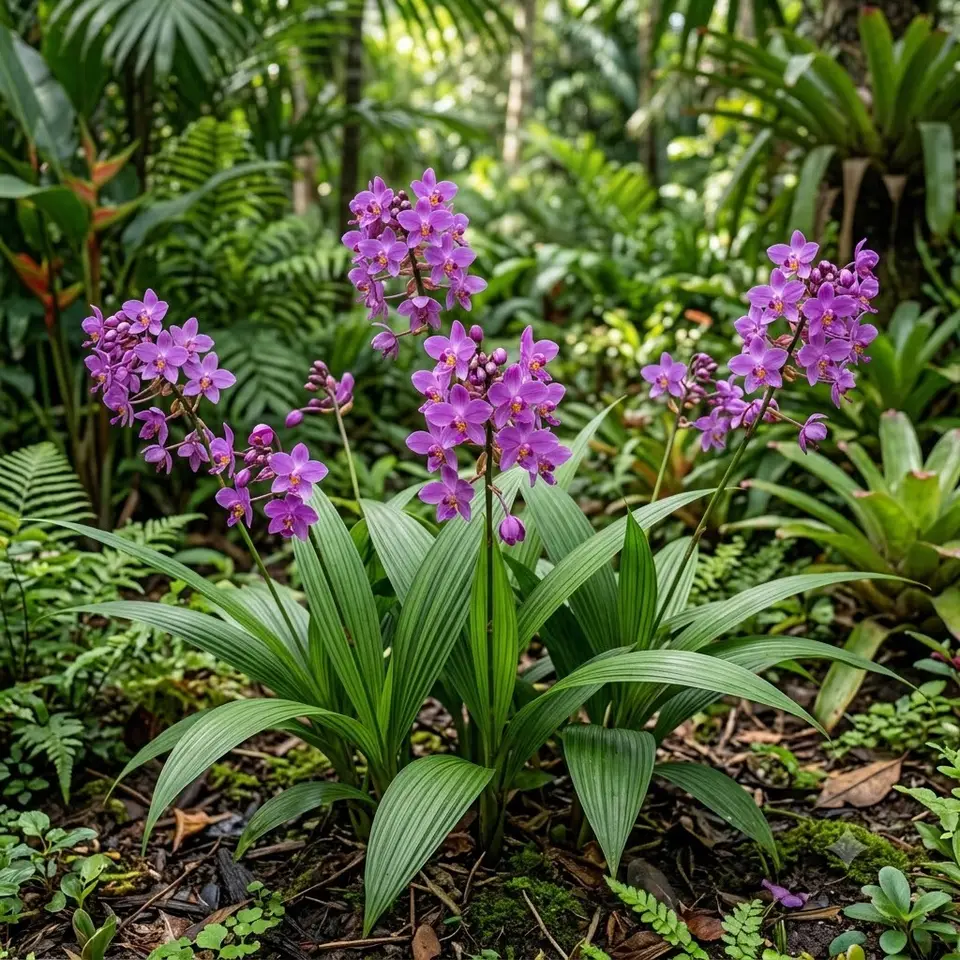
Spathoglottis is a true terrestrial orchid with pleated palm-like leaves and constant purple (or gold) sprays, planted straight into tropical garden soil like an agapanthus.
Last reviewed: October 2026
 AI illustration
 Overview
Spathoglottis is a true terrestrial orchid with pleated palm-like leaves and constant purple (or gold) sprays, planted straight into tropical garden soil like an agapanthus. In frost-free climates it's landscape material; in pots it's the easiest 'always blooming' orchid a patio can hold. (Spathoglottis plicata.)
Origin & Natural Habitat
Ground-dwelling across tropical Asia and the Pacific - open sunny clearings and roadsides; naturalized through the tropics (including, invasively-adjacent, in some regions: keep garden waste contained).
Appearance
Pleated broad leaves in ground rosettes 30-80 cm; upright spikes of 2-5 cm purple, pink, gold or white blooms opening successively - essentially year-round in warmth.
Why People Grow It - Qualities & Benefits
- Plants-in-DIRT orchid simplicity
- Effectively everblooming in warmth
- Landscape-scale color in the tropics
- Divides like a perennial
Care
Light: Half-day sun to bright shade - garden light, not orchid-shelf light.
Water: Garden-regular: evenly moist, drained; it wilts visibly when thirsty and forgives promptly.
Potting medium: Rich well-drained garden soil or ordinary potting mix - actual dirt, the genus's charm.
Temperature & Humidity: Warm 15-32°C; leaves burn at frost, roots survive brief near-frost mulched in 9b-10. Elsewhere: pots wintered indoors bright.
Feeding: Balanced feeding like a bedding perennial - it's a hungry everbloomer.
Rest & rebloom: None in warmth; cool winters pause it. Deadhead spikes to keep the succession rolling.
Propagation
Division of clumps - exactly like splitting a daylily; plantlets on old spikes occasionally.
Common Problems & Pests
- Snails/slugs on pleated leaves
- Spider mites in hot dry patios
- Frost = mush (protect or lift)
- Check regional invasiveness before composting seed spikes in the humid tropics
Toxicity & Safety
Orchids are non-toxic to cats and dogs - one of the safest flowering houseplant families.
Pros & Cons
Pros
- The no-mystique orchid
- Continuous color
- Perennial-style division economy
Cons
- Tropical hardiness only
- Individually modest blooms
- Leaves scruffy without grooming
Best Suited For
- Tropical/subtropical beds (10-11)
- Patio pots wintered inside
- Beginners scared of orchid rules
- Mass color plantings
FAQ
An orchid in regular potting soil - really?
Really - Spathoglottis is a true terrestrial that evolved in earth, not on branches. Treat it like a tender flowering perennial and it simply performs.
How do I get more plants?
Divide the clump like any perennial in spring - each fan with roots restarts; a bed builds from one pot in a couple of seasons.
Gear for growing spathoglottis (ground orchid)
Links go to Amazon or a partner store (such as Adagio Teas) and may earn us a commission at no extra cost to you. As an Amazon Associate we earn from qualifying purchases. We link gear types, not sponsors' picks: you choose the exact product.