Silver Torch Cactus
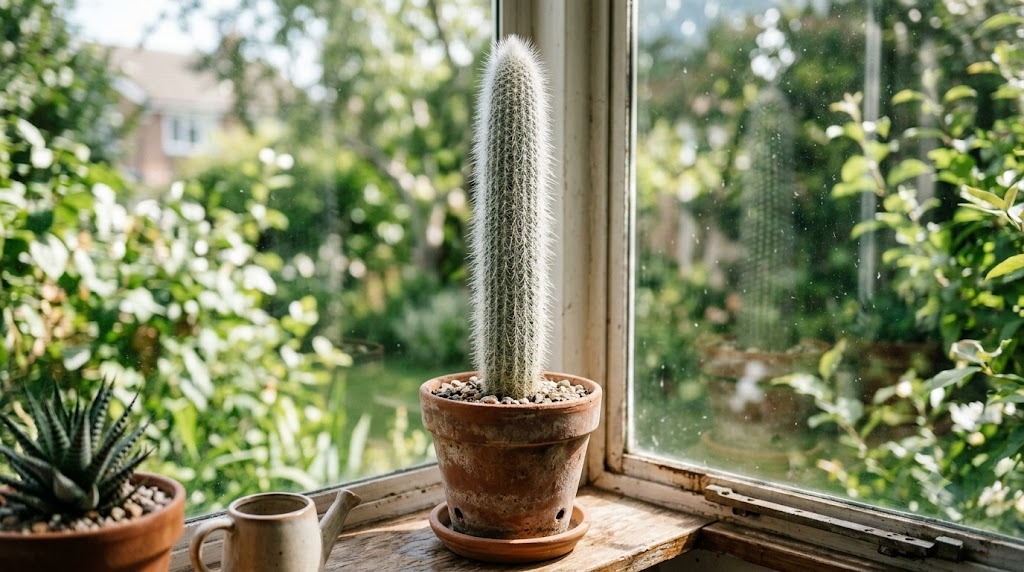
The silver torch is a slender, upright columnar cactus wrapped so densely in fine white spines that the whole column gleams silver.
Last reviewed: October 2026
Overview
The silver torch is a slender, upright columnar cactus wrapped so densely in fine white spines that the whole column gleams silver. Slow but eventually tall, tolerant of cold, and topped in time with unusual deep-red tubular flowers, it is a striking and hardy choice for a bright, sunny spot.
Origin & Natural Habitat
Cleistocactus strausii comes from the high mountains of Bolivia, growing on sunny, well-drained slopes at altitude. Its mountain home makes it more cold-tolerant than most cacti.
Appearance
A narrow, upright, ribbed green column completely clothed in dense, fine, white bristly spines that give a silvery, furry sheen. With age and height it may branch from the base. Mature plants produce distinctive deep red, narrow tubular flowers that barely open, projecting horizontally from the column.
Why People Love It - Qualities & Benefits
People love the elegant silvery column and its neat, upright form, as well as its unusual cold-hardiness and the curious red flowers on established plants. It is a hardy, sculptural, low-fuss cactus with real presence.
Care
Light
Give the brightest light you can - a sunny, south-facing window with hours of direct sun keeps the spines dense, white and silvery and the column upright. Poor light dulls it and causes thin, leaning growth.
Watering
Soak, then let the soil dry out completely before watering again, roughly fortnightly in summer and rarely in winter. It stores water in its column and rots if kept wet, so err dry.
Soil & Potting
A gritty, free-draining cactus mix in a pot with drainage. Sharp drainage is essential; add extra pumice or grit if your mix holds moisture.
Humidity & Temperature
Warm to cool, dry air suits it; it dislikes humidity. Notably cold-tolerant thanks to its mountain origins, it can take a cool, dry winter rest well - keep it frost-free in a pot but cool and dry over winter.
Feeding
A dilute cactus feed once or twice in the growing season is plenty. Like most desert cacti it is adapted to lean soil and needs little.
Repotting
Repot every few years in spring when pot-bound, handling the densely spined column with thick gloves and folded card. Choose a pot only slightly larger and wait a week before watering.
Propagation
Propagate from offsets where the plant branches at the base, or from seed. Remove an offset, callus it for several days, and root it in gritty mix. Seed is slower but reliable.
Common Problems & Pests
Overwatering rot at the base is the main danger. Mealybugs can hide among the dense spines and be hard to spot; check regularly. Pale, thin, stretched growth means too little light.
Toxicity & Safety
The silver torch cactus is not toxic to people or pets, but its dense fine spines can prick and catch, so keep it out of reach of children and animals and handle with protection.
Pros & Cons
Pros: elegant silvery column, unusually cold-tolerant, hardy and low-care, curious red flowers with age. Cons: slow-growing, densely spiny (pests hide easily), needs strong light to stay white and upright.
Best Suited For
A handsome, hardy choice for anyone with a bright sunny window who wants an upright, silvery, sculptural cactus that tolerates cooler conditions than most.
FAQ
Why is my silver torch losing its bright white look? Usually too little light - move it to your sunniest spot to keep the spines dense and silvery.
Can it handle a cold room in winter? Yes - from its mountain home it takes a cool, dry (but frost-free) winter rest well.
Gear for growing silver torch cactus
Links go to Amazon or a partner store (such as Adagio Teas) and may earn us a commission at no extra cost to you. As an Amazon Associate we earn from qualifying purchases. We link gear types, not sponsors' picks: you choose the exact product.