Ripple Peperomia
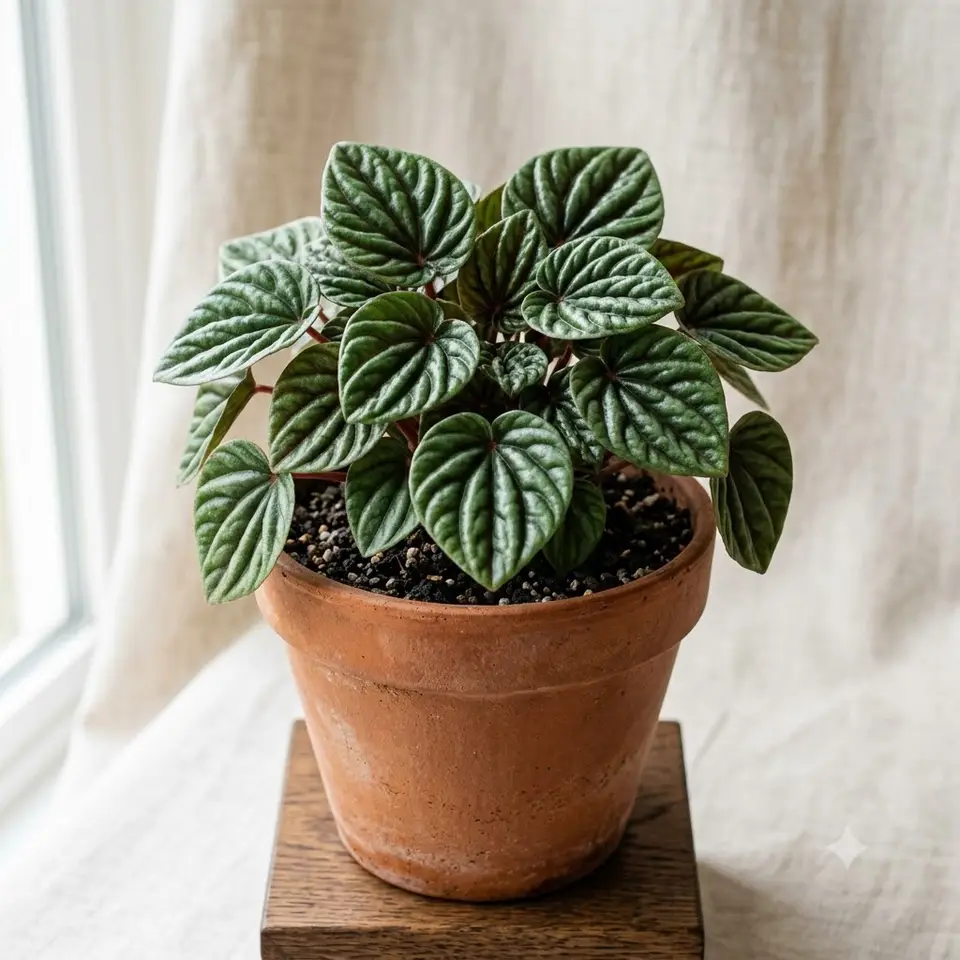
Ripple Peperomia is a compact, semi-succulent houseplant prized for its deeply corrugated, heart-shaped leaves that catch the light in ripples of green and burgundy (Peperomia caperata).
Last reviewed: September 2026
 AI illustration
 Overview
Ripple Peperomia is a compact, semi-succulent houseplant prized for its deeply corrugated, heart-shaped leaves that catch the light in ripples of green and burgundy (Peperomia caperata). It stays small, grows slowly, and asks for very little, which makes it a favourite for windowsills, desks, and shelf collections. Its water-storing leaves and stems give it a forgiving nature, as long as you resist the urge to overwater.
Origin & Natural Habitat
Peperomia caperata is native to the tropical rainforests of Brazil in South America. In the wild it grows as a low understorey plant, often rooting in the thin layer of leaf litter, moss, and decaying bark on the forest floor or on the surface of rotting logs. This means it is adapted to warm temperatures, filtered light beneath the canopy, and steady humidity rather than deep, rich soil.
Appearance
The plant forms a tidy, mounding rosette rather than a climbing or trailing shape. Each leaf is roughly 2.5 to 4 cm across, heart-shaped, and heavily textured with sunken veins that give the surface its signature rippled, quilted look. Foliage ranges from deep emerald to rich wine-red or bronze depending on the variety, sometimes with a silvery sheen. Slender, upright flower spikes appear in the growing season, looking like thin pale-green or reddish rat-tails held above the leaves. Mature plants stay small, usually reaching about 20 to 25 cm tall and a similar width.
Why People Grow It - Qualities & Benefits
- Compact size that fits on a desk, shelf, or crowded windowsill without taking over
- Striking textured foliage that adds colour and depth without needing flowers
- Low, forgiving care needs that suit beginners and busy owners
- Pet-safe, non-toxic foliage that makes it a relaxed choice for homes with cats and dogs
Care
Light: Bright, indirect light. It tolerates medium light but keeps its richest colour and tightest form in a bright spot out of direct midday sun, which can scorch the leaves. Water: Let the top 2.5 cm of soil dry out between waterings. The thick leaves and stems store water, so it handles a missed watering far better than a soggy pot. Overwatering is the number one killer. Soil: A light, fast-draining mix. A peat- or coir-based potting soil cut with plenty of perlite (or an orchid-bark blend) mimics its airy native footing and prevents waterlogging. Temperature & Humidity: Comfortable at 18 to 24°C. Keep it above 10 to 12°C and away from cold draughts. It enjoys moderate to high humidity but tolerates average household air well. Feeding: Feed monthly during spring and summer with a balanced liquid fertiliser diluted to half strength. Skip feeding in autumn and winter when growth slows. Extra: The stems are brittle and the root system is small and shallow, so handle it gently and use a snug pot to avoid excess wet soil around the roots. Good news for pet owners: Ripple Peperomia is non-toxic to cats and dogs and appears on the ASPCA pet-safe list.
Propagation
Propagation is easy and rewarding. Take a healthy leaf with a short piece of its stalk, or cut a stem section, and let the cut end callus for an hour or two. Leaf-and-stalk cuttings can be pushed into moist, airy mix; whole leaves can even be cut in half across the veins and laid on the surface. Keep the medium lightly moist and warm, and small plantlets will form at the base over several weeks.
Common Problems & Pests
- Root rot and yellowing, mushy leaves from overwatering or heavy, water-retentive soil
- Snapped or bruised stems, since the succulent stems are brittle and break easily when handled
- Occasional sap-sucking pests such as mealybugs, fungus gnats (a sign of soil kept too wet), and spider mites in dry air
Toxicity & Safety
Ripple Peperomia is pet-safe. It is non-toxic to both cats and dogs and is listed as safe by the ASPCA, so a curious nibble is not a poisoning concern. As with any houseplant, the soil, added grit, and fertiliser are not meant to be eaten, so it is still sensible to keep potting mix out of pets' and children's mouths.
Pros & Cons
Pros
- Small, slow-growing, and easy to fit almost anywhere
- Pet-safe and forgiving of occasional neglect
Cons
- Very sensitive to overwatering and soggy soil
- Brittle stems that snap if knocked or handled roughly
Best Suited For
- Beginners and busy owners who want a low-maintenance, characterful plant
- Homes with cats or dogs where a non-toxic option is a priority
FAQ
Why are the leaves on my Ripple Peperomia turning yellow and soft?
This is almost always overwatering. The plant stores water in its leaves and stems, so soggy soil quickly leads to root rot. Let the top few centimetres dry out, make sure the pot drains freely, and switch to a lighter, grittier mix if the soil stays wet for long.
Does Ripple Peperomia need high humidity to thrive?
It appreciates moderate to high humidity given its rainforest origins, but it adapts well to normal room air. A pebble tray or a spot in a naturally humid room like a kitchen helps, though there is no need for constant misting.
Sources
Pet toxicity: checked against the ASPCA Animal Poison Control Center lists of toxic and non-toxic plants for cats and dogs, entry "Emerald Ripple Peperomia" (Peperomia caperata): non-toxic to cats and dogs. Lists read on 10 October 2026.
Gear for growing ripple peperomia
Links go to Amazon or a partner store (such as Adagio Teas) and may earn us a commission at no extra cost to you. As an Amazon Associate we earn from qualifying purchases. We link gear types, not sponsors' picks: you choose the exact product.