Saguaro Cactus
The saguaro is the giant, tree-like cactus of the American Southwest, an icon of the desert that can eventually tower to enormous heights and live for well over a century.
Last reviewed: October 2026
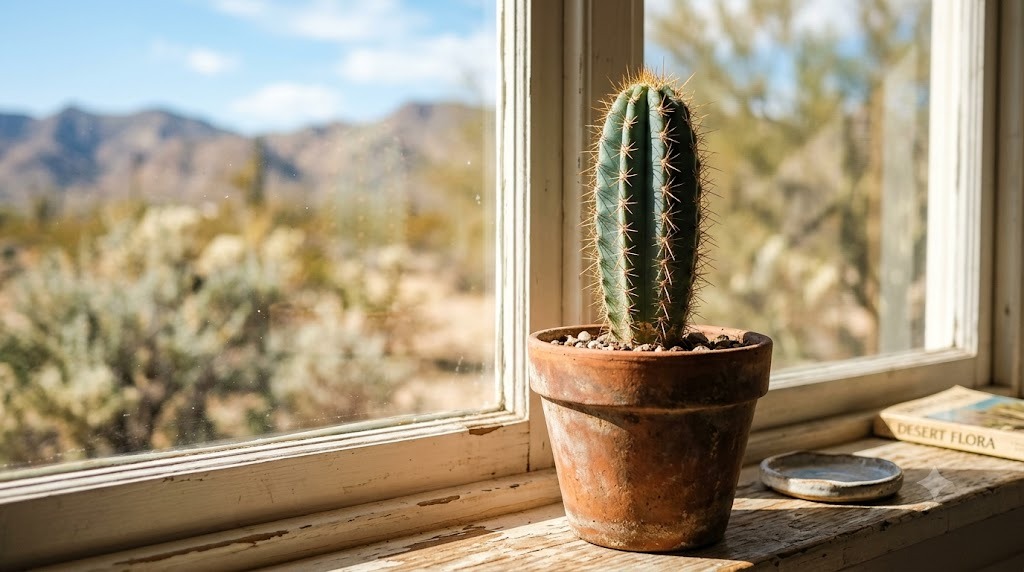
Overview
The saguaro is the giant, tree-like cactus of the American Southwest, an icon of the desert that can eventually tower to enormous heights and live for well over a century. As a houseplant it is grown as a slow, sculptural young specimen - because a potted saguaro often gains only a centimetre or two a year, patience is the whole game.
Origin & Natural Habitat
Saguaros are native to the Sonoran Desert of Arizona, California and northwestern Mexico, where they endure blazing sun, long drought and cool desert nights. In the wild they are a protected keystone species, so any plant you buy should be nursery-propagated, never wild-collected.
Appearance
A columnar, ribbed, blue-green cactus armed with clusters of stiff spines along the ribs. Young potted plants are simple upright columns; the famous arms only appear after many decades and great size, so an indoor saguaro stays a single slow spire for its whole life with you.
Why People Love It - Qualities & Benefits
People love the saguaro for its symbolism and its extreme, low-fuss slowness - it is a living piece of the desert that asks almost nothing. It is the ultimate set-it-and-forget-it cactus for a bright, sunny windowsill, and a real conversation piece.
Care
Light
Give a saguaro the brightest, sunniest position you have - a south-facing window with hours of direct sun, or a spot outdoors in warm weather. Too little light and it grows pale, soft and etiolated, losing its tight desert form.
Watering
Water sparingly. Soak the soil thoroughly, then let it dry out completely (and stay dry for a week or more) before watering again. In winter, water only rarely. Overwatering, especially in cool or dim conditions, is the fastest way to rot a saguaro.
Soil & Potting
Use a gritty, fast-draining cactus mix, or cut potting soil with plenty of pumice, perlite or coarse sand. A pot with a drainage hole is essential; these plants must never sit in soggy soil.
Humidity & Temperature
Saguaros want warm, dry air and dislike humidity. Ordinary room air is fine; they tolerate heat well but keep them above about 10°C, as they are frost-tender when young and potted.
Feeding
Feed lightly - a dilute cactus fertiliser once or twice through the warm growing season is plenty. Do not feed in winter, and never overfeed, which forces soft growth on a plant built for lean conditions.
Repotting
Repot rarely, only every few years when truly pot-bound, in spring. Handle with thick gloves and folded newspaper or tongs, and let the plant settle a week before watering. Slow growth means it is happy in the same pot for a long time.
Propagation
Saguaros are grown from seed, which is slow but rewarding - seedlings are tiny for years. Cuttings are not a practical route for this columnar species, so seed (from a reputable source, never the wild) is the way.
Common Problems & Pests
The main problem is rot from overwatering or cold, wet soil - watch for soft, discoloured or mushy patches at the base. Mealybugs and scale can appear; treat with rubbing alcohol on a cotton bud. Etiolation (pale, thin growth) means not enough light.
Toxicity & Safety
Saguaro cactus is not considered toxic to people or pets, but the stiff spines can cause painful injury, so keep it out of reach of children and animals. Handle only with protection. As always, discourage pets from chewing any houseplant.
Pros & Cons
Pros: iconic, extremely low-maintenance, drought-proof, long-lived. Cons: painfully slow (little visible growth), spiny and best kept away from traffic, needs very bright light to stay healthy.
Best Suited For
Best for patient collectors and anyone who wants a hardy, sculptural desert plant for a bright, sunny window and a hands-off routine. Not for those wanting fast, showy growth.
FAQ
How fast does a saguaro grow indoors? Extremely slowly - often just a centimetre or two a year, so treat it as a long, slow companion.
Will it grow arms? Not in a pot - arms take many decades and great size in the wild.
Gear for growing saguaro cactus
Links go to Amazon or a partner store (such as Adagio Teas) and may earn us a commission at no extra cost to you. As an Amazon Associate we earn from qualifying purchases. We link gear types, not sponsors' picks: you choose the exact product.