Rieger Begonia
The Rieger Begonia is a compact, heavy-blooming hybrid grown for its glossy foliage and clusters of double, rose- or camellia-like flowers in saturated reds, oranges, pinks, yellows, and whites.
Last reviewed: October 2026
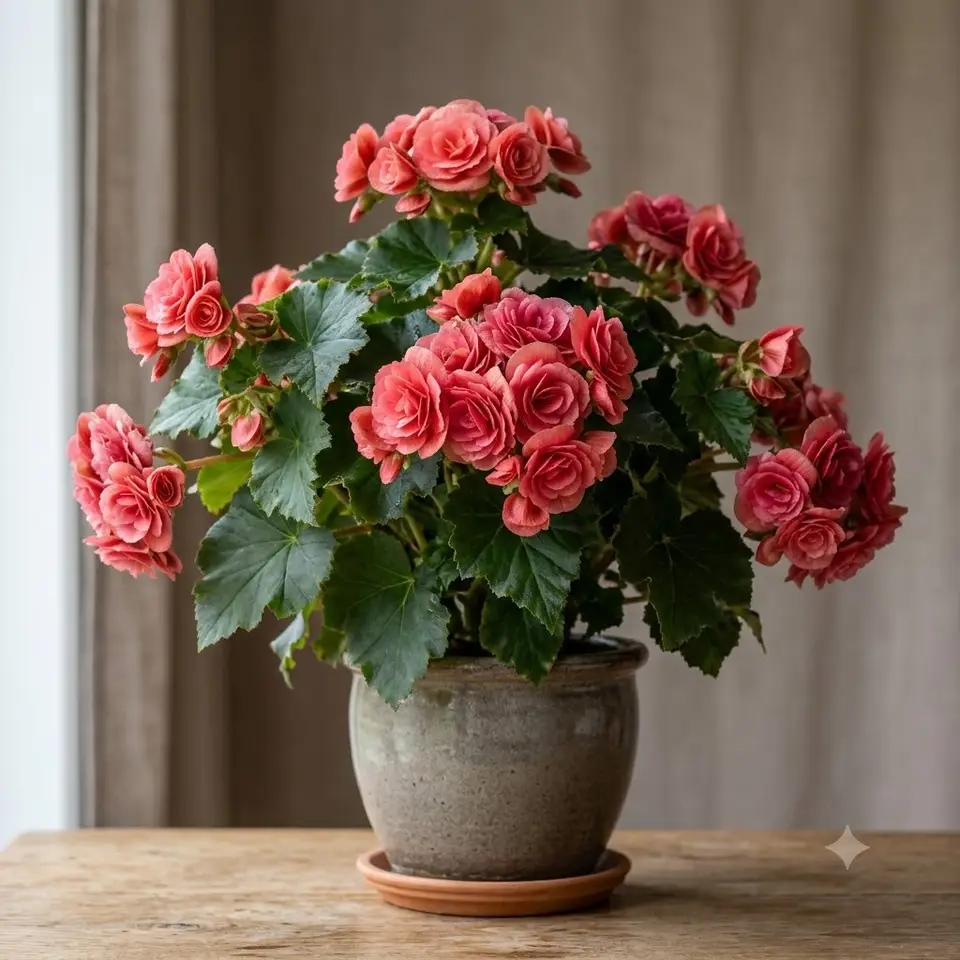 AI illustration
 Overview
The Rieger Begonia is a compact, heavy-blooming hybrid grown for its glossy foliage and clusters of double, rose- or camellia-like flowers in saturated reds, oranges, pinks, yellows, and whites. Collectors prize it as one of the showiest flowering begonias you can keep indoors, packing weeks of dense colour onto a small, tidy plant. It is a bred hybrid rather than a wild species (Begonia × hiemalis).
Origin & Natural Habitat
Rieger begonias are a garden hybrid developed in Germany (by the breeder Otto Rieger) by crossing the winter-flowering Begonia socotrana from the island of Socotra with tuberous begonias derived from cool, humid Andean highlands of South America. That parentage gives the hybrid its taste for bright but gentle light, steady warmth, and moisture without waterlogging.
Appearance
It forms a low, mounding clump of thick, waxy stems clothed in asymmetric, glossy dark-green leaves with a slightly heart-shaped, angel-wing outline and lightly toothed margins. Above the foliage it throws up abundant clusters of fully double flowers up to 5 cm across that read like miniature roses or camellias. Mature plants stay compact, usually around 20 to 40 cm tall and wide, making them well suited to windowsills and shelves.
Why People Grow It - Qualities & Benefits
- Long, dense flushes of double blooms in bold colours, often lasting many weeks
- Compact, well-behaved size that fits small indoor spaces
- Attractive glossy foliage that looks good even between flowering flushes
- Wide colour range that lets collectors build a matched or contrasting set
Care
Light: Bright, indirect light. Direct midday sun scorches the leaves and fades the flowers, while deep shade stops blooming and stretches the growth. An east window or a metre or so back from a south or west window is ideal.
Water: Keep the mix lightly and evenly moist during active growth, letting only the top 2-3 cm dry between waterings. Avoid soggy soil and water at the base - wet foliage invites disease. Ease off noticeably as the plant slows after a bloom cycle.
Soil: A light, airy, peat- or coir-based mix with added perlite for sharp drainage. Roots are shallow and fine, so a heavy, water-retentive medium leads quickly to rot.
Temperature & Humidity: Warm and stable, roughly 16 to 24°C, with no cold drafts. It likes moderate to higher humidity (around 40 to 60%) but hates water sitting on its leaves, so raise humidity with a pebble tray or nearby humidifier rather than misting.
Feeding: Feed with a diluted balanced or bloom-focused liquid fertilizer every 2 to 4 weeks while it is growing and flowering. Stop feeding once the plant enters its post-bloom rest.
Extra: Be honest with yourself - many Rieger begonias decline into a semi-dormant slump after their big flowering push, dropping leaves and looking rough. Cut them back, reduce water, keep them warm, and many will regrow, though they are often treated as a spectacular but short-lived plant. Toxic to cats and dogs (soluble oxalates, most concentrated in the tubers and underground parts) - keep out of reach of pets and children.
Propagation
Propagate from stem tip cuttings or leaf cuttings taken from healthy, non-flowering growth. Let cut ends callus briefly, then root in a light, moist mix or water under warm, humid, bright-indirect conditions. Rooting is reliable but the young plants are prone to rot if kept too wet.
Common Problems & Pests
- Powdery mildew and botrytis (grey mould) thrive on damp foliage and poor airflow - the most common Rieger complaint
- Root and crown rot from overwatering or heavy soil
- Spider mites, mealybugs, and fungus gnats, plus bud or leaf drop from cold drafts, dry air, or sudden environmental changes
Toxicity & Safety
Begonias, including Rieger hybrids, are toxic to cats and dogs. They contain soluble oxalates, which are most concentrated in the tubers and underground parts. Chewing can cause intense oral irritation and burning, drooling, and vomiting, and kidney effects are a concern with large ingestions in animals. The sap can also irritate sensitive skin, so wear gloves when taking cuttings and wash hands afterward. Keep the plant out of reach of curious pets and children.
Pros & Cons
Pros
- Exceptionally showy, long-lasting double blooms in a wide colour range
- Compact and space-friendly with attractive glossy leaves
Cons
- Fussy about moisture and airflow, and quick to develop powdery mildew or rot
- Often declines after flowering and can be short-lived, plus it is toxic to pets
Best Suited For
- Collectors who want maximum indoor flower power and will manage watering and airflow carefully
- Growers with a bright, warm, draft-free spot and no pets able to reach the plant
FAQ
Why is my Rieger begonia dropping leaves and flowers after a great bloom?
This is usually the natural post-bloom slump. After heavy flowering the plant tires and enters a semi-dormant rest. Trim it back, reduce watering, keep it warm and bright, and it will often push fresh growth, though some plants simply fade.
How do I stop powdery mildew?
Water at the soil surface rather than over the leaves, keep humidity moderate rather than dripping, and give the plant good air circulation. Remove affected leaves promptly and avoid crowding it against other plants.
Sources
Pet toxicity: checked against the ASPCA Animal Poison Control Center lists of toxic and non-toxic plants for cats and dogs, genus-wide entry "Begonia" (Begonia spp.): toxic to cats and dogs. Lists read on 10 October 2026.
Gear for growing rieger begonia
Links go to Amazon or a partner store (such as Adagio Teas) and may earn us a commission at no extra cost to you. As an Amazon Associate we earn from qualifying purchases. We link gear types, not sponsors' picks: you choose the exact product.