Rhizomatous Begonia
Rhizomatous begonias are a large collector group grown almost entirely for their bold, patterned foliage rather than their flowers.
Last reviewed: September 2026
 AI illustration
 Overview
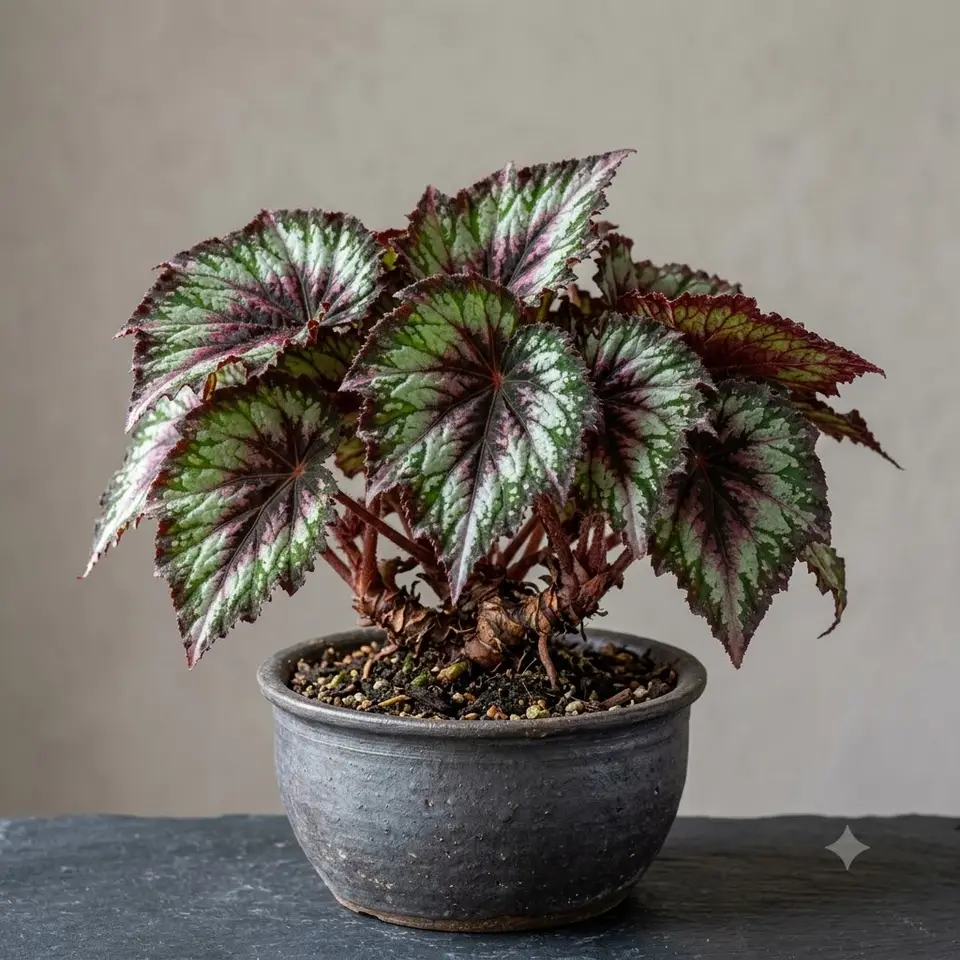
Rhizomatous begonias are a large collector group grown almost entirely for their bold, patterned foliage rather than their flowers. They grow from a thick creeping rhizome that snakes along the soil surface and sends up strikingly lopsided leaves in swirls of silver, maroon, bronze and green. Prized for the sheer variety of leaf shape and color, they reward a bit of fussing with year-round drama (Begonia spp., rhizomatous group).
Origin & Natural Habitat
The genus spans tropical and subtropical regions worldwide, and rhizomatous types trace to shaded forest floors, rocky outcrops and stream banks in Central and South America and parts of Asia. In the wild they hug humid, dappled ground where the creeping rhizome roots as it spreads.
Appearance
Leaves rise on fleshy petioles straight from the rhizome and are famously asymmetric, ranging from rounded and star-shaped to deeply lobed and spiraled, often 10 to 25 cm across. Colors and textures vary enormously between cultivars: puckered surfaces, silver banding, dark veining, red undersides and metallic sheens are all common. Growth is low and spreading rather than upright, typically reaching 30 to 45 cm tall while the rhizome fans outward, with slender stalks of small pink or white flowers appearing mostly in late winter.
Why People Grow It - Qualities & Benefits
- Enormous variety of leaf shape, pattern and color across hundreds of cultivars
- Compact, spreading habit that suits shelves, wide bowls and terrarium edges
- Grown for foliage, so it looks good every month of the year
- Easy to propagate, which makes trading and collecting part of the fun
Care
Light: Bright, indirect light. Direct sun scorches and bleaches the foliage, while deep shade dulls the colors and stretches the growth.
Water: Keep the mix lightly moist and let the top 2-3 cm dry before watering again. They rot easily if left soggy, so water from below or aim at the soil to keep the leaves dry.
Soil: A light, airy, fast-draining mix - peat or coir with plenty of perlite. Use a shallow, wide pot because the rhizome creeps across the surface rather than diving deep.
Temperature & Humidity: Warmth of 18 to 24°C suits them. They want humidity above 50% yet resent water sitting on the leaves, which is the tricky balance: raise ambient humidity with a tray or room humidifier rather than misting.
Feeding: A balanced liquid fertilizer at half strength every 2 to 4 weeks during active growth. Ease off in the darker months.
Extra: Many rhizomatous begonias slow down or go semi-dormant in winter, dropping some leaves and needing much less water - do not panic or overwater during that lull. Toxic to cats and dogs (soluble oxalates, most concentrated in the rhizomes and underground parts) - keep out of reach of pets and children.
Propagation
Very easy from rhizome cuttings: cut a section with a growth point, lay it on moist mix and pin it down until it roots. Leaf cuttings also work well, either whole leaves pinned flat or wedge sections with a vein, kept warm and humid until plantlets form.
Common Problems & Pests
- Powdery mildew is the classic issue, driven by poor airflow and wet foliage - space plants out and keep leaves dry
- Overwatering causes rhizome and stem rot; mushy, blackened bases are a warning sign
- Mealybugs and thrips are common, and spider mites can appear when the air is very dry
Toxicity & Safety
Begonias are toxic to cats and dogs. They contain soluble oxalates, most concentrated in the rhizomes and underground parts, which cause oral irritation, intense drooling and vomiting if chewed or swallowed. The sap can also irritate skin, so wash your hands after taking cuttings and site the plant well away from curious pets and children.
Pros & Cons
Pros
- Spectacular, varied foliage with strong year-round interest
- Compact and easy to propagate, ideal for collectors
Cons
- Fussy about the humidity-versus-wet-leaves balance and prone to powdery mildew
- Winter slowdown and toxicity to pets take extra management
Best Suited For
- Foliage collectors who enjoy chasing new cultivars and patterns
- Growers with a bright, warm, humid spot and no pets grazing on plants
FAQ
Why is my rhizomatous begonia dropping leaves in winter?
Many go semi-dormant as light drops, shedding older leaves and resting. Cut back on water, hold off feeding and it should push fresh growth again in spring.
Why does white powder keep appearing on the leaves?
That is powdery mildew, encouraged by stagnant air and moisture on the foliage. Improve airflow, avoid misting, water at the soil line and remove badly affected leaves.
Gear for growing rhizomatous begonia
Links go to Amazon or a partner store (such as Adagio Teas) and may earn us a commission at no extra cost to you. As an Amazon Associate we earn from qualifying purchases. We link gear types, not sponsors' picks: you choose the exact product.