Red Root Floater
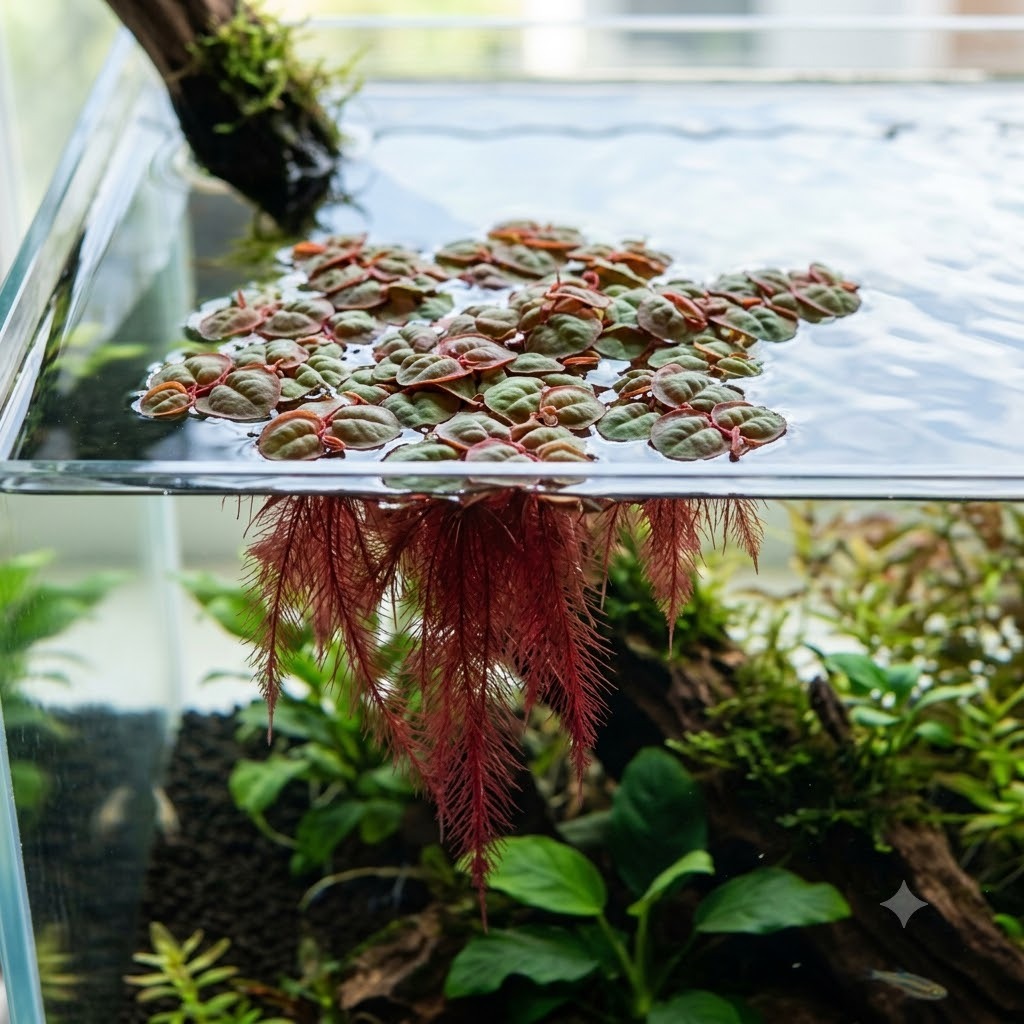
Red root floater is the show-off among small floating plants - coin-sized leaves that blush deep red under strong light, trailing wine-red roots below the surface.
🗓️ Last reviewed: July 2026
Overview
Red root floater is the show-off among small floating plants - coin-sized leaves that blush deep red under strong light, trailing wine-red roots below the surface. It gives open-top and aquascaped tanks a finished, natural ceiling and eats nitrates while doing it. It is fussier than duckweed-grade floaters though: it hates being splashed, blown around or cooked under a hot lamp. (Phyllanthus fluitans.)
Origin & Natural Habitat
South America - quiet backwaters, oxbows and flooded areas of the Amazon basin, drifting in still, warm water. Never release aquarium plants into natural waterways.
Appearance
Rosettes of small, rounded, slightly folded leaves with a velvety, water-repellent surface - olive green in modest light, rusty to deep red under strong light. Each rosette trails a tassel of feathery red roots that fish and shrimp graze around.
Why People Grow It - Qualities & Benefits
- The best red colour available in a floating plant
- Nitrate uptake and gentle shade against algae
- Red root curtains look striking and shelter fry
- Stays small - easier to control than water hyacinth-sized floaters
Care
Light: Moderate to strong from above - light drives the red. Under weak light it stays green and thins out; it will not stay red in a dim tank, whatever the seller says.
Water: 22-28°C, pH 6.0-7.5, soft to moderately hard. Calm surface is non-negotiable: constant ripple flips and sinks the rosettes.
Substrate: None - it floats. A ring of airline tubing or a floating corral keeps it out of the filter outflow.
CO₂ & feeding: No CO2 needed - floating leaves take CO2 from the air. It does want liquid fertiliser (iron especially) in clean tanks; starved plants go pale and stall.
Placement: Surface of open-top or long tanks with gentle filtration; also happy in shrimp bowls and paludarium pools.
Extra: ⚠️ Drips kill it slowly - condensation from tight lids and splash from filters sit on the velvet leaves and rot them. Open tops or well-ventilated lids work far better.
Propagation
Division - rosettes bud off daughter plants at their edges. Scoop out and rehome or bin the surplus every week or two once it takes off.
Common Problems & Pests
Rotting leaves under drippy lids or spray bars; green, leggy plants in weak light; melting after shipping (common - it usually recovers from surviving rosettes); occasional aphids on the emersed leaves, which a brief push underwater lets the fish handle.
Toxicity & Safety
Not known to be toxic to cats, dogs or aquarium livestock. Shrimp-safe; the root tangle is a favourite grazing ground.
Best Suited For
- Open-top and rimless aquascapes
- Shrimp and betta-style calm tanks
- Keepers wanting red without planting a stem plant
- Anyone fighting nitrates who finds duckweed too invasive in-tank
FAQ
Why won't my red root floater turn red?
Light intensity, mainly - red develops under strong overhead light, helped by iron fertiliser and low nitrates. In moderate light it stays a perfectly healthy green.
Why do the leaves keep rotting?
Water sitting on top of the leaves. Tight lids drip condensation and filters splash; both rot the velvety leaves. Calm the surface, ventilate the lid or open the top, and new rosettes usually recover.