Raindrop Peperomia
Raindrop Peperomia is a compact, semi-succulent foliage plant loved for its glossy, teardrop-shaped leaves that come to a soft point, like a stylised drop of water (Peperomia polybotrya).
Last reviewed: October 2026
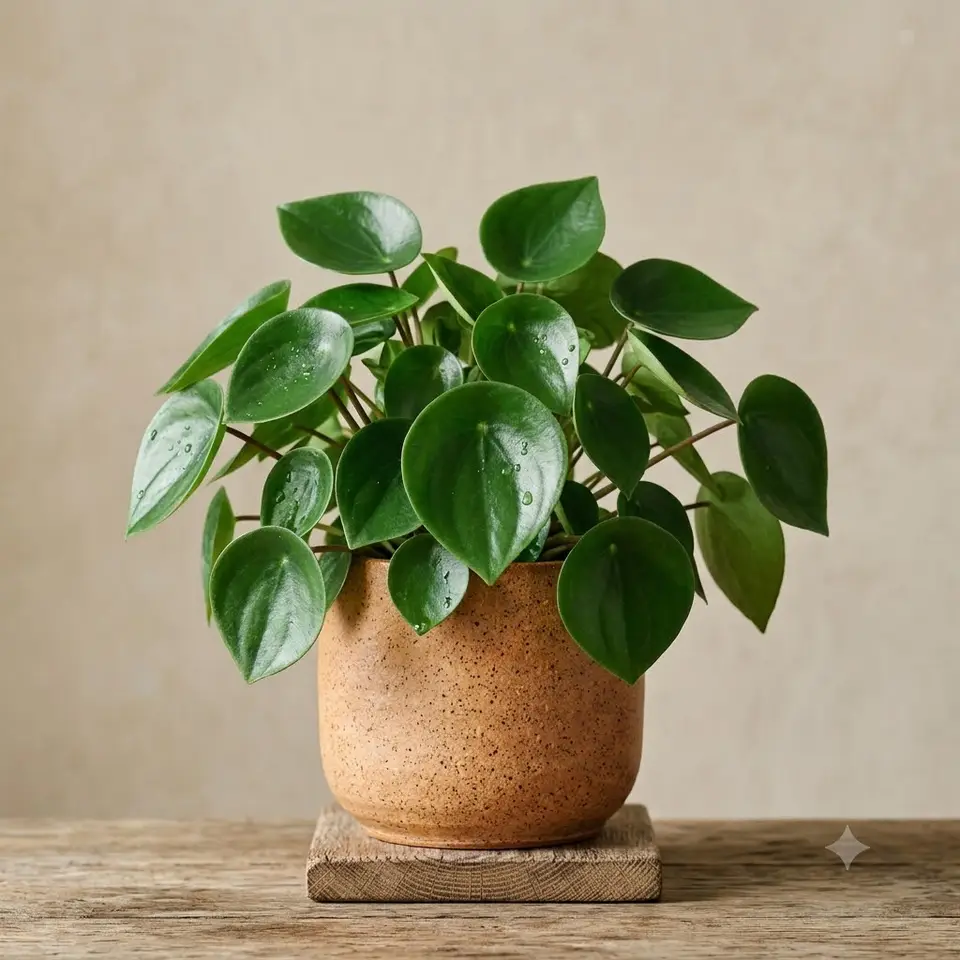 AI illustration
 Overview
Raindrop Peperomia is a compact, semi-succulent foliage plant loved for its glossy, teardrop-shaped leaves that come to a soft point, like a stylised drop of water (Peperomia polybotrya). It stays small and tidy, making it a favourite for desks, shelves, and windowsills where space is tight. Collectors often reach for it as an easy-care alternative to the similar-looking Chinese Money Plant.
Origin & Natural Habitat
Peperomia polybotrya is native to the tropical rainforests of South America, mainly Colombia and Peru. In the wild it grows as an understory and epiphytic plant, often perched on rotting wood or nestled among leaf litter where light is filtered and humidity is high. Its thick, moisture-holding leaves are an adaptation to these shaded, damp forest floors where water availability can swing between soaking and dry.
Appearance
The standout feature is the foliage: rounded, heart-to-teardrop leaves that taper to a gentle point, each one thick, waxy, and deep glossy green. Leaves are peltate, meaning the stalk joins near the centre of the underside rather than the edge, which gives the plant its plump, shield-like look. It grows in an upright, bushy mound on short succulent stems and stays compact, usually reaching about 25 to 30 cm tall and wide at maturity. Mature plants can produce slender, rat-tail-like flower spikes, though these are modest and grown-for-foliage gardeners often trim them off.
Why People Grow It - Qualities & Benefits
- Compact size that suits small apartments, office desks, and crowded plant shelves.
- Thick, water-storing leaves make it forgiving of the occasional missed watering.
- Non-toxic and pet-safe, so it fits homes with curious cats and dogs.
- Distinctive raindrop foliage that adds a sculptural, modern look without demanding much care.
Care
Light: Bright, indirect light is ideal. It tolerates medium light but grows leggy and pale in deep shade, while harsh direct sun can scorch or fade the leaves. Water: Let the top half of the soil dry out between waterings, then water thoroughly and drain fully. The plump leaves store water, so it prefers to run dry rather than sit wet. Soil: A light, fast-draining mix. Standard potting soil cut with perlite, orchid bark, or coarse sand works well to keep roots airy. Temperature & Humidity: Comfortable at normal room temperatures of about 18 to 26°C. Keep it above 12°C and away from cold drafts. It appreciates moderate to high humidity but copes fine with average household levels. Feeding: Feed lightly with a balanced, diluted liquid fertiliser once a month during spring and summer. Skip feeding in autumn and winter. Extra: The key quirk is overwatering sensitivity, as its succulent stems and leaves rot quickly in soggy soil, so err on the dry side. Good news for pet owners: Peperomia is non-toxic to cats and dogs and appears on the ASPCA pet-safe list.
Propagation
Propagation is easy and satisfying. Take a healthy leaf with a short piece of its stalk, let the cut end callus for a few hours, then insert it into moist, well-draining mix or a glass of water. Stem cuttings with a couple of leaves also root readily. Keep cuttings warm and in bright, indirect light, and new roots and small plantlets usually appear within a few weeks.
Common Problems & Pests
- Overwatering and root rot, shown by mushy stems, yellowing leaves, and sudden collapse.
- Brittle stems and leaves that snap or bruise if the plant is knocked or handled roughly.
- Occasional sap-sucking pests such as mealybugs, spider mites, and fungus gnats, the last often a sign the soil is staying too wet.
Toxicity & Safety
Raindrop Peperomia is pet-safe. It is considered non-toxic to both cats and dogs, and the ASPCA lists several other Peperomia species as non-toxic, so it is a sound choice for households with pets and children. The plant itself poses no poisoning risk, though as with any houseplant the potting soil and any fertiliser should not be eaten, and it is sensible to discourage nibbling simply to keep the plant looking its best.
Pros & Cons
Pros
- Genuinely pet-safe and non-toxic, a rare bonus among popular houseplants.
- Compact and low-maintenance, forgiving of light neglect thanks to its water-storing leaves.
Cons
- Very easy to overwater, and root rot can kill it fast if the soil stays wet.
- Stems and leaves are brittle and snap easily, so it dislikes heavy handling or busy walkways.
Best Suited For
- Beginners and busy people who want a striking plant that forgives an occasional missed watering.
- Pet owners and small-space growers looking for a safe, compact plant for desks and shelves.
FAQ
Why are my Raindrop Peperomia leaves going soft and yellow?
This is almost always overwatering. The succulent leaves and stems rot when soil stays wet, so let the top half of the mix dry out, make sure the pot drains freely, and trim away any mushy parts.
Is Raindrop Peperomia safe for cats and dogs?
Yes. Peperomia is non-toxic to cats and dogs and is on the ASPCA pet-safe list, making it a great pick for homes with pets, though soil and fertiliser should still not be eaten.
Gear for growing raindrop peperomia
Links go to Amazon or a partner store (such as Adagio Teas) and may earn us a commission at no extra cost to you. As an Amazon Associate we earn from qualifying purchases. We link gear types, not sponsors' picks: you choose the exact product.