Rebutia (Crown Cactus)
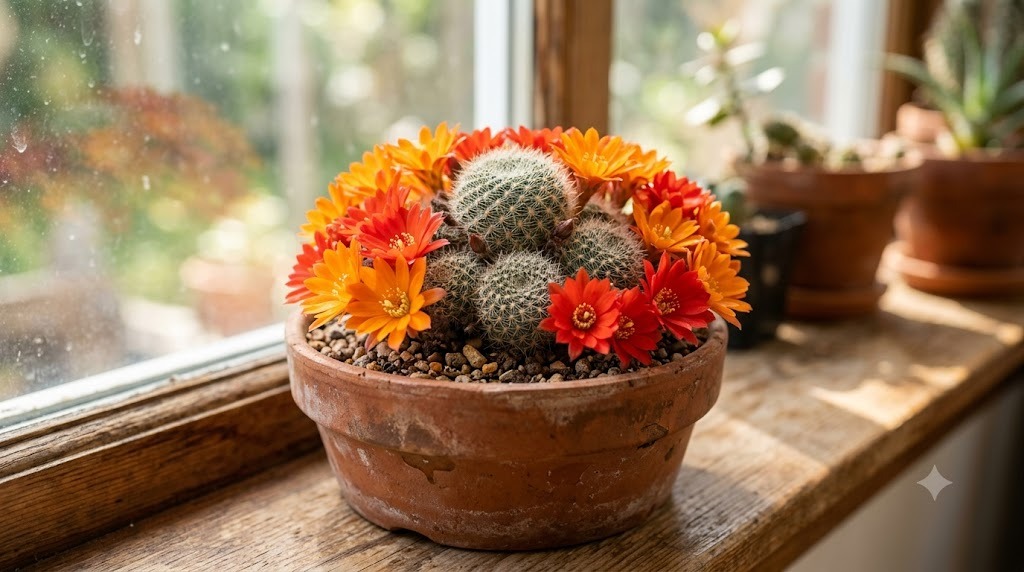
Rebutias are tiny, clustering desert cacti that flower so freely and so young that a small pot can vanish beneath a crown of big, brilliant blooms in red, orange, pink or yellow.
Last reviewed: July 2026
Overview
Rebutias are tiny, clustering desert cacti that flower so freely and so young that a small pot can vanish beneath a crown of big, brilliant blooms in red, orange, pink or yellow. Easy, compact and quick to multiply, they are among the very best cacti for a beginner's windowsill.
Origin & Natural Habitat
Rebutia species come from the high mountains of Bolivia and northern Argentina, growing in sunny, well-drained crevices at altitude. Their mountain home makes them tolerant of cool conditions and reliable spring flowerers.
Appearance
Small, globular, softly spined green bodies that quickly form clusters of many heads. The flowers are the show: large for the plant's size, funnel-shaped, and often ringing the base of each head in vivid red, orange, pink, magenta or yellow, sometimes almost hiding the plant.
Why People Love It - Qualities & Benefits
People love how young and freely they flower, how small and windowsill-friendly they stay, how easily they cluster and propagate, and how genuinely easy they are. A pot of rebutias in full bloom is one of the great small-cactus displays.
Care
Light
Bright light with some direct sun keeps them compact and, above all, flowering - a sunny windowsill is ideal. Enough light and a cool winter rest are the keys to the spring flower show.
Watering
Soak, then let the soil dry out completely before watering again. Keep them nearly dry through winter - a cool, dry rest is what triggers the spring flowers. Overwatering rots the small clustering roots, so err dry.
Soil & Potting
A gritty, free-draining cactus mix in a pot with drainage. Good drainage matters for the small root systems, which rot easily if kept wet.
Humidity & Temperature
Cool to warm, dry air suits them; they dislike humidity. Thanks to their mountain origins they take a cool, dry, frost-free winter well - which is exactly what sets the flowers.
Feeding
A dilute cactus feed once or twice in the growing season supports the flowering. These small plants need little, so do not overfeed.
Repotting
Repot every couple of years in spring when the cluster fills the pot, handling gently with folded card. The many offsets can be split off at repotting to make new plants.
Propagation
Very easy: detach an offset (pup), let it callus for a day or two, and set it on gritty soil to root. They also grow readily from seed, often flowering within a couple of years.
Common Problems & Pests
Rot from overwatering, especially in winter, is the main risk. Red spider mite and mealybugs can appear. The commonest disappointment - no flowers - is almost always too little light or the lack of a cool, dry winter rest.
Toxicity & Safety
Rebutias are not toxic to people or pets, and their spines are relatively soft, but it is still best to keep them out of reach of animals that might chew them and to handle with a little care.
Pros & Cons
Pros: flowers young and profusely, stays small, clusters and propagates easily, tolerant of cool conditions, superb for beginners. Cons: needs a cool dry winter to bloom, small roots rot if overwatered, needs good light for flowers.
Best Suited For
One of the best cacti to start a collection with - perfect for beginners and windowsill growers who want big, reliable flowers from tiny, easy plants.
FAQ
Why is my rebutia not flowering? It almost always needs more light and a cool, dry winter rest to set its spring buds.
It has lots of little heads - can I split them? Yes, at repotting: callus each offset, then root it in gritty soil.
Gear for growing rebutia (crown cactus)
Links go to Amazon or a partner store (such as Adagio Teas) and may earn us a commission at no extra cost to you. As an Amazon Associate we earn from qualifying purchases. We link gear types, not sponsors' picks: you choose the exact product.