Rat Tail Cactus
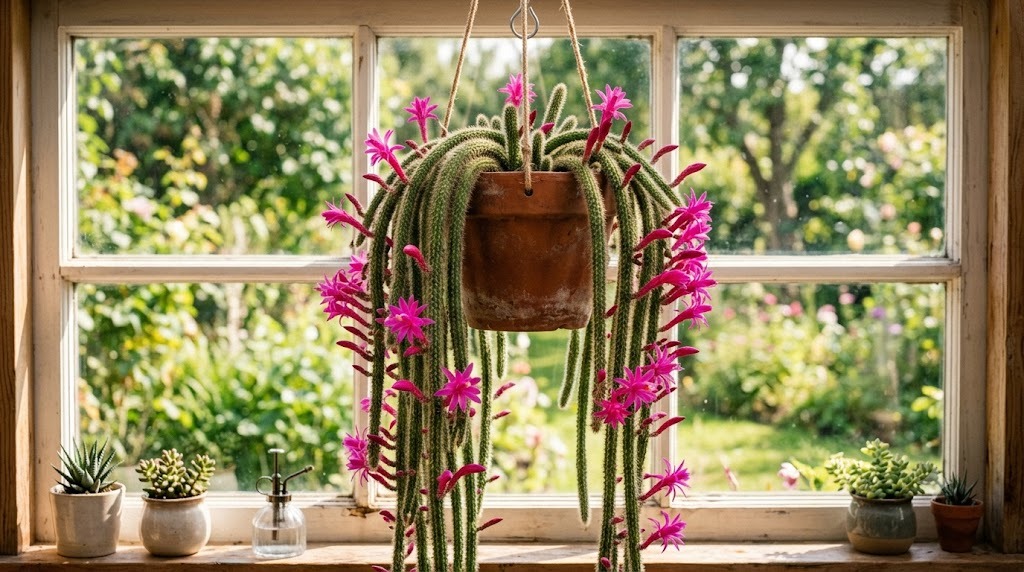
The rat tail cactus is a trailing desert cactus grown for its long, slender, pendant stems that spill from a hanging pot and, in spring, erupt in vivid magenta-pink flowers.
Last reviewed: July 2026
Overview
The rat tail cactus is a trailing desert cactus grown for its long, slender, pendant stems that spill from a hanging pot and, in spring, erupt in vivid magenta-pink flowers. Fast, easy and spectacular in bloom, it is one of the best cacti for a hanging basket in a sunny window.
Origin & Natural Habitat
Disocactus flagelliformis (once Aporocactus) comes from Mexico, where it grows as a semi-trailing plant on rocks and in trees. Its partly epiphytic habit means it likes a touch more moisture and richer conditions than a true desert cactus.
Appearance
Long, thin, ropelike green stems, up to a metre or more, densely covered in short, fine bristly spines, trailing and hanging as they lengthen. In spring the stems are lined with large, bright magenta-pink tubular flowers - a startling, showy display for a cactus.
Why People Love It - Qualities & Benefits
People love the fast-growing cascade of tails and the brilliant flush of pink flowers, which is one of the most reliable and dramatic blooms among cacti. It is easy, quick and perfect for hanging baskets.
Care
Light
Bright light with some direct sun suits it - a sunny window, or a bright spot outdoors in summer. Good light drives the spring flowering; too little and the stems grow thin and shy to bloom.
Watering
Water when the top of the soil has dried, keeping it a little more moist than a desert cactus during active growth and flowering, then drier in winter. A cool, drier winter rest helps set the spring flowers. Still, avoid waterlogging, which rots the stems.
Soil & Potting
A free-draining cactus mix with a little added organic matter suits its semi-epiphytic nature, in a hanging pot with drainage. Sharp drainage still matters to prevent rot.
Humidity & Temperature
Tolerates ordinary room air and appreciates slightly more humidity than desert cacti, reflecting its partly epiphytic origins. Keep it above about 8-10°C, with a cooler winter rest to encourage blooms.
Feeding
Feed with a dilute cactus or flowering fertiliser through the growing season to support its vigorous growth and generous flowering.
Repotting
Repot every year or two in spring as it fills the basket, handling the bristly stems with care. Refresh the mix and it quickly rewards you with fresh trailing growth.
Propagation
Extremely easy: cut a length of stem, let the end callus for a few days, and set it in gritty mix to root. Stem sections root readily, so a full basket is quick to build up.
Common Problems & Pests
Overwatering rot is the main risk, especially in winter. Mealybugs and scale can hide among the bristly stems. Thin, non-flowering stems usually mean too little light or no cool winter rest.
Toxicity & Safety
The rat tail cactus is not toxic to people or pets, but its fine bristly spines can catch and irritate skin, so site the hanging pot where it won't be brushed and keep it out of reach of pets and children.
Pros & Cons
Pros: fast-growing trailing habit, spectacular reliable pink flowers, very easy from cuttings, ideal for hanging baskets. Cons: bristly stems can irritate, needs good light and a cool winter rest to flower well, stems can tangle.
Best Suited For
Perfect for anyone wanting an easy, fast, showy trailing cactus for a hanging basket in a bright window - one of the most rewarding cacti in bloom.
FAQ
Why isn't mine flowering? It usually needs brighter light and a cooler, drier winter rest to set its spring buds.
Can I start a new plant from a piece of stem? Yes - callus a cut length for a few days, then root it in gritty mix; it roots very easily.
Gear for growing rat tail cactus
Links go to Amazon or a partner store (such as Adagio Teas) and may earn us a commission at no extra cost to you. As an Amazon Associate we earn from qualifying purchases. We link gear types, not sponsors' picks: you choose the exact product.